Rajasthan CMO orders senior police to hit the field

Synopsis
The Chief Minister's Office of Rajasthan publicly ordered all senior police officers on 4 November 2026 to personally conduct ground-level security reviews and guarantee a safe, peaceful environment — a sharp administrative signal from CM Bhajanlal Sharma's office on law-and-order accountability.
Key Takeaways
The Chief Minister's Office of Rajasthan issued a public directive on 4 November 2026 ordering senior police officers to personally deploy to the field.
Officers are instructed to personally assess security arrangements and ensure a safe and peaceful atmosphere.
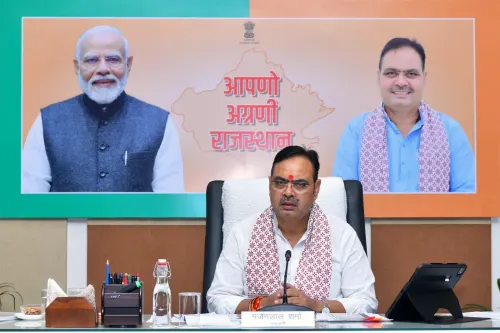
The post is addressed to Chief Minister Bhajanlal Sharma and tagged #आपणो_अग्रणी_राजस्थान .
Bhajanlal Sharma has led the BJP government in Rajasthan since December 2023 , with law-and-order as a stated governance priority.
District-level compliance reports and departmental circulars will indicate whether the directive translates into verifiable field action.
With law-and-order on the line, the Chief Minister's Office of Rajasthan issued a sharp directive on Wednesday, 4 November 2026: every senior police officer must step out of their offices, go into the field personally, and ensure a safe and peaceful environment across the state.
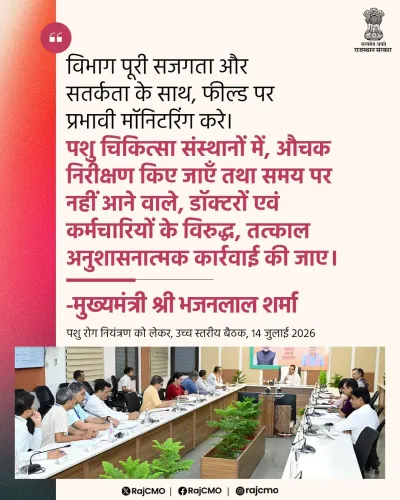
The post, addressed directly to Chief Minister Bhajanlal Sharma via his handle @BhajanlalBjp and tagged with the hashtag #आपणो_अग्रणी_राजस्थान ('Our Leading Rajasthan'), carries a clear administrative message: desk-level oversight is not enough. The instruction reads, 'सभी वरिष्ठ पुलिस अधिकारी स्वयं फील्ड में उतरकर, सुरक्षा व्यवस्थाओं का जायजा लें और सुरक्षित एवं शांतिपूर्ण माहौल सुनिश्चित करें' — 'All senior police officers should personally come down to the field, assess security arrangements, and ensure a safe and peaceful atmosphere.'
What the directive demands from Rajasthan Police
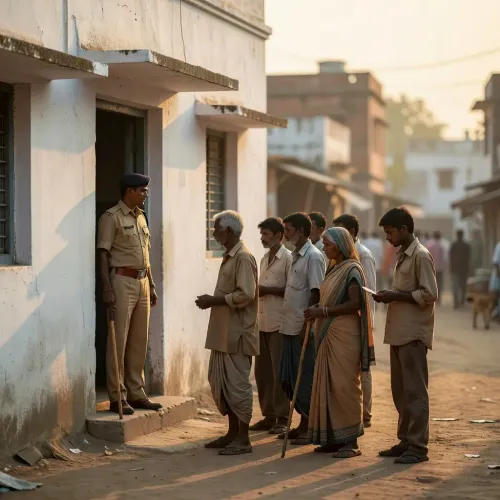
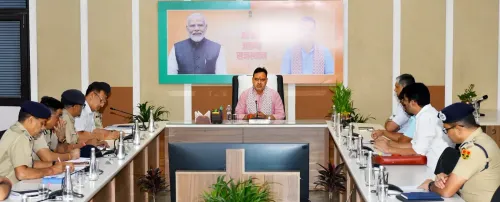
The instruction targets the senior tier of Rajasthan Police — the officers who typically operate at the district superintendent level and above. By mandating physical, ground-level presence, the CMO is signalling that command-and-control must move from briefing rooms to the streets. It is a pointed reminder that accountability flows downward only when leadership is visible.
Directing senior officers to conduct on-ground security reviews is a well-established administrative tool in Indian state governance — used by CM offices to reinforce proactive policing and demonstrate executive attention to public order. The move puts the onus squarely on field commanders to verify that arrangements are holding, not merely report that they are.
Bhajanlal Sharma's governance signalling
Bhajanlal Sharma, who has led the BJP government in Rajasthan since December 2023, has consistently framed law-and-order as a headline governance priority. Direct, public-facing instructions from his CMO — bypassing bureaucratic channels and landing on a live social-media feed — are part of a broader pattern of visible accountability messaging. The directive underscores that at the CM's office, security is not a background administrative function; it is a frontline political commitment.
What follows will matter as much as the directive itself. District-level compliance reports and any subsequent departmental circulars will tell whether this instruction translates from an X post into verifiable field action. The residents of Rajasthan will be watching — and so, it seems, is the CM.
Point of View
Social-media-first directive rather than a closed departmental order, the Rajasthan CMO is deploying a dual-use governance tool: an actual administrative instruction and a visible accountability signal to voters. For a BJP government elected on a law-and-order platform in December 2023, keeping policing front-of-mind through such communications reinforces its core brand promise. The pattern of CM offices across India using X to amplify routine administrative directives reflects a broader shift — governance as performance, where the audience is as much the public as the bureaucracy. Whether measurable field outcomes follow will determine if this directive carries real administrative weight or remains a governance optic.
NationPress
4 Nov 2026
Frequently Asked Questions
What did the Rajasthan CMO direct senior police officers to do?
The Chief Minister's Office of Rajasthan directed all senior police officers to personally go into the field, review security arrangements, and ensure a safe and peaceful environment.
Who is the Chief Minister of Rajasthan in 2026?
Bhajanlal Sharma of the BJP is the Chief Minister of Rajasthan, in office since December 2023.
Why did the Rajasthan CMO issue this security directive?
The precise trigger has not been officially stated. Such directives are a common administrative tool used by Indian CM offices to emphasise field presence, proactive policing, and law-and-order accountability.
What does #आपणो_अग्रणी_राजस्थान mean?
It is a Hindi-Rajasthani hashtag used by the Rajasthan government meaning 'Our Leading Rajasthan,' and serves as a campaign and governance branding tag for CM Bhajanlal Sharma's administration.
What happens after such a Rajasthan Police field review directive?
Typically, district-level compliance reports and departmental circulars follow to verify that senior officers have conducted the mandated on-ground security reviews.