CM Rekha Gupta pushes Delhi's free rooftop solar push at BRE Summit
Synopsis
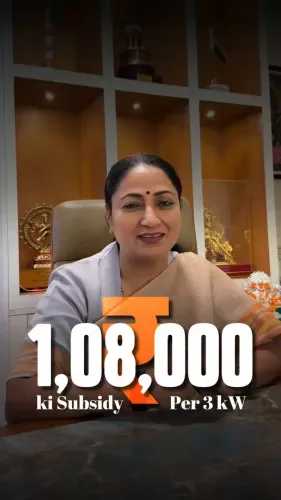
Delhi CM Rekha Gupta announced at the Bharat Renewable Energy Summit that her government will install rooftop solar systems free for homes up to 3 kW and offer up to ₹1.56 lakh subsidy for higher-capacity systems, framing the drive as Delhi's contribution to PM Modi's national solar vision.
Key Takeaways
Delhi CM Rekha Gupta addressed the Solar Plenary at the Bharat Renewable Energy Summit & Expo at Bharat Mandapam on November 4, 2026 .
The Delhi government is providing free rooftop solar installation up to 3 kilowatts for residential households.
Systems above 3 kW capacity attract a state subsidy of up to ₹1.56 lakh .
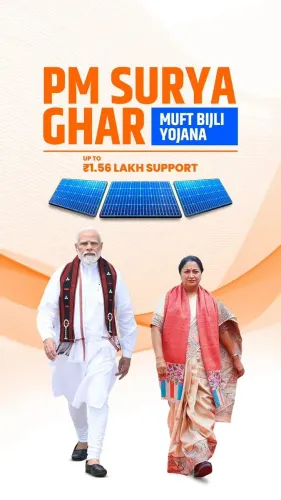
The state scheme is positioned as complementing the central PM Surya Ghar: Muft Bijli Yojana , launched by PM Modi in February 2024 .
Union Minister Prahlad Joshi was present, underscoring central-state coordination on the solar push.
The stated goal is for every Delhi rooftop to become a clean-energy source and for the capital to serve as a national model for urban distributed solar.
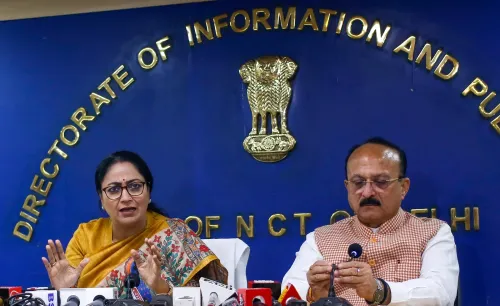
Every rooftop in Delhi, a power plant. That is the ambition Delhi Chief Minister Rekha Gupta laid out on Wednesday, November 4, 2026, when she addressed the Solar Plenary session of the Bharat Renewable Energy Summit & Expo at Bharat Mandapam, New Delhi — pledging free rooftop solar installations and subsidies to make the capital a national model for distributed clean energy.
Free panels for Delhi homes — what the scheme offers
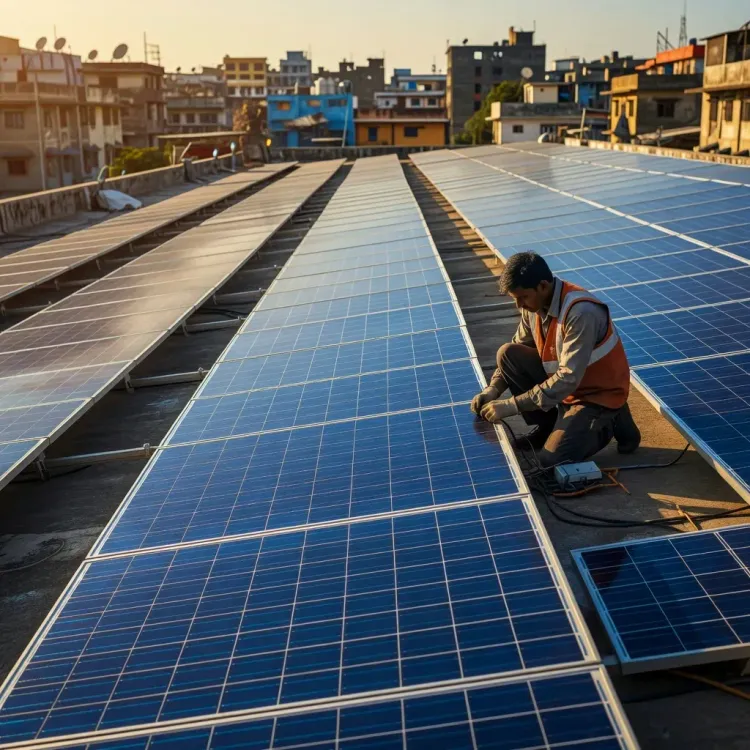
Speaking in Hindi, CM Gupta declared that the Delhi government is installing rooftop solar systems of up to 3 kilowatts free of cost for households. For those who want higher-capacity systems, a subsidy of up to ₹1.56 lakh is being extended. The goal, she said, is twin: cut electricity bills for every family and turn every terrace into a clean-energy source.
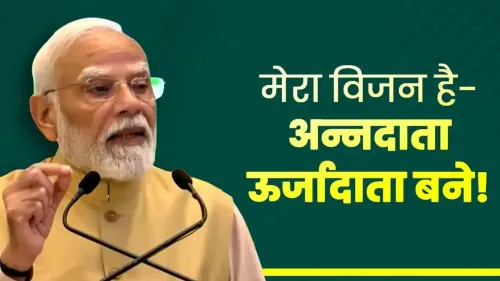
'दिल्ली की हर छत स्वच्छ ऊर्जा का स्रोत बने' — 'every roof in Delhi should become a source of clean energy' — is how she framed the ambition. It is a retail-level pitch at a moment when Delhi's dense residential fabric makes rooftop solar one of the fastest paths to meaningful capacity addition.
PM Surya Ghar — the central backbone Delhi is building on
Gupta positioned Delhi's programme as a direct extension of the PM Surya Ghar: Muft Bijli Yojana, the central scheme Prime Minister Narendra Modi launched in February 2024 to subsidise residential rooftop solar across the country. That scheme provides central financial assistance to households, aiming to deliver effectively free power once panels are installed and net-metered.
Delhi's additional state-level subsidy and free-installation pledge layers on top of the central support — a pattern emerging across states where BJP governments are pairing national scheme frameworks with local top-ups to accelerate ground-level adoption. Union Minister for New and Renewable Energy Prahlad Joshi was present at the session, signalling alignment between the state and central governments on the rollout.
The number to watch: installations, not announcements
The policy direction is clear and the political alignment is firm. What the Delhi solar push needs next is execution proof: actual installation counts, subsidy disbursement timelines, and grid-integration data. For a city of over 20 million residents packed into a relatively compact geography, rooftop solar at scale is both technically feasible and logistically demanding — approvals, net-metering connections, and supply chains all need to run in parallel.
If Delhi delivers on the numbers behind these commitments, it has a credible shot at becoming the urban benchmark for distributed solar in India. That is precisely the 'national example' CM Gupta is promising from the stage at Bharat Mandapam.
Point of View
Gupta signals political continuity with the Centre while also asserting Delhi's own policy identity. The presence of Union Minister Prahlad Joshi reinforces that this is a coordinated push, not a unilateral state initiative. The real test will be whether installation and subsidy disbursement data backs up the platform rhetoric — urban rooftop solar at scale has a poor track record of matching announcement numbers in India.
NationPress
4 Nov 2026
Frequently Asked Questions
What is Delhi's free rooftop solar scheme?
The Delhi government is installing rooftop solar systems of up to 3 kilowatts free of cost for households, and offering a subsidy of up to ₹1.56 lakh for higher-capacity systems, as announced by CM Rekha Gupta at the Bharat Renewable Energy Summit on November 4, 2026.
What is the PM Surya Ghar: Muft Bijli Yojana?
PM Surya Ghar: Muft Bijli Yojana is a central government scheme launched by PM Narendra Modi in February 2024 that provides financial assistance for residential rooftop solar installations to help households generate their own electricity and reduce bills.
How much subsidy does Delhi give for rooftop solar above 3 kW?
According to CM Rekha Gupta's announcement, households installing rooftop solar systems of capacity above 3 kilowatts in Delhi are eligible for a subsidy of up to ₹1.56 lakh from the Delhi government.
Who attended the Bharat Renewable Energy Summit 2026 Solar Plenary?
Delhi CM Rekha Gupta addressed the Solar Plenary session, and Union Minister for New and Renewable Energy Prahlad Joshi was also present at the session held at Bharat Mandapam in New Delhi.
What is Delhi's solar energy target?
CM Rekha Gupta stated that the Delhi government's goal is for every rooftop in the city to become a source of clean energy, to bring relief to every family on electricity bills, and for the capital to set a national example in rooftop solar adoption.