CM Rekha Gupta Pushes PM Surya Ghar Yojana for Delhi Homes
Synopsis
Delhi Chief Minister Rekha Gupta on June 16, 2026, called on residents to apply for the PM Surya Ghar Yojana, a central government scheme offering subsidies up to ₹1.08 lakh for rooftop solar installations, as part of efforts to lower electricity bills and advance clean energy in the capital.
Key Takeaways
Delhi CM Rekha Gupta publicly promoted the PM Surya Ghar Yojana on June 16, 2026 , urging Delhi families to apply for rooftop solar subsidies.
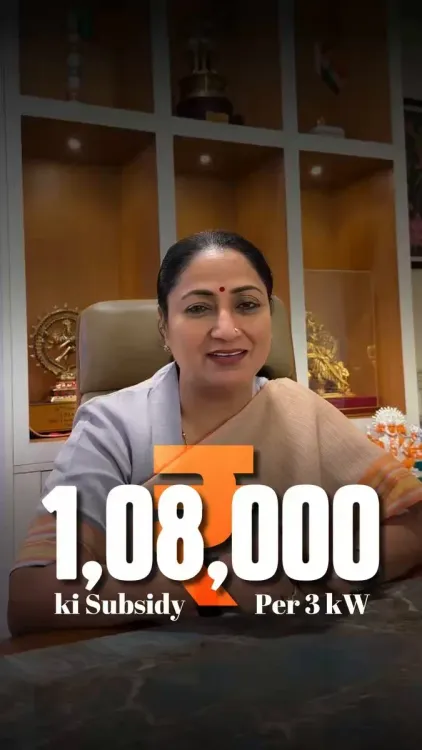
The scheme offers financial assistance of up to ₹1.08 lakh per household for residential rooftop solar panel installation.
The PM Surya Ghar Muft Bijli Yojana was launched by the central government in February 2024 under Prime Minister Narendra Modi .
The outreach is part of India's push to scale rooftop solar capacity toward its 2030 renewable energy targets.
Key beneficiaries include Delhi households seeking lower electricity bills and local solar installers who gain increased demand.
The Delhi government is expected to track and report on subsidy applications and completed installations in coming months.
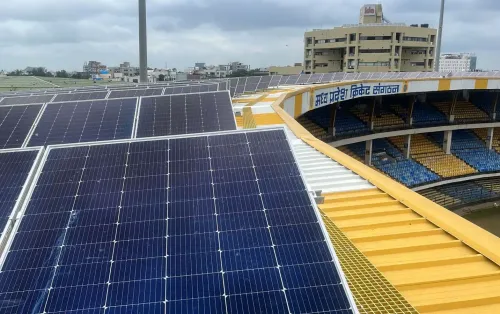
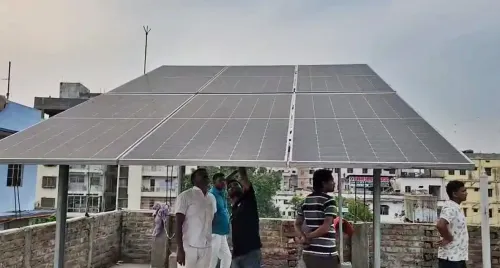
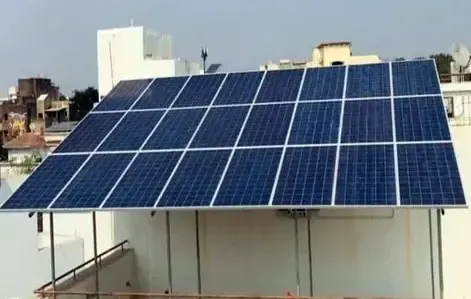
Delhi Chief Minister Rekha Gupta on Tuesday, June 16, 2026, called on Delhi residents to install rooftop solar panels under the PM Surya Ghar Yojana, urging families to apply for central government subsidies of up to ₹1.08 lakh to reduce electricity bills and support cleaner energy in the capital.
Context
In her post on X, Chief Minister Rekha Gupta wrote: 'Your rooftop can power your home, reduce your electricity bills and help build a cleaner Delhi.' She credited the scheme to the vision of Prime Minister Narendra Modi and directed Delhi families to apply immediately. The message was accompanied by a video and tagged under #ViksitDelhi — a hashtag aligned with the broader 'Viksit Bharat' (Developed India) campaign.
Policy Backdrop
The PM Surya Ghar Muft Bijli Yojana was launched by the central government in February 2024 as a flagship residential rooftop solar initiative. It offers financial assistance to households for installing solar panels, aiming to reduce dependence on grid electricity and cut carbon emissions. The scheme is part of India's broader push to scale renewable energy capacity ahead of its 2030 clean energy targets.
Delhi, as a dense urban territory with a large number of residential rooftops, is considered a significant potential contributor to rooftop solar capacity. CM Gupta's public outreach represents state-level amplification of a centrally funded programme — a pattern seen across multiple BJP-governed states since the scheme's national launch.
Stakeholders and Impact
Delhi households stand to benefit directly through reduced electricity costs and the one-time capital subsidy for installation. The scheme also creates downstream demand for solar installers and equipment suppliers operating in and around the capital. For the Delhi government, promoting the scheme aligns state energy policy with central government priorities under the BJP's governance agenda.
Urban rooftop solar adoption has historically faced barriers including building society approvals, technical capacity, and awareness gaps. Chief Minister Gupta's direct appeal is aimed at closing the awareness gap and driving application numbers for Delhi families who may not yet have explored the subsidy window.
What's Next
The immediate measure of success will be the volume of subsidy applications filed by Delhi residents in the weeks following this outreach push. The Delhi government is expected to report on applications processed and actual rooftop installations completed under the scheme. Analysts watching the capital's energy transition will look for data on how many households convert from application to installation, and what share of Delhi's residential rooftop potential is ultimately activated under the programme.
Point of View
Gupta positions the Delhi government as an active delivery partner rather than a passive recipient of central policy. This is politically significant in Delhi, where the BJP has sought to consolidate its governance credentials after returning to power in the capital. The broader pattern — state leaders amplifying central schemes on social media — reflects a coordinated communication architecture that blurs the line between policy delivery and political messaging.
NationPress
15 Sept 2026
Frequently Asked Questions
What is PM Surya Ghar Yojana and how can Delhi residents apply?
PM Surya Ghar Muft Bijli Yojana is a central government scheme launched in February 2024 that provides subsidies for residential rooftop solar installations. Delhi residents can apply through the scheme's official portal to avail subsidies of up to ₹1.08 lakh, as promoted by Chief Minister Rekha Gupta.
How much subsidy is available under PM Surya Ghar Yojana in Delhi?
The scheme offers subsidies of up to ₹1.08 lakh for eligible Delhi households installing rooftop solar panels, according to Chief Minister Rekha Gupta's June 2026 announcement.
Who launched the PM Surya Ghar Muft Bijli Yojana?
The scheme was launched by the central government under Prime Minister Narendra Modi in February 2024 to promote residential rooftop solar adoption across India.
What is the benefit of rooftop solar installation for Delhi households?
Rooftop solar installations can reduce household electricity bills, provide energy independence, and contribute to Delhi's clean energy goals, while the PM Surya Ghar Yojana subsidy lowers the upfront cost of installation.
Why is Delhi CM Rekha Gupta promoting the PM Surya Ghar Yojana?
As Chief Minister, Rekha Gupta is amplifying the central government's scheme at the state level to increase awareness and drive applications among Delhi residents, in line with the BJP government's renewable energy and 'Viksit Delhi' agenda.