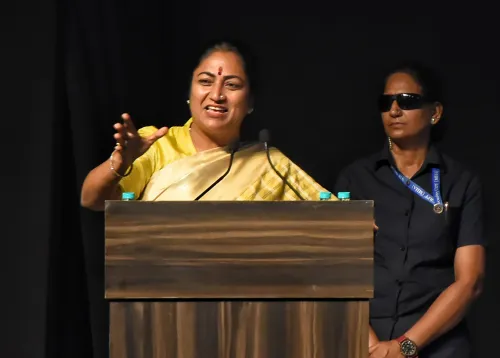
CM Rekha Gupta Inaugurates 500 kW Solar Plant in Dwarka
Synopsis
Delhi Chief Minister Rekha Gupta inaugurated a 500 kW solar power plant at the Air Force and Naval Officers Enclave in Dwarka on 4 July 2026, spotlighting PM Surya Ghar Yojana benefits of over Rs 1 lakh for eligible Delhi families adopting rooftop solar.
Key Takeaways
Delhi CM Rekha Gupta inaugurated a 500 kW solar power plant at the Air Force and Naval Officers Enclave, Dwarka on 4 July 2026 .
Under the PM Surya Ghar Muft Bijli Yojana , eligible Delhi families can receive benefits of more than Rs 1 lakh by installing rooftop solar panels.
The central scheme targets one crore household rooftop solar installations nationwide.
MP Ramvir Singh Bidhuri , MLA Kuldeep Solanki , and former MLA Dharam Dev Solanki were present at the inauguration.
India aims for 500 GW of non-fossil fuel capacity by 2030 and net-zero emissions by 2070 , with rooftop solar a key pillar.
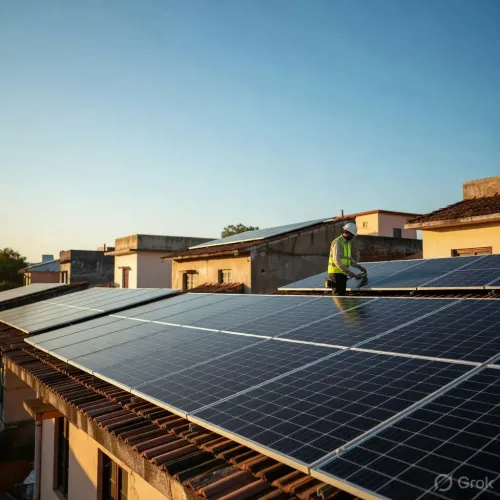
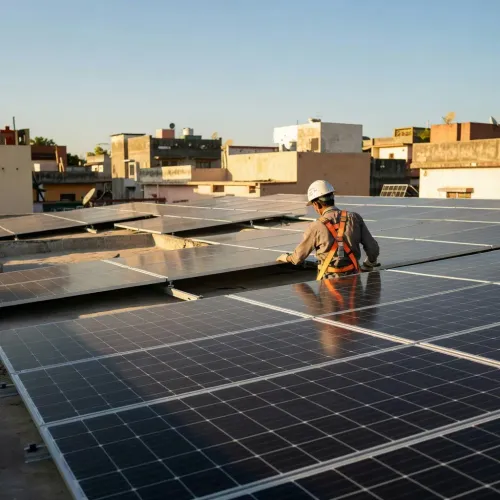
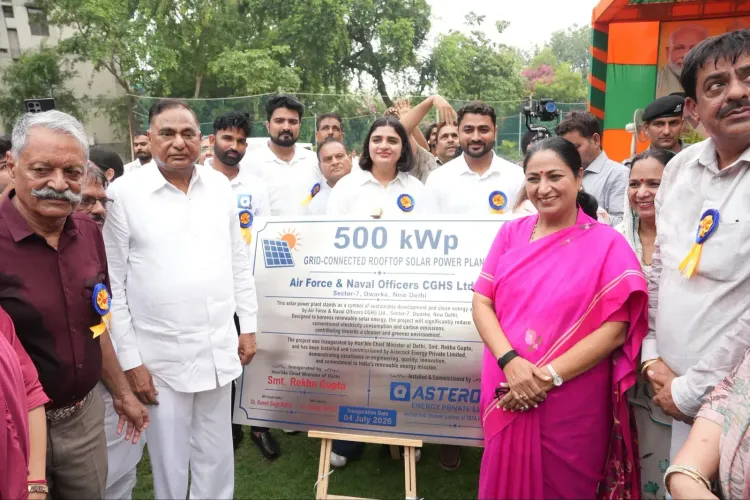
Delhi Chief Minister Rekha Gupta on Saturday, 4 July 2026, inaugurated a 500-kilowatt solar power plant at the Air Force and Naval Officers Enclave in Dwarka, southwest Delhi, marking a significant step in the capital's push toward distributed clean energy in residential and community complexes.
Context
Addressing the gathering, CM Gupta said it was heartening to see residential colonies and community campuses embracing solar energy and moving toward a 'swachh, kifayati aur aatmanirbhar bhavishya' [clean, affordable and self-reliant future]. She underlined that this transformation was as important for the environment as it was for future generations.
The inauguration took place in the presence of South Delhi MP Ramvir Singh Bidhuri, MLA Kuldeep Solanki, and former MLA Dharam Dev Solanki, alongside other dignitaries.
Policy Backdrop
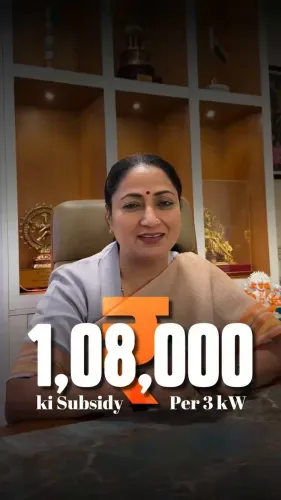
The Chief Minister highlighted the PM Surya Ghar Muft Bijli Yojana, launched by Prime Minister Narendra Modi, under which eligible Delhi families can receive benefits of more than Rs 1 lakh by installing rooftop solar panels on their homes.
The scheme, announced in the 2024 Union Budget, targets subsidising rooftop solar installations across one crore households nationwide. It forms part of India's broader National Solar Mission, which dates to 2010, and the country's commitment to achieving 500 GW of non-fossil fuel capacity by 2030 and net-zero emissions by 2070.
Stakeholders and Impact
The Air Force and Naval Officers Enclave in Dwarka is home to serving and retired personnel from the Indian Air Force and Navy, making it one of several defence housing complexes increasingly being brought under India's rooftop solar drive. Dwarka, a planned sub-city in southwest Delhi, hosts numerous group housing societies that represent a substantial potential base for distributed solar generation.
Urban housing complexes, including those catering to government and defence personnel, have become focal points of such installations as civic bodies and state governments align their sustainability drives with central subsidy frameworks. Residents of eligible complexes stand to benefit both through reduced electricity bills and direct financial support under the central scheme.
What's Next
The inauguration signals that Delhi is actively integrating central solar subsidy programmes into its residential infrastructure, with defence and institutional enclaves serving as early adopters. Observers will watch for progress reports on the capital's overall rooftop solar installation tally under the PM Surya Ghar scheme and any state-level policy announcements that complement the central subsidy framework. Wider adoption across Delhi's group housing societies could meaningfully accelerate the city's clean energy transition and reduce dependence on grid power.
Point of View
And their adoption of rooftop solar sends a signal to neighbouring group housing societies in Dwarka. By anchoring the event to the PM Surya Ghar Yojana's Rs 1 lakh benefit, CM Gupta is essentially acting as a local amplifier of a central scheme, a pattern common among BJP-governed states seeking to build electoral credit from Union government programmes. The move also fits a broader urban governance trend where institutional and defence campuses serve as demonstration sites before mass residential rollout. Whether Delhi's administrative machinery follows through with streamlined subsidy processing will determine whether this inauguration translates into measurable rooftop solar uptake across the capital.
NationPress
3 Oct 2026
Frequently Asked Questions
What is the PM Surya Ghar Muft Bijli Yojana and how can Delhi residents benefit?
The PM Surya Ghar Muft Bijli Yojana is a central government scheme that subsidises rooftop solar installations for households. Eligible Delhi families can receive financial benefits of more than Rs 1 lakh by installing rooftop solar panels under this programme.
Where was the 500 kW solar plant inaugurated by CM Rekha Gupta?
The 500-kilowatt solar power plant was inaugurated at the Air Force and Naval Officers Enclave in Dwarka, southwest Delhi, on 4 July 2026.
Who attended the solar plant inauguration in Dwarka with CM Rekha Gupta?
South Delhi MP Ramvir Singh Bidhuri, MLA Kuldeep Solanki, and former MLA Dharam Dev Solanki were among the dignitaries present at the inauguration.
What is India's solar energy target by 2030?
India aims to achieve 500 GW of non-fossil fuel energy capacity by 2030 and net-zero emissions by 2070, with rooftop solar a key component of this strategy.
How does the PM Surya Ghar scheme relate to India's National Solar Mission?
The PM Surya Ghar Muft Bijli Yojana, announced in the 2024 Union Budget, builds on India's National Solar Mission launched in 2010, extending subsidised rooftop solar to one crore households to accelerate the country's clean energy transition.