Rajasthan CM: 3 Lakh Solar Plants Installed Under PM Surya Ghar
Synopsis
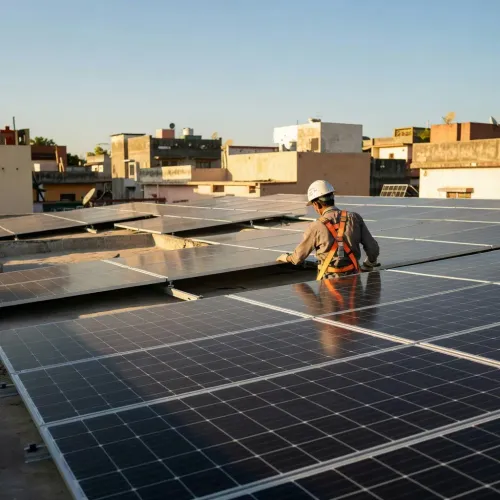
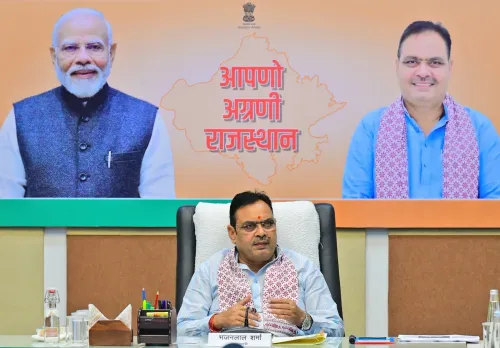
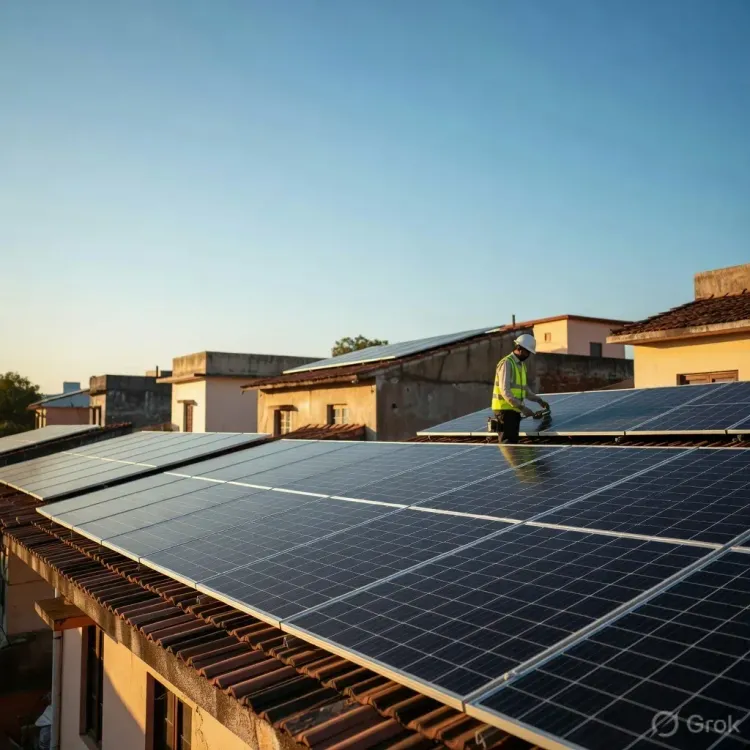
The Chief Minister's Office of Rajasthan announced that nearly three lakh rooftop solar plants have been installed under PM Surya Ghar Muft Bijli Yojana, highlighting the state's progress under CM Bhajanlal Sharma in India's household solar push.
Key Takeaways
The Chief Minister's Office of Rajasthan announced nearly three lakh rooftop solar installations completed under the PM Surya Ghar Muft Bijli Yojana as of August 19, 2026 .
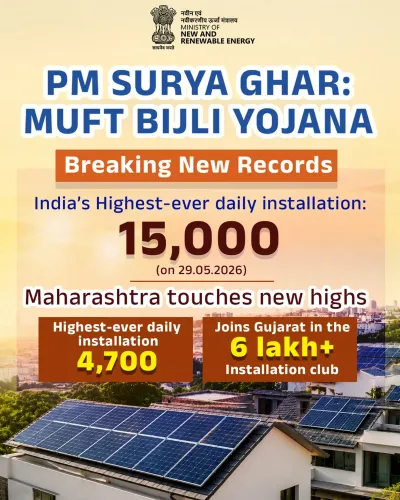
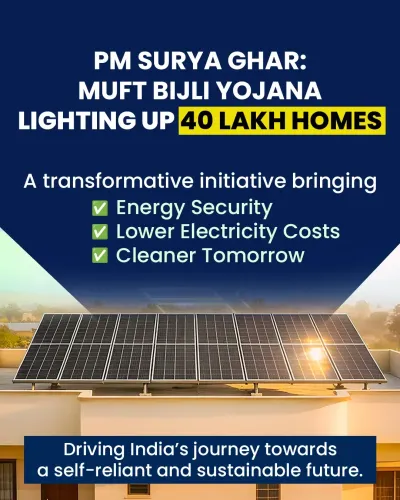
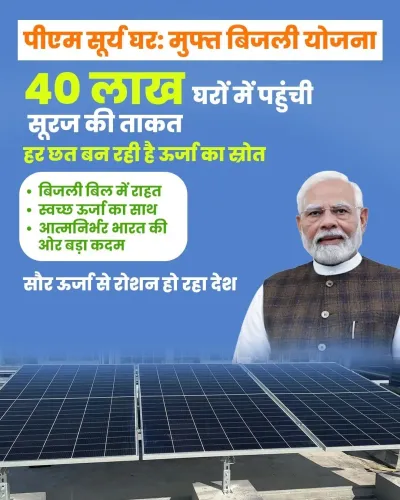
The PM Surya Ghar Muft Bijli Yojana was launched in February 2024 and offers subsidised installations generating up to 300 units of free electricity per month per household.
Rajasthan 's high solar irradiance and desert geography make it one of India's strongest states for solar deployment.
The announcement was tagged to Chief Minister Bhajanlal Sharma , who has led Rajasthan since December 2023 .
India targets 500 GW of non-fossil fuel capacity by 2030 ; rooftop solar is a key pillar of that goal.
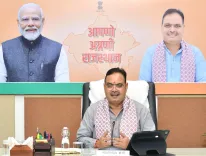
Three lakh rooftop solar plants — and counting. The Chief Minister's Office of Rajasthan announced on Wednesday, August 19, 2026, that nearly three lakh installations have been completed in the state under the PM Surya Ghar Muft Bijli Yojana, tagging Chief Minister Bhajanlal Sharma in the post under the hashtag #आपणो_अग्रणी_राजस्थान ('Our Pioneering Rajasthan').
What the PM Surya Ghar Scheme Promises Households
Launched in February 2024 by the Central Government, the PM Surya Ghar Muft Bijli Yojana offers subsidised rooftop solar installations that can generate up to 300 units of free electricity per month for enrolled households. The scheme built on the earlier Rooftop Solar Programme Phase II, but with a sharper focus on direct household benefit — not just grid capacity. For a family in Rajasthan, where summer power bills can be punishing, that monthly credit is tangible relief.
Why Rajasthan Is a Natural Fit for This Push
Rajasthan's Thar Desert geography gives it some of the highest solar irradiance levels in India — a structural advantage that has made the state a consistent heavyweight in national renewable capacity. The state has historically contributed a disproportionately large share of grid-connected solar projects, and supportive state-level policies have reinforced that edge. Three lakh rooftop plants adds a distributed, household-level layer to what has largely been utility-scale solar dominance.
Rajasthan's Role in India's 500 GW Clean Energy Race
The Central Government has set a target of 500 GW of non-fossil fuel capacity by 2030, and rooftop solar is a critical piece of that puzzle — one that grid-scale farms alone cannot solve. Every household installation reduces strain on distribution infrastructure, cuts transmission losses, and embeds energy security at the most local level possible. Rajasthan's reported milestone, if sustained, positions the state as a model for how high-irradiance states can accelerate the Centre's clean energy arithmetic.
The Central Government publishes monthly dashboards tracking national installation targets; those figures will be the next checkpoint for how this state-level momentum compares to the all-India pace.
Point of View
Which carries stronger political resonance at the voter level. The tagging of CM Bhajanlal Sharma personalises the achievement, tying his administration's brand to a welfare-coded energy programme. Whether the pace of installations holds will depend on subsidy disbursement speed and the capacity of local solar installers — the two chokepoints that have historically slowed rooftop schemes nationwide.
NationPress
3 Oct 2026
Frequently Asked Questions
What is PM Surya Ghar Muft Bijli Yojana?
PM Surya Ghar Muft Bijli Yojana is a Central Government scheme launched in February 2024 that provides subsidised rooftop solar installations to households, enabling them to generate up to 300 units of free electricity per month.
How many solar plants have been installed in Rajasthan under PM Surya Ghar?
According to the Chief Minister's Office of Rajasthan, nearly three lakh rooftop solar plants have been installed in the state under the PM Surya Ghar Muft Bijli Yojana as of August 2026.
Who is the Chief Minister of Rajasthan in 2026?
Bhajanlal Sharma of the BJP has been the Chief Minister of Rajasthan since December 2023.
Why is Rajasthan important for solar energy in India?
Rajasthan has some of the highest solar irradiance levels in India due to its Thar Desert geography, making it one of the country's top states for both utility-scale and rooftop solar deployment.
What is India's solar energy target by 2030?
India has set a target of 500 GW of non-fossil fuel energy capacity by 2030, with rooftop solar under schemes like PM Surya Ghar playing a key role in reaching that goal.