CM Bhajan Lal Highlights PM Surya Ghar Solar Scheme Gains
Synopsis
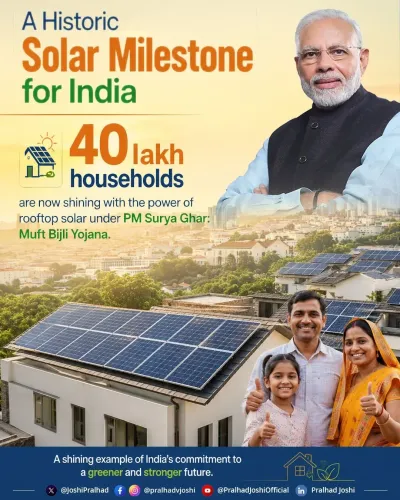
Rajasthan CM Bhajan Lal Sharma on 29 May 2026 announced that over 2 lakh Rajasthan families and 40 lakh households nationwide have enrolled in PM Surya Ghar Muft Bijli Yojana, underscoring the state's push for energy self-reliance and its standing among India's top five solar states.
Key Takeaways
Over 2 lakh households in Rajasthan have enrolled in the PM Surya Ghar Muft Bijli Yojana, according to CM Bhajan Lal Sharma.
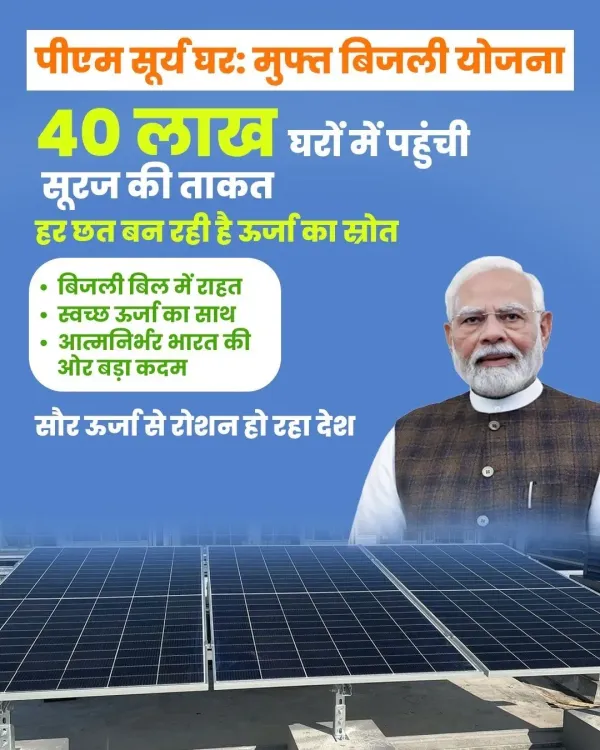
Nationally, more than 40 lakh families are participating in the central rooftop solar scheme.
The scheme was launched in 2024 with a target of rooftop solar installations on one crore homes , offering up to 300 units of free electricity per month .
Rajasthan is ranked among the top five solar-energy-rich states in India, aided by high solar irradiance and state-level incentives.
The initiative is designed to reduce household electricity bills, advance energy self-reliance, and support India's 500 GW non-fossil fuel target by 2030 .
The scheme channels subsidies through state DISCOMs , making them central to its implementation and grid-integration challenges.
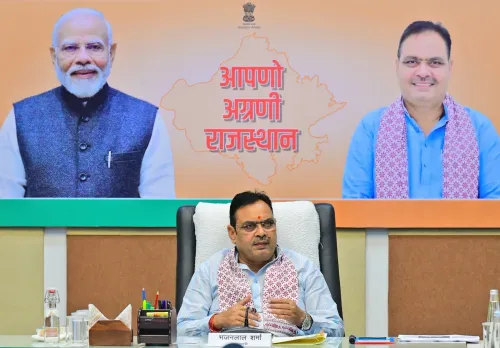
Rajasthan Chief Minister Bhajan Lal Sharma on Friday, 29 May 2026 highlighted the growing reach of the PM Surya Ghar Muft Bijli Yojana, stating that more than 2 lakh households in Rajasthan and over 40 lakh families nationwide have enrolled in the central rooftop solar scheme. Sharma credited the scheme's momentum to the 'visionary leadership' of Prime Minister Narendra Modi and reaffirmed the state government's commitment to making Rajasthan a leader in renewable energy.
Context
Posting in Hindi on X, CM Sharma wrote: 'PM Surya Ghar Muft Bijli Yojana deश में स्वच्छ ऊर्जा को बढ़ावा देने तथा ऊर्जा आत्मनिर्भरता के लक्ष्य को साकार करने की दिशा में महत्वपूर्ण भूमिका निभा रही है' — ('The PM Surya Ghar Muft Bijli Yojana is playing an important role in promoting clean energy in the country and realising the goal of energy self-reliance'). He noted that participation is reducing household electricity bills while simultaneously strengthening energy self-reliance and environmental conservation.
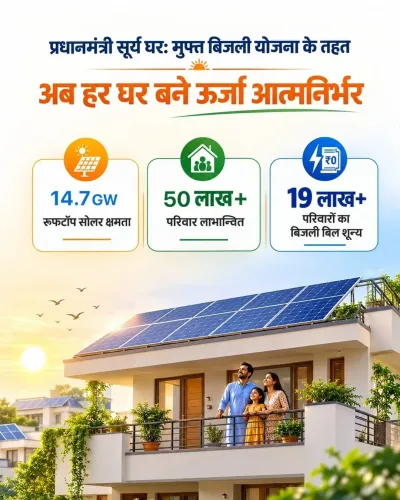
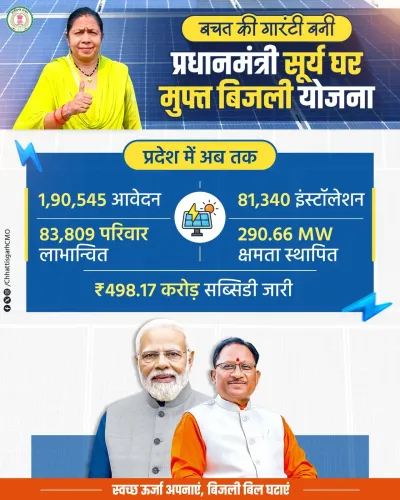
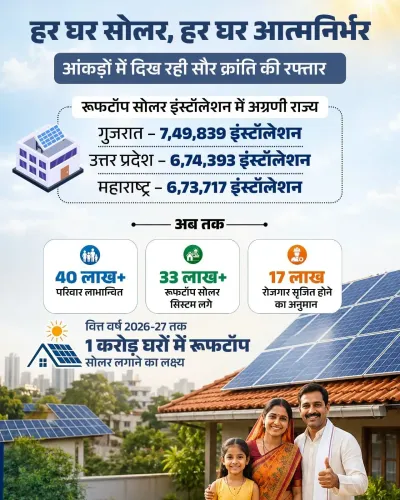
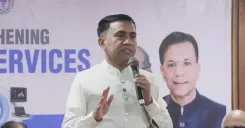
The post was accompanied by two images and tagged with the campaign hashtag #40LakhsPMSuryaGhar, reflecting a coordinated push by the ruling BJP to publicise the scheme's national milestones.
Policy Backdrop
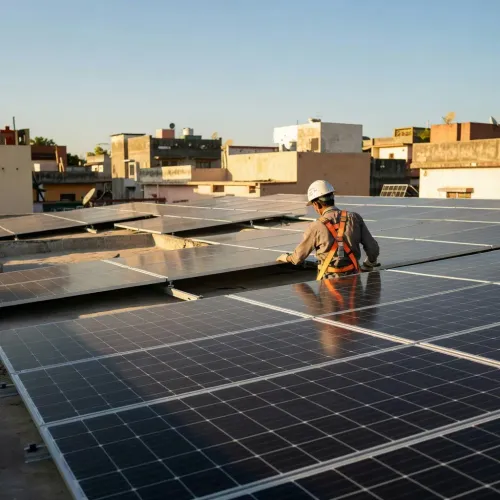
The PM Surya Ghar Muft Bijli Yojana was launched by the Modi government in 2024 with an ambitious target of installing rooftop solar panels on one crore homes across India, offering beneficiaries up to 300 units of free electricity per month. The scheme channels central subsidies through state governments and power distribution companies, making it a distributed-generation counterpart to large utility-scale solar parks.
Rajasthan's solar credentials are well established. The state consistently ranks among the top five solar-energy-rich states in India, a position Sharma attributed on Friday to 'far-sighted policies and dedication to sustainable development.' The state benefits from some of the highest solar irradiance levels in the country, making rooftop installations particularly productive.
This scheme builds on the lineage of India's National Solar Mission, initiated in 2010, which created the policy and institutional framework that later enabled state-level capacity addition at scale. Successive expansions of that mission set progressively higher targets, culminating in schemes like PM Surya Ghar that target individual households rather than only industrial or utility consumers.
Stakeholders and Impact
The primary beneficiaries are residential households, particularly those in states with high solar irradiance where the payback period on rooftop systems is shorter. For enrolled families, the scheme directly reduces monthly electricity expenditure — a significant relief given rising power tariffs in several states.
State power distribution companies (DISCOMs) are key intermediaries: they process applications, oversee installations, and manage net-metering arrangements. Wider rooftop adoption can ease peak-demand pressure on the grid, though it also requires DISCOMs to upgrade infrastructure to handle two-way power flows.
From an environmental standpoint, large-scale rooftop solar uptake contributes to India's climate commitments under the Paris Agreement, including its target of achieving 500 GW of non-fossil fuel capacity by 2030. Every household that installs panels reduces dependence on coal-based grid power.
What's Next
Attention will now turn to state-wise progress reports on actual connections completed and subsidy disbursements under the scheme, as these metrics will determine whether the national one-crore-household target remains on track. Any additional solar incentives announced in the upcoming Rajasthan state budget could further accelerate uptake.
As Rajasthan positions itself as a renewable energy leader, the state's ability to resolve DISCOM financial constraints and grid-integration challenges will be critical to sustaining the momentum that CM Sharma highlighted on Friday.
Point of View
Even as the harder question of whether installations are fully commissioned and metered remains unanswered. Framing the uptake as 'energy self-reliance' — urja aatmanirbharta — deliberately echoes the broader Aatmanirbhar Bharat vocabulary, tying a state-level update to the Centre's overarching economic sovereignty narrative. The post also quietly stakes Rajasthan's claim as a model state for solar policy at a time when inter-state competition for renewable investment is intensifying.
NationPress
16 Oct 2026
Frequently Asked Questions
What is PM Surya Ghar Muft Bijli Yojana?
PM Surya Ghar Muft Bijli Yojana is a central government scheme launched in 2024 that provides rooftop solar installations to households, offering up to 300 units of free electricity per month and targeting one crore homes across India.
How many families in Rajasthan have joined PM Surya Ghar scheme?
According to CM Bhajan Lal Sharma's post on 29 May 2026, more than 2 lakh households in Rajasthan have enrolled in the PM Surya Ghar Muft Bijli Yojana.
Is Rajasthan a top state for solar energy in India?
Yes, Rajasthan is consistently ranked among the top five solar-energy-rich states in India, benefiting from high solar irradiance levels and state policies supporting renewable energy development.
What is the national enrollment figure for PM Surya Ghar Muft Bijli Yojana?
CM Sharma stated on 29 May 2026 that over 40 lakh families across India have joined the PM Surya Ghar Muft Bijli Yojana as part of the country's energy self-reliance campaign.
How does PM Surya Ghar scheme help reduce electricity bills?
The scheme installs rooftop solar panels on enrolled households and provides up to 300 units of free electricity per month through net-metering arrangements managed by state power distribution companies, directly reducing monthly power costs.