CM Dhami to Set Up India's First Agniveer Employment Cell
Synopsis
Uttarakhand CM Pushkar Singh Dhami announced India's first Agniveer Employment Cell on July 17, 2026, to coordinate civilian jobs, skill development, and counselling for ex-Agniveers across police, disaster management, forest, and private sectors — building on the state's existing 10% horizontal reservation for Agniveers.
Key Takeaways
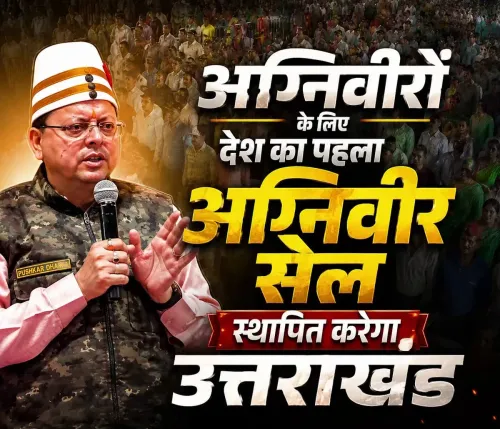
Uttarakhand will establish the country's first Agniveer Employment Cell , announced by CM Pushkar Singh Dhami on July 17, 2026 .
The cell will coordinate job opportunities across the Police , Disaster Management , Forest Department , and private-sector employers.
It will also provide skill development and career counselling to ex-Agniveers leveraging their military training and discipline.
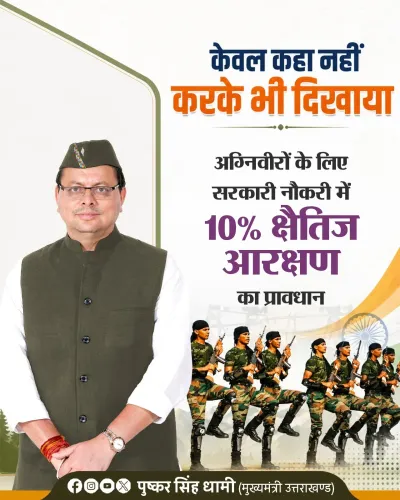
Uttarakhand had already introduced a 10 per cent horizontal reservation in state government services for Agniveers prior to this announcement.
The initiative is positioned as a potential national model for other high-recruitment states dealing with Agniveer post-service welfare.
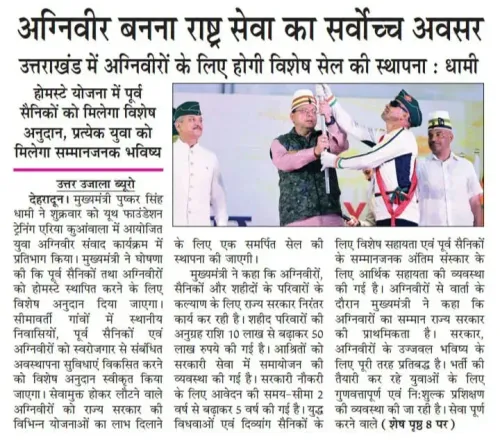
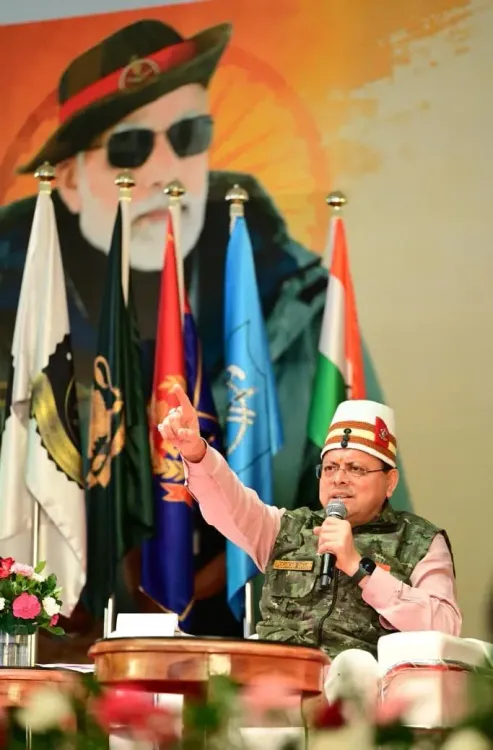
Uttarakhand Chief Minister Pushkar Singh Dhami announced on Friday, July 17, 2026, that his government will establish the country's first dedicated 'Agniveer Employment Cell' — a specialised body aimed at channelling the skills, discipline, and experience of ex-Agniveers into civilian employment across government and private sectors in the state.
Context
Posting in Hindi on X, CM Dhami stated: 'देश का पहला अग्निवीर रोजगार सेल स्थापित करेगा उत्तराखंड' ('Uttarakhand will establish the country's first Agniveer Employment Cell'). He framed the move as an expression of the state's highest priority — honouring soldiers dedicated to national defence on Uttarakhand's soil, which he called Veerbhoomi (Land of the Brave). The announcement was tagged to Prime Minister Narendra Modi, Home Minister Amit Shah, and Defence Minister Rajnath Singh, signalling federal-level coordination.
Policy Backdrop
Uttarakhand had already implemented a 10 per cent horizontal reservation in state government services for Agniveers — a policy Dhami cited as the foundation on which this new cell will build. The Agnipath scheme, launched by the Union government in 2022, recruits youth aged 17.5 to 21 years into the armed forces for a four-year tenure, after which roughly 75 per cent exit as Agniveers without a permanent service guarantee. Their post-service rehabilitation has been a sustained policy concern across states. Uttarakhand, which has one of the highest per-capita military recruitment rates in India, has a particularly direct stake in ensuring these veterans find structured pathways into civilian life.
Stakeholders and Impact
According to the announcement, the Agniveer Employment Cell will coordinate opportunities across the Police, Disaster Management, and Forest Department, as well as various private-sector employers. The cell will also provide career counselling and skill-development guidance tailored to the competencies Agniveers acquire during their military service. For Uttarakhand, a hill state where military service is deeply embedded in local culture and family livelihoods, the initiative directly addresses the economic anxiety of families whose sons complete the four-year tenure without a pension or guaranteed re-employment.
What's Next
No operational timeline or budgetary outlay for the cell was specified in the announcement. The government is expected to formalise the institutional structure — including nodal officers, a digital portal for job-matching, and private-sector partnerships — in the coming weeks. If the model proves effective, it could serve as a template for other states with high Agniveer recruitment, particularly Himachal Pradesh, Rajasthan, and Punjab. The move also arrives at a politically significant moment, with the Agnipath scheme remaining a contested topic nationally, and state-level welfare measures increasingly shaping how the policy is perceived on the ground.
Point of View
A state with deep military roots, as a proactive implementer of the Centre's Agnipath vision at a time when the scheme continues to face national criticism. By tagging the Prime Minister, Home Minister, and Defence Minister, Dhami is also publicly aligning the state's initiative with the Union government's defence-reform agenda, reinforcing BJP's narrative of soldier welfare. The 'first in the country' framing is a clear signal to other BJP-governed states and to the electorate in a state where military families form a decisive vote bloc. Whether the cell translates into measurable employment outcomes will determine if this becomes a replicable model or remains a well-intentioned institutional announcement.
NationPress
16 Oct 2026
Frequently Asked Questions
What is the Agniveer Employment Cell announced by Uttarakhand?
The Agniveer Employment Cell is a first-of-its-kind body announced by Uttarakhand CM Pushkar Singh Dhami that will coordinate civilian employment opportunities, skill development, and career counselling for ex-Agniveers in sectors including police, disaster management, forests, and private industry.
Which state is setting up India's first Agniveer Employment Cell?
Uttarakhand is setting up India's first Agniveer Employment Cell, as announced by Chief Minister Pushkar Singh Dhami on July 17, 2026 .
What reservation does Uttarakhand already provide for Agniveers?
Uttarakhand had already implemented a 10 per cent horizontal reservation in state government services for Agniveers before the Employment Cell announcement.
What is the Agnipath scheme and why does Agniveer welfare matter?
The Agnipath scheme , launched by the Union government in 2022 , recruits youth for a four-year military tenure . Around 75 per cent exit as Agniveers without permanent service or pension, making post-service rehabilitation a critical policy concern, especially in high-recruitment states like Uttarakhand .
What sectors will the Uttarakhand Agniveer Employment Cell cover?
The cell will connect Agniveers with opportunities in the Police , Disaster Management , Forest Department , and various other government and private-sector employers, alongside providing skill development and counselling support.