Modi tells Putin at SCO: Move from endless war to end of war
Synopsis
At the SCO Summit in Bishkek, PM Modi delivered his most pointed public appeal yet to Putin — invoking Gandhi and Buddha to urge a shift from 'endless war' to peace in Ukraine. With the BRICS Summit in Delhi weeks away and trade ties quietly strengthening, India is walking a delicate diplomatic line between global pressure and strategic partnership.
Key Takeaways
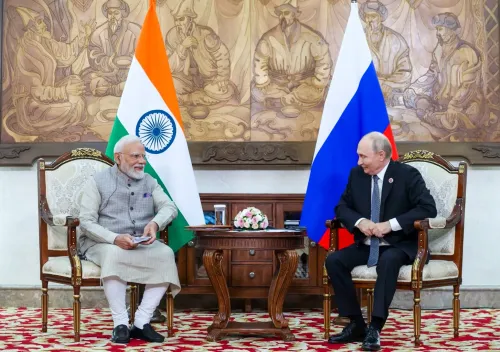
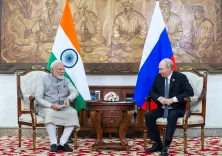
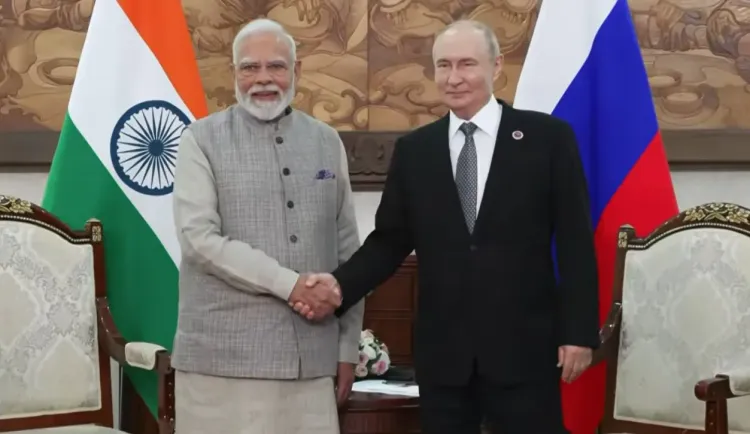
PM Modi met President Putin bilaterally on the sidelines of the SCO Summit in Bishkek on 31 August .
Modi called on the world to move from an 'endless war' to an 'end to the war' in Ukraine , reiterating India's support for peace efforts.
Modi invited Putin to the BRICS Summit in Delhi , expected next month, calling it an opportunity to strengthen bilateral ties.
Jaishankar had visited Moscow on 24 August , handing Putin a personal message from Modi ahead of the SCO meeting.
Russia-India bilateral trade has grown this year, according to Putin, who credited Modi's personal engagement.
The 27th IRIGC-TEC session co-chaired by Jaishankar and Denis Manturov covered energy, fertilisers, nuclear cooperation, and high-tech sectors.
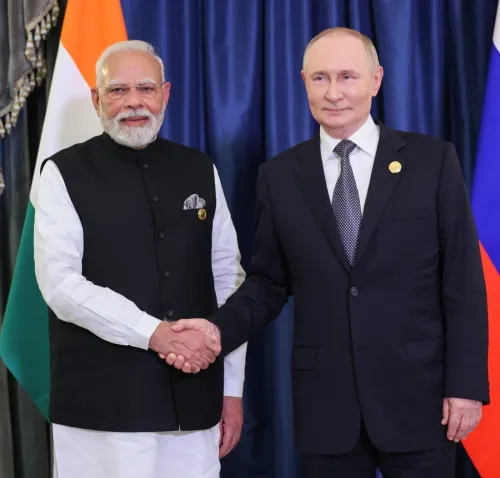
Prime Minister Narendra Modi on Monday, 31 August met Russian President Vladimir Putin on the sidelines of the Shanghai Cooperation Organisation (SCO) Summit in Bishkek, calling on both nations and the world to move decisively from conflict to peace in Ukraine. Reiterating India's consistent position, Modi said it is essential for the well-being of humanity to end the ongoing war rather than allow it to drag on indefinitely.
Modi's Core Message on Ukraine
In his opening remarks at the bilateral meeting, Prime Minister Modi said: 'As you know, India supports all efforts towards peace and will continue to do so. Every day spent in war pushes humanity backwards, while every step taken towards peace fills humanity with a new hope and enthusiasm. We must move from an endless war towards an end to the war. This is essential for the well-being of humanity.'
Describing it as a 'call of humanity', Modi stressed that India's longstanding position is that all disputes must be resolved through dialogue, peacefully and at the earliest. He invoked the legacies of Mahatma Gandhi and the Buddha, saying: 'The land of Gandhi and the land of Buddha has one message: to follow the path of peace.'
BRICS Summit Invitation and Bilateral Ties
Modi also extended a formal invitation to Putin to attend the upcoming BRICS Summit in Delhi, expected next month. 'All Indians are very eager to welcome you and your delegation to India. Your visit will further strengthen our bilateral relations and also enhance dialogue and cooperation within BRICS,' Modi said.
Putin, in turn, acknowledged the strength of the Russia-India partnership, noting that bilateral trade turnover has grown this year after a slight dip the previous year. He credited Modi's personal attention to the relationship as a key driver. 'I'm pleased to note that our trade turnover has increased this year... this is partly, and perhaps primarily, thanks to Prime Minister Modi, who is devoting his personal attention to developing Russian-Indian relations,' Putin said.
Jaishankar's Moscow Visit Sets the Stage
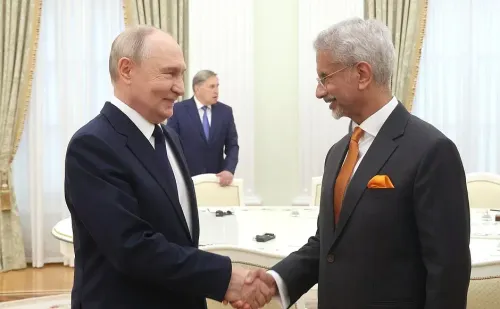
The Bishkek meeting was preceded by a visit to Moscow by External Affairs Minister S. Jaishankar on 24 August, during which he called on Putin and handed over a personal message from Prime Minister Modi. Jaishankar confirmed the visit in a post on X, writing: 'Pleased to call on President Vladimir Putin of Russia in Moscow today. Handed over a personal message from Prime Minister Narendra Modi.'
According to a statement released by the Kremlin, Putin said Jaishankar's visit underscored the depth of ties between the two countries, built over decades. Putin also indicated he anticipated meeting Modi at the SCO Summit, which has now taken place.
IRIGC-TEC Session and Economic Cooperation
Ahead of the bilateral, Jaishankar co-chaired the 27th Session of the India-Russia Inter-Governmental Commission on Trade, Economic, Scientific, Technological and Cultural Cooperation (IRIGC-TEC) alongside Russia's First Deputy Prime Minister Denis Manturov. The session covered energy, fertiliser supplies, nuclear energy cooperation, and high-technology sectors.
Putin noted that Russia is actively working to increase fertiliser supplies to India to support Indian farmers and agriculture. 'We are doing everything to address this issue for Indian farmers, for agriculture; we are increasing these supplies and are ready to do so further,' he said. Jaishankar described the bilateral economic partnership as 'strong and robust', and said he had a 'very good report' to share on economic cooperation, nuclear energy, and fertilisers.
What This Signals
Modi's remarks at Bishkek represent India's most direct public appeal to Putin for an end to the Ukraine conflict in recent months. This comes amid sustained international pressure on New Delhi to take a firmer stance, and ahead of a high-profile BRICS Summit that will place India at the centre of global diplomatic attention. With the BRICS gathering weeks away, the Modi-Putin bilateral at the SCO is widely seen as a preparatory diplomatic reset.
Point of View
Yet absent any direct attribution of blame or demand for a ceasefire mechanism. India continues to resist Western pressure for a harder line while preserving its strategic and economic equities with Moscow. The timing matters: with BRICS in Delhi weeks away, New Delhi needs Putin at the table without being seen as endorsing the war. The Gandhi-Buddha invocation is a rhetorical device India has used before, but repetition risks it being read as moral cover rather than genuine mediation. The real test is whether India moves from messaging to mechanism — offering a concrete peace framework rather than principled abstention.
NationPress
31 Aug 2026
Frequently Asked Questions
What did PM Modi say to Putin at the SCO Summit in Bishkek?
PM Modi told Putin on 31 August at the SCO Summit in Bishkek that it is essential for humanity to move from an 'endless war' to an 'end to the war' in Ukraine. He reiterated India's support for all peace efforts and invoked the legacies of Gandhi and Buddha in calling for a peaceful resolution.
Where did the Modi-Putin bilateral meeting take place?
The meeting took place in Bishkek, the capital of Kyrgyzstan, on the sidelines of the Shanghai Cooperation Organisation (SCO) Summit on 31 August. It was a bilateral meeting separate from the main SCO proceedings.
Why did EAM Jaishankar visit Moscow before the SCO Summit?
External Affairs Minister S. Jaishankar visited Moscow on 24 August and handed over a personal message from PM Modi to President Putin. He also co-chaired the 27th IRIGC-TEC session with Russia's First Deputy Prime Minister Denis Manturov, covering trade, energy, fertilisers, and nuclear cooperation.
Did Modi invite Putin to the BRICS Summit?
Yes, PM Modi formally invited Putin to the upcoming BRICS Summit in Delhi, expected next month. Modi said all Indians are eager to welcome Putin and his delegation, and that the visit would strengthen bilateral relations and BRICS dialogue.
What is India's official position on the Ukraine conflict?
India's official position is that all disputes must be resolved peacefully and through dialogue at the earliest. New Delhi has consistently supported peace efforts without assigning blame to either side, and has maintained economic and diplomatic ties with Russia throughout the conflict.