India's GDP grows 7.8% in Q1 FY27, MoSPI cites reforms and consumption
Synopsis
India's economy expanded 7.8% in Q1 FY27, beating cautious forecasts despite global uncertainty. MoSPI Secretary Dr Saurabh Garg credited GST-driven data improvements, household spending, and corporate investment — signalling that India's multi-year growth streak is structural, not cyclical.
Key Takeaways
India's real GDP growth stood at 7.8 per cent in Q1 FY 2026-27 , according to MoSPI .
MoSPI Secretary Dr Saurabh Garg credited GST reforms , household consumption, and corporate and government investment for the performance.
India has sustained growth momentum above 7 per cent for three consecutive years, keeping it among the world's fastest-growing major economies.
GST reforms were specifically cited for improving both transaction convenience and data quality, enabling more accurate policy responses.
Conservative forecasts were attributed to global geopolitical uncertainty, which domestic demand helped offset.
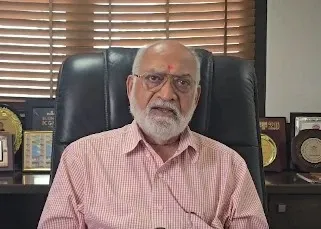
India's real GDP growth came in at 7.8 per cent in the first quarter of FY 2026-27, reflecting the underlying resilience of the economy driven by policy reforms, household consumption, and sustained investment, Ministry of Statistics and Programme Implementation (MoSPI) Secretary Dr Saurabh Garg said on Monday, 31 August. The figure outpaced conservative forecasts made against a backdrop of global geopolitical uncertainty.
India Among World's Fastest-Growing Economies
Dr Garg emphasised that India has maintained strong growth momentum over the past three years, positioning it firmly among the world's fastest-growing major economies. 'India is one of the fastest-growing economies in the world. It has been growing rapidly over the last three years, and that momentum continues even now,' he said. He added that the performance reflects both government interventions and the continued economic activity of households and individuals.
GST Reforms Credited for Structural Gains
The MoSPI Secretary specifically attributed a portion of the economy's resilience to reforms in the Goods and Services Tax (GST) regime. According to Garg, the GST overhaul has achieved two distinct outcomes: making transactions more convenient and improving the quality of underlying data sources. 'If we measure something properly, we are able to take various measures based on it. And these reforms help on both these aspects,' he said. Better measurement, he argued, allows policymakers to calibrate responses more accurately — a structural improvement that compounds over time.
Domestic Demand Offsets Global Headwinds
On the stronger-than-expected print despite a challenging external environment, Garg acknowledged that conservative growth estimates were understandable given prevailing geopolitical pressures. However, he pointed to domestic drivers — private final consumption expenditure, corporate investment, and government capital outlay — as the decisive factors sustaining momentum. 'Because of the overall geopolitical situation, conservative estimates are but natural. But I think the Indian consumer, the Indian household, private final consumption expenditure, and investments by corporates and governments have ensured that the growth remains resilient,' he said. Notably, the resilience has been visible on both a year-on-year and a quarter-on-quarter basis, according to the Secretary.
What the Numbers Signal
A 7.8 per cent expansion in Q1 FY27 keeps India on track to remain the fastest-growing large economy globally, ahead of China, which has reported sub-6 per cent growth in recent quarters. This is the third consecutive year in which India's growth trajectory has held above the 7 per cent mark, reinforcing the narrative of structural resilience rather than a one-off bounce. The data comes at a time when several advanced economies are grappling with slowing demand and tightening financial conditions, lending additional weight to the domestic-demand story.
What to Watch Next
Analysts will now look to subsequent quarters to assess whether the 7.8 per cent pace is sustainable, particularly as global commodity prices and interest rate trajectories remain fluid. The quality of investment — whether led by public capital expenditure or a genuine revival in private capex — will be a key variable. MoSPI is expected to release revised estimates in line with its regular schedule, which will provide further clarity on the composition of growth.
Point of View
But the more important signal is in what Dr Garg chose to highlight: GST-driven data quality. India has historically struggled with GDP measurement credibility, and if structural reforms are genuinely improving the statistical base, that matters as much as the headline number. The persistent reliance on government capex as a growth anchor, however, raises a question mainstream coverage tends to skip — when does private investment decisively take the baton? Three years of resilience is a trend; the fourth year will test whether it is a transformation.
NationPress
31 Aug 2026
Frequently Asked Questions
What was India's GDP growth rate in Q1 FY 2026-27?
India's real GDP grew at 7.8 per cent in the first quarter of FY 2026-27, according to data released by the Ministry of Statistics and Programme Implementation (MoSPI) on 31 August. The figure outperformed conservative estimates made amid global geopolitical uncertainty.
What factors drove India's 7.8% GDP growth in Q1 FY27?
MoSPI Secretary Dr Saurabh Garg attributed the growth to a combination of GST policy reforms, strong private final consumption expenditure, and investments by both corporates and the government. He noted that domestic demand proved resilient despite challenging global conditions.
How did GST reforms contribute to India's GDP performance?
According to Dr Garg, GST reforms improved both the convenience of transactions and the quality of economic data available to policymakers. Better data, he argued, enables more accurate measurement of economic activity and more effective policy responses.
How does India's Q1 FY27 growth compare globally?
At 7.8 per cent, India remains among the fastest-growing large economies in the world. The growth is particularly notable given that several advanced economies are contending with slowing demand, and China has reported sub-6 per cent growth in recent quarters.
What will determine whether India sustains this growth pace?
Analysts will watch whether the 7.8 per cent pace holds in subsequent quarters, with particular focus on the composition of investment — specifically whether private capex revives alongside public spending. MoSPI is expected to release revised estimates in line with its regular schedule.