India GDP grows 7.7% in FY26, PM Modi credits reforms and 140 crore Indians
Synopsis
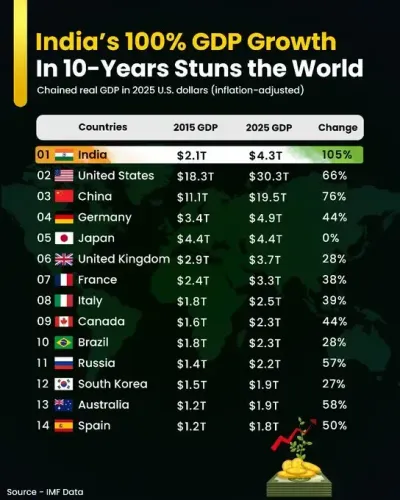
India clocked 7.7 per cent GDP growth in FY26 — its Q4 alone hitting 7.8 per cent — while Germany, Japan, and the G7 struggled below 2 per cent. With manufacturing and services both in double digits and the IMF backing India as the sole major economy above 6 per cent, Modi's infrastructure-and-reform bet is, at least for now, producing the numbers.
Key Takeaways
India's GDP grew 7.7 per cent in FY 2025-26 , with Q4 accelerating to 7.8 per cent .
Both private consumption and gross fixed capital formation grew more than 7.5 per cent during the year.
The tertiary sector grew 9.9 per cent ; the secondary sector grew 8.8 per cent ; the primary sector grew 3.2 per cent .
Manufacturing, trade, hotels, transport, financial services, and real estate all recorded double-digit growth in FY26.
The IMF had projected India as the only major economy forecast to exceed 6 per cent growth in FY26.
PM Modi attributed the performance to structural reforms, infrastructure investment, and the efforts of 140 crore Indians .
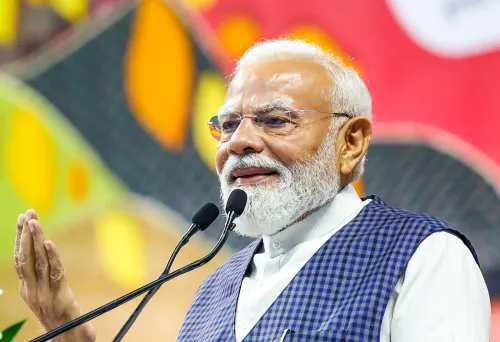
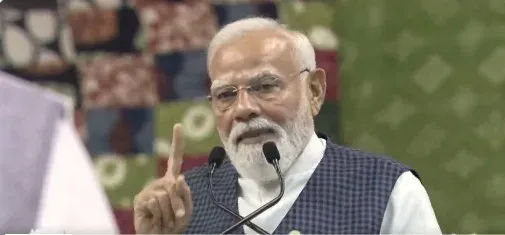
Prime Minister Narendra Modi on Friday, 5 June credited India's 7.7 per cent GDP growth in FY 2025-26 to structural reforms, large-scale infrastructure investment, and the collective effort of 140 crore Indians. The figure cements India's position as the world's fastest-growing major economy amid a broad global slowdown.
What the Numbers Show
India's GDP expanded at 7.7 per cent for the full fiscal year, with the fourth quarter of FY 2025-26 clocking an even sharper 7.8 per cent. Both private final consumption expenditure and gross fixed capital formation grew at more than 7.5 per cent during the year, signalling that demand and investment are expanding in tandem — not just one propping up the other.
The secondary sector — covering manufacturing and industry — recorded 8.8 per cent growth, while the tertiary sector, which includes services, surged 9.9 per cent. The primary sector posted a more modest 3.2 per cent, led by agriculture and fisheries. Notably, manufacturing, trade, hotels, transport, communications, financial services, and real estate all achieved double-digit growth in FY26, according to the official statement.
How India Compares Globally
Modi drew a pointed contrast with other major economies. Germany grew at just 0.4 per cent, Japan at 0.8 per cent, the Euro Area at 1.3 per cent, and the G7 as a bloc at 1.6 per cent. China's growth, meanwhile, has reportedly been weighed down by weak domestic demand, manufacturing overcapacity, and rising youth unemployment.
The International Monetary Fund (IMF) had projected India as the only major economy expected to exceed 6 per cent growth in FY26 — a forecast made against the backdrop of US tariff disruptions and elevated geopolitical uncertainty that dampened global trade.
The Infrastructure Dividend
The government pointed to its sustained capital expenditure push — spanning highways, railways, ports, and airports — as a key driver of the growth rate. This infrastructure-led demand has helped sustain momentum even as external headwinds, including US trade policy shifts, clouded the global outlook.
The strategy reflects a deliberate pivot: use public investment to crowd in private capital, while consumption holds up on the back of improved incomes and employment in services and manufacturing.
What the Government Said
'The GDP growth rate of 7.7 per cent in FY 2025-26 and 7.8 per cent in Q4 of FY 2025-26 reflect the inherent strength of our economy, the success of reforms, and the hard work of 140 crore Indians,' Modi said. He added that the government would leave no stone unturned to advance 'ease of living', 'ease of doing business', and expand opportunities for India's youth.
What Comes Next
With global trade uncertainty persisting and the IMF keeping a close watch on emerging-market outlooks, sustaining above-7 per cent growth into FY27 will depend on private investment picking up the baton from public capex. The double-digit performance in manufacturing and services provides a constructive base, but the primary sector's relatively modest showing underscores that rural income growth remains a variable to watch.
Point of View
But the composition deserves scrutiny. Services at 9.9 per cent is doing the heavy lifting; manufacturing's 8.8 per cent, while solid, needs to be sustained over multiple years before India can claim a structural shift in its industrial base. The primary sector at 3.2 per cent is the quiet concern — agricultural income still determines consumption for a large share of the population, and a below-trend kharif season could quickly narrow the headline margin. The IMF's endorsement is useful optics, but the real test is whether private capex — still lagging public investment — accelerates in FY27 without the government needing to keep its foot on the spending pedal.
NationPress
21 Oct 2026
Frequently Asked Questions
What is India's GDP growth rate for FY 2025-26?
India's GDP grew at 7.7 per cent for the full fiscal year FY 2025-26, with the fourth quarter alone recording 7.8 per cent growth, according to official data cited by PM Modi on 5 June.
How does India's GDP growth compare to other major economies?
India significantly outpaced its peers: Germany grew at 0.4 per cent, Japan at 0.8 per cent, the Euro Area at 1.3 per cent, and the G7 bloc at 1.6 per cent. The IMF had projected India as the only major economy expected to exceed 6 per cent growth in FY26.
Which sectors drove India's GDP growth in FY26?
The tertiary (services) sector led with 9.9 per cent growth, followed by the secondary (industry and manufacturing) sector at 8.8 per cent. Manufacturing, trade, hotels, transport, financial services, and real estate all posted double-digit growth. The primary sector grew 3.2 per cent, driven by agriculture and fisheries.
What role did government infrastructure spending play in India's growth?
The government's sustained capital expenditure in highways, railways, ports, and airports is cited as a key contributor to the growth rate, supporting both gross fixed capital formation and employment. This public investment push has helped maintain momentum even as global trade conditions remained uncertain.
What did PM Modi say about India's economic outlook?
Modi said the government would leave no stone unturned to improve 'ease of living' and 'ease of doing business', and to expand opportunities for India's youth. He attributed the strong GDP numbers to the success of economic reforms and the hard work of 140 crore Indians.