PM Modi Hails 7.7% GDP Growth, Vows Ease of Living Push

Synopsis
Prime Minister Narendra Modi on June 5, 2026, highlighted India's GDP growth of 7.7% for FY 2025-26 and 7.8% in Q4, crediting structural reforms and 140 crore Indians, while pledging to deepen the Ease of Living agenda.
Key Takeaways
Prime Minister Narendra Modi cited a GDP growth rate of 7.7% for FY 2025-26 in a post on June 5, 2026 .
The fourth quarter of FY 2025-26 recorded an even higher growth rate of 7.8% .
Modi attributed the performance to the 'inherent strength' of the economy, successful reforms, and the efforts of 140 crore Indians .
The Prime Minister pledged to advance 'Ease of Living' — extending the reform agenda from business facilitation to citizen welfare.
Key structural reforms underpinning the growth narrative include GST (2017) , the Insolvency and Bankruptcy Code (2016) , Make in India (2014) , and Digital India (2015) .
The Union Budget for 2026-27 and the next quarterly GDP release are the key near-term events to watch.
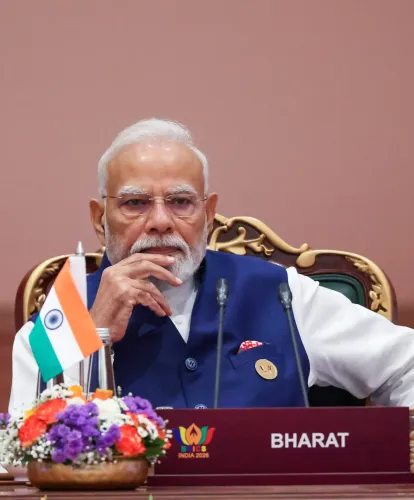
Prime Minister Narendra Modi on Friday, June 5, 2026, cited India's latest national accounts data to declare the country's growth momentum 'strong,' pointing to a GDP growth rate of 7.7% for FY 2025-26 and 7.8% in the fourth quarter of that fiscal year as evidence of economic resilience.
Context
In his post on X, the Prime Minister attributed the numbers to 'the inherent strength of our economy, the success of reforms and the hard work of 140 crore Indians.' He also pledged to 'leave no stone unturned' to further Ease of Living — a phrase that signals a deliberate shift in political messaging from business facilitation to citizen-level welfare. The statement comes as the government prepares for the next Union Budget cycle and ahead of the Ministry of Statistics and Programme Implementation's forthcoming quarterly national accounts release.
Policy Backdrop
The growth figures cited by Modi are framed as the dividend of a decade-long reform programme. Since 2014, the government has rolled out structural changes including the Goods and Services Tax (GST) in July 2017, which unified the national market by replacing multiple central and state levies, and the Insolvency and Bankruptcy Code of 2016, which expedited resolution of stressed assets and strengthened the credit ecosystem. The Make in India initiative, launched in September 2014, sought to position India as a global manufacturing destination and attract foreign investment. The Digital India programme, initiated in 2015, expanded digital infrastructure and broadened public service delivery — all steps intended to formalise the economy and raise its potential growth rate.
Together, these reforms followed the earlier liberalisation wave of the 1990s and were designed to improve India's standing in global ease-of-doing-business rankings while sustaining post-pandemic recovery. The Prime Minister's invocation of 'Ease of Living' extends that logic beyond the corporate sector to everyday citizens.
Stakeholders and Impact
A 7.7% full-year growth rate, if sustained, would keep India among the fastest-growing major economies globally, reinforcing its position ahead of other large emerging markets. For Indian businesses, the data provides a confidence signal on domestic demand and investment conditions. Foreign investors tracking India as an alternative manufacturing and services hub will read the numbers alongside the government's continued reform rhetoric. For ordinary citizens — the '140 crore Indians' the Prime Minister credited — the 'Ease of Living' pledge points to policy attention on inflation management, public services, and livelihood programmes rather than purely macro-level metrics.
What's Next
The next scheduled release of quarterly GDP data by the Ministry of Statistics and Programme Implementation will be closely watched to assess whether the growth trajectory holds. The forthcoming Union Budget for 2026-27 is the more consequential near-term event: it will reveal how the government intends to translate strong headline growth into targeted spending on infrastructure, social welfare, and the 'Ease of Living' agenda the Prime Minister has now publicly committed to advancing.
Point of View
Where macro-economic achievements are reframed as personal dividends for ordinary citizens. The commitment, however, will be tested by how the forthcoming budget translates headline GDP into tangible welfare outcomes.
NationPress
21 Oct 2026
Frequently Asked Questions
What is India's GDP growth rate for FY 2025-26?
According to Prime Minister Narendra Modi's post on June 5, 2026, India's GDP growth rate for FY 2025-26 is 7.7% , with the fourth quarter of that fiscal year recording 7.8% growth.
What does 'Ease of Living' mean in PM Modi's statement?
'Ease of Living' refers to the government's stated goal of making everyday life simpler and better for citizens — covering access to public services, affordability, and livelihood support — extending the earlier 'Ease of Doing Business' reform agenda to the general population.
What reforms has Modi's government implemented to boost GDP growth?
Key reforms include the Goods and Services Tax (2017), the Insolvency and Bankruptcy Code (2016), the Make in India initiative (2014), and the Digital India programme (2015), all aimed at formalising the economy and improving competitiveness.
When is the next India GDP data release?
The next quarterly national accounts data will be released by the Ministry of Statistics and Programme Implementation ; the exact date has not been announced, but it is among the key economic events to watch in the coming months.
What is the Union Budget 2026-27 significance after these GDP numbers?
The Union Budget for 2026-27 is the next major policy event where the government is expected to outline spending priorities that translate the strong GDP growth into targeted welfare and infrastructure measures aligned with the 'Ease of Living' pledge.