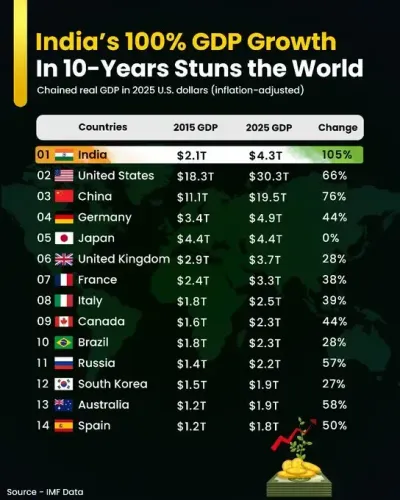
India's GDP doubles to $4.1 trillion in 12 years under Modi: ASSOCHAM
Synopsis
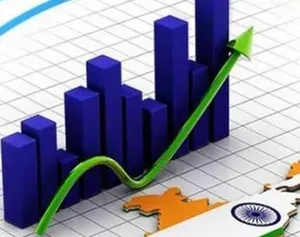
ASSOCHAM has put numbers to 12 years of Modi-era economic policy — and they are striking. GDP doubled, exports nearly doubled, FDI doubled, and manufacturing swung from contraction to 10.7 per cent growth. The industry body's verdict: India is now a structural bright spot, not just a cyclical one.
Key Takeaways
India's GDP doubled from $1.9 trillion in 2013-14 to $4.1 trillion in 2025-26 , according to ASSOCHAM.
GDP growth rate rose from 6.4 per cent to 7.7 per cent over the same period.
Manufacturing growth swung from -0.7 per cent to 10.7 per cent ; services growth rose from 7.8 per cent to 9.3 per cent .
Exports grew from $466 billion to $860 billion ; current account deficit narrowed from 1.7 per cent to 0.6 per cent .
Sensex rose nearly threefold from 22,386 to 71,947 ; FDI inflows doubled from $45 billion to $95 billion .
Key drivers cited include PLI schemes , GST , Make in India , Digital India , and BHAVYA .
ASSOCHAM President Nirmal K Minda on Wednesday, 10 June credited Prime Minister Narendra Modi's 12-year tenure with delivering broad-based economic transformation across growth, manufacturing, services, exports, and investment climate, as India's GDP doubled from $1.9 trillion in 2013-14 to $4.1 trillion in 2025-26. The industry body's remarks coincided with Modi being recognised as India's longest-serving Prime Minister.
Growth Fundamentals
'Our economy's growth fundamentals have performed as well as or better than those of any major economy in the global system,' Minda said. GDP growth has risen from 6.4 per cent in 2013-14 to 7.7 per cent in 2025-26, with all top 10 leading economic indicators reportedly performing robustly — reinforcing India's positioning as the fastest-growing major economy in the world, according to ASSOCHAM.
Manufacturing and Services Surge
According to ASSOCHAM Secretary General Saurabh Sanyal, the manufacturing sector recorded a sharp turnaround, growing at 10.7 per cent in 2025-26 compared to a contraction of 0.7 per cent in 2013-14. The services sector also expanded, with growth climbing from 7.8 per cent to 9.3 per cent over the same period. Sanyal described these gains as structural rather than cyclical, underpinned by sustained policy reforms.
External Sector and Investment Climate
On the external front, exports nearly doubled from $466 billion in 2013-14 to $860 billion in 2025-26, while the current account deficit narrowed sharply from 1.7 per cent to 0.6 per cent of GDP. Investment conditions strengthened in parallel: the Sensex rose almost threefold from 22,386 to 71,947, and foreign direct investment (FDI) inflows doubled from $45 billion to $95 billion.
Key Policy Drivers
ASSOCHAM Chief Economist Dr S P Sharma attributed the gains to a suite of structural initiatives, including Make in India, Jan Dhan Yojana, Digital India, Skill India, Startup India, the Goods and Services Tax (GST), Production-Linked Incentive (PLI) schemes, the Green Hydrogen Mission, the New Foreign Trade Policy 2023, logistics and customs digitalisation reforms, and BHAVYA (Bharat Audyogik Vikas Yojna). 'These policies have supported India's growth trajectory and strengthened its global economic standing,' ASSOCHAM said. The industry body called India 'a bright spot in the global economic system.'
With the government entering what would be a record-extending term, ASSOCHAM's assessment sets a high benchmark — and an implicit scorecard — for the economic agenda ahead.
Point of View
But it is worth noting that this is an industry body — not an independent audit — congratulating a government whose policies it has broadly supported. The GDP doubling reflects genuine structural gains, but also a global tailwind and a low base from the pandemic trough. The more telling metric is the manufacturing share of GDP, which ASSOCHAM does not cite — because despite the 10.7 per cent sectoral growth rate, manufacturing's share has remained stubbornly below 20 per cent. The FDI and export numbers are real, but the current account improvement owes partly to compressed import demand in certain years. The scorecard is strong; the full picture is more nuanced than a congratulatory statement allows.
NationPress
29 Jul 2026
Frequently Asked Questions
How much has India's GDP grown under PM Modi's 12-year tenure?
India's GDP more than doubled from $1.9 trillion in 2013-14 to $4.1 trillion in 2025-26, according to ASSOCHAM. GDP growth rate also improved from 6.4 per cent to 7.7 per cent over the same period.
What happened to India's manufacturing sector in the last 12 years?
India's manufacturing sector grew at 10.7 per cent in 2025-26, a sharp reversal from a contraction of 0.7 per cent in 2013-14, according to ASSOCHAM Secretary General Saurabh Sanyal. The turnaround is attributed to PLI schemes, Make in India, and related structural reforms.
How have India's exports and FDI changed since 2013-14?
Exports rose from $466 billion in 2013-14 to $860 billion in 2025-26, while FDI inflows doubled from $45 billion to $95 billion, according to ASSOCHAM. The current account deficit also narrowed from 1.7 per cent to 0.6 per cent of GDP.
Which government policies does ASSOCHAM credit for India's economic gains?
ASSOCHAM cited Make in India, Jan Dhan Yojana, Digital India, Skill India, Startup India, GST, PLI schemes, the Green Hydrogen Mission, the New Foreign Trade Policy 2023, logistics and customs digitalisation reforms, and BHAVYA (Bharat Audyogik Vikas Yojna) as key drivers.
What is ASSOCHAM and why does its assessment matter?
ASSOCHAM, the Associated Chambers of Commerce and Industry of India, is one of India's oldest and largest apex industry bodies. Its economic assessments carry weight as a barometer of private-sector sentiment, though they represent the industry's perspective rather than an independent economic audit.