Adani: Mundra, Vizhinjam ports and Khavda project reshape India's economic geography
Synopsis
Gautam Adani told a room of rating professionals that India's biggest infrastructure bets — Mundra, Vizhinjam, Khavda — are not just assets, they are economic multipliers. His sharpest line: India spent decades paying a 'sovereignty tax' to foreign ports because domestic infrastructure was deemed too risky. That era, he argued, is over.
Key Takeaways
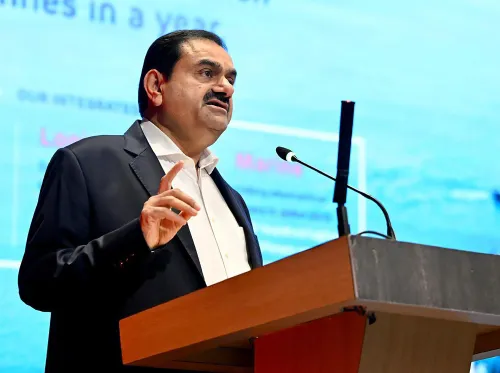
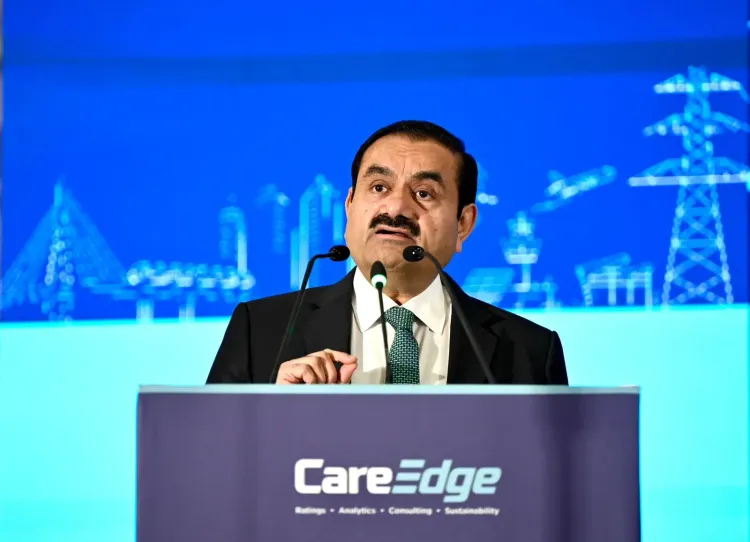
Gautam Adani addressed CareEdge Group's annual summit in Mumbai on 31 August .
Mundra Port , India's largest , has spawned an industrial ecosystem — rail, logistics, power, and manufacturing — many times the size of the port itself.
Vizhinjam port in Kerala attracted no institutional capital for 25 years ; India previously transhipped cargo through Singapore, Dubai, and Colombo .
Khavda is described as a convergence platform for energy, AI , manufacturing, and digital infrastructure — not merely a renewable energy site.
Adani called on rating agencies to evolve their frameworks to match the transformational scale of modern Indian infrastructure.
Adani Group Chairman Gautam Adani on Monday, 31 August argued that landmark infrastructure assets — including Mundra and Vizhinjam ports and the Khavda renewable energy project — do not merely serve existing demand but generate entirely new economic ecosystems and redefine the commercial landscape around them. He made the remarks while addressing CareEdge Group's annual summit in Mumbai.
A New Era for Indian Infrastructure
Adani said India has entered a fundamentally different phase of development and called on the financial community to update its thinking. 'India has now entered a very different period. The nature of infrastructure has changed, and the sophistication of our rating frameworks must evolve alongside the sophistication of what India is building,' he said.
He cautioned against the tendency to build only for visible, near-term demand. 'If we build only for the demand we can see today, India will always be late for the opportunities of tomorrow,' he remarked.
Mundra: From Marshy Coastline to Commercial Gateway
Mundra Port in Gujarat, today India's largest port, would have been dismissed three decades ago by conventional risk assessments as little more than a marshy coastline with no surrounding industrial base, Adani said.
'Today, Mundra is easily one of India's most important commercial gateways. But more importantly, Mundra has created an ecosystem multiple times the size of the port. It is a port connected to rail. Rail connected to logistics centres. Logistics connected to power plants. Power connected to industrial zones. Industrial zones connected to traders and manufacturers all across India,' he noted.
Vizhinjam: Ending Decades of Transhipment Dependency
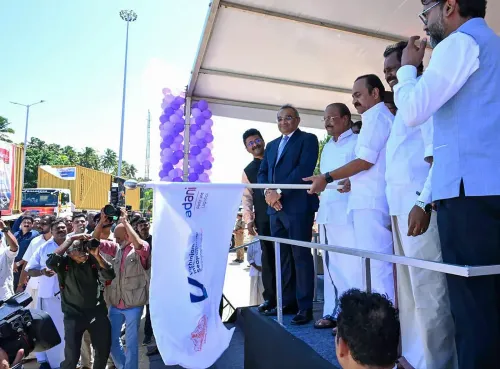
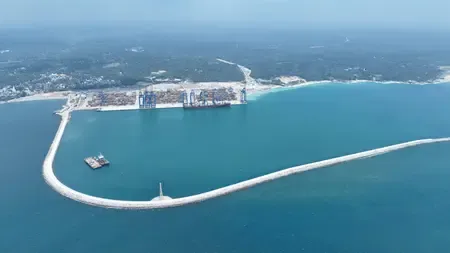
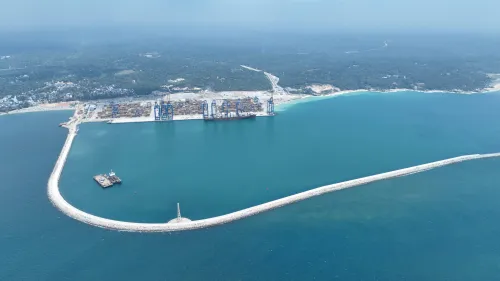
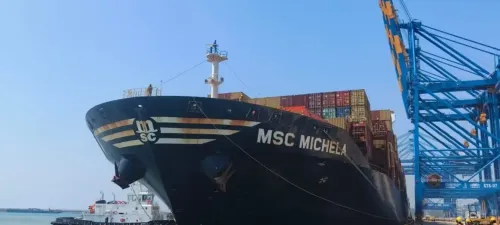
The Vizhinjam port project in Kerala found no institutional takers for 25 years because capital risk was considered, in his words, 'too immense' despite the clear strategic need for a deep-water facility. The Adani Group ultimately stepped in and built it.
'We sat just 10 nautical miles from the world's busiest shipping routes, yet we could not handle our own container cargo. We had to tranship through Singapore, Dubai, and Colombo. For decades, Indian commerce paid a direct sovereignty tax to foreign ports simply because domestic infrastructure was deemed too risky for institutional capital,' he said.
Khavda: Beyond Renewable Energy
On the Khavda project in Gujarat's Rann of Kutch, Adani acknowledged that traditional frameworks would flag harsh terrain, execution risk, and uncertain demand — challenges he said are real and the caution justified. However, he argued the conventional lens misses the bigger picture.
'Khavda is not a renewable energy project. Khavda is a platform where energy, artificial intelligence, manufacturing, digital infrastructure and industrial capability converge at an unprecedented scale,' he observed. He added that Khavda could supply the clean power needed for India's future compute infrastructure and serve as the foundation for the country's AI manufacturing ecosystem.
India's Infrastructure Confidence Has Changed
Adani said that India's infrastructure ambitions were historically constrained by limited resources, limited capability, and limited confidence. That has shifted. 'Today, India has resources and has demonstrated its capability, but more importantly, discovered a belief in its own potential — which ultimately changes the future of a nation,' he asserted.
He pointed to roads, ports, and airports expanding at unprecedented speed, renewable energy capacity growing faster than any other nation, and digital infrastructure reaching hundreds of millions of citizens. As rating agencies recalibrate their frameworks, the question is whether institutional capital will follow the ambition India is already building toward.
Point of View
He was lobbying for a different risk calculus. The 'sovereignty tax' line on Vizhinjam is the sharpest articulation yet of why decades of institutional caution had a real economic cost. But the Khavda-as-AI-platform argument is a newer, bolder bet — one that conflates energy supply with tech-sector demand in ways that remain unproven at scale. Rating agencies will rightly ask for evidence before repricing that risk. The broader tension is real: India's infrastructure ambition has genuinely outpaced legacy assessment models, but the solution is rigour, not lower bars.
NationPress
31 Aug 2026
Frequently Asked Questions
What did Gautam Adani say about Mundra Port at the CareEdge summit?
Adani said Mundra Port, now India's largest, would have been dismissed three decades ago as a marshy coastline with no industrial base. Today it anchors an ecosystem of rail, logistics, power plants, and industrial zones that is many times larger than the port itself.
Why did Vizhinjam port go without investors for 25 years?
Institutional investors considered the capital risk too immense despite the strategic need for a deep-water port. As a result, India transhipped container cargo through Singapore, Dubai, and Colombo for decades — what Adani called a 'direct sovereignty tax to foreign ports.'
What is the Khavda renewable energy project?
Khavda is a large-scale renewable energy project in Gujarat's Rann of Kutch being developed by the Adani Group. Adani described it as more than an energy asset — a convergence platform for energy, AI, manufacturing, and digital infrastructure at an unprecedented scale.
What did Adani mean by evolving rating frameworks?
Adani argued that traditional risk-assessment models evaluate infrastructure against existing demand and visible returns, causing them to undervalue transformational assets. He called on rating agencies like CareEdge to develop frameworks that account for the ecosystem-building potential of large-scale projects.
How does Adani's speech connect to India's broader infrastructure push?
Adani's remarks align with India's accelerating build-out of ports, roads, airports, and renewable energy. He said India now has the resources, capability, and national confidence to pursue infrastructure that creates demand rather than merely responding to it.