CM Bhajan Lal Reviews Rajasthan Energy Dept, Pushes Solar Schemes
Synopsis
Rajasthan Chief Minister Bhajan Lal Sharma chaired an Energy Department review on 8 July 2026, directing officials to accelerate PM Surya Ghar and KUSUM solar schemes and ensure uninterrupted power supply to farmers, industries, and domestic consumers statewide.
Key Takeaways
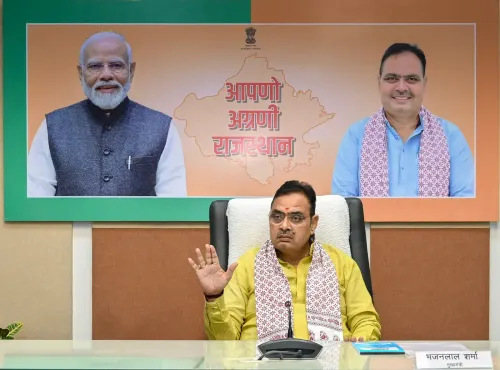
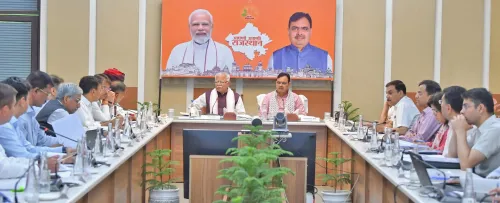
Rajasthan CM Bhajan Lal Sharma chaired an Energy Department review at the Chief Minister's residence on 8 July 2026 .
Officials were directed to ensure uninterrupted electricity supply to industries, domestic consumers, and farmers .
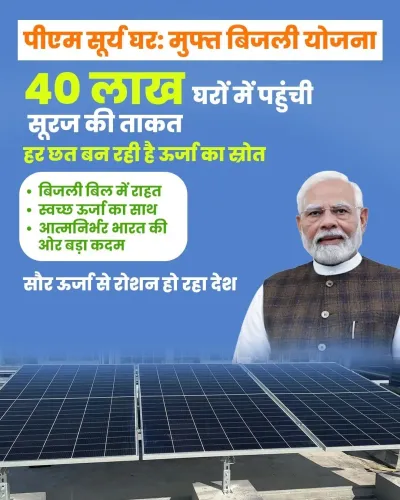
The PM Surya Ghar-Muft Bijli Yojana — offering up to 300 units of free monthly electricity via rooftop solar — was identified for accelerated implementation.
The PM-KUSUM scheme , launched in 2019 to solarise agriculture, was also flagged for faster rollout in the state.
The meeting is part of a broader state push to make Rajasthan self-reliant in energy and aligned with India's 500 GW non-fossil fuel target by 2030 .
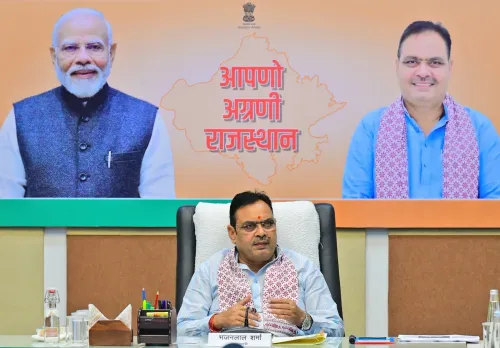
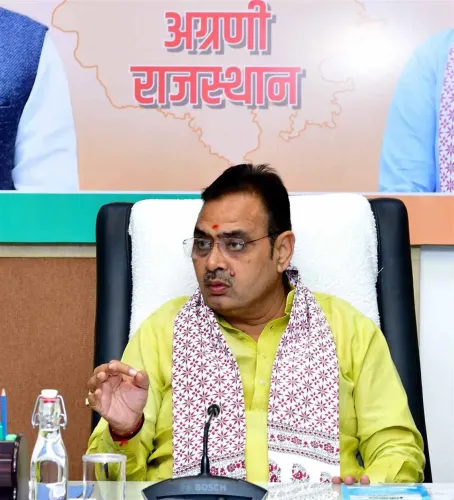
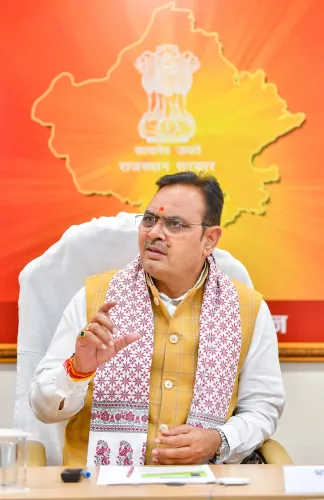
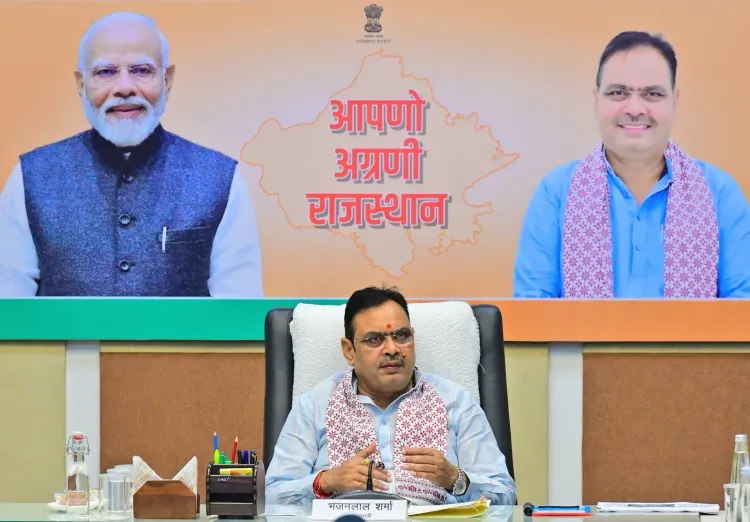
Rajasthan Chief Minister Bhajan Lal Sharma chaired a review meeting of the state Energy Department at the Chief Minister's residence on Wednesday, 8 July 2026, directing officials to accelerate two flagship solar programmes and ensure uninterrupted power supply to all consumer categories across the state.
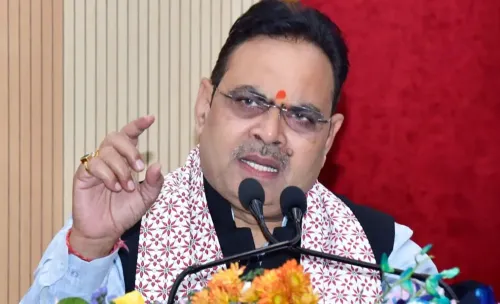
Posting on X, the Chief Minister stated that the meeting was convened with the objective of making Rajasthan 'ऊर्जा के क्षेत्र में आत्मनिर्भर, सशक्त और भविष्य की आवश्यकताओं के अनुरूप' ('self-reliant, empowered, and prepared for future energy needs'). He said instructions were issued to ensure uninterrupted electricity supply to the general public, to bring the required momentum to the PM Surya Ghar-Muft Bijli Yojana and the KUSUM Yojana, and to guarantee adequate power for industries, domestic consumers, and farmers.
Context
The meeting signals renewed administrative focus on Rajasthan's power sector as peak summer demand strains distribution infrastructure. Bhajan Lal Sharma, who assumed office in December 2023 following the BJP's victory in the state assembly elections, has convened periodic energy-sector reviews as part of a broader push to improve distribution company performance. The twin mandates — reliable supply and renewable energy integration — reflect priorities that the state has pursued across successive governments, though the pace of scheme implementation has varied.
Policy Backdrop
The PM Surya Ghar-Muft Bijli Yojana, announced in the Union Budget 2024-25, aims to provide rooftop solar installations to households, entitling beneficiaries to up to 300 units of free electricity per month. The Pradhan Mantri Kisan Urja Suraksha evam Utthaan Mahabhiyan (PM-KUSUM) scheme, launched by the Ministry of New and Renewable Energy in 2019, promotes solar pump deployment and decentralised solar plants for the agriculture sector. Both schemes require active state-level facilitation — including subsidy disbursement, grid connectivity, and beneficiary enrolment — to meet national targets.
Rajasthan, with its high solar irradiance, is considered a key contributor to India's target of 500 GW of non-fossil fuel power capacity by 2030. Accelerating rooftop solar adoption and farmer-facing solar infrastructure in the state could have a meaningful impact on that national goal.
Stakeholders and Impact
Farmers stand to benefit from KUSUM's solar pump component, which reduces dependence on erratic grid supply and lowers irrigation costs. Domestic consumers eligible under PM Surya Ghar could see reduced electricity bills through net metering arrangements tied to rooftop solar units. Industrial consumers, who require stable, high-quality power for operations, are also explicitly named in the Chief Minister's directive — indicating that the review was not limited to welfare-oriented schemes but also addressed commercial and economic continuity.
Distribution companies (DISCOMs) in Rajasthan will bear the operational burden of implementing the instructions, including infrastructure upgrades required to absorb additional renewable capacity and maintain supply reliability.
What's Next
The Chief Minister's directive sets an expectation of measurable progress on both PM Surya Ghar and KUSUM enrolment and installation targets in the state. Observers will watch for quarterly progress disclosures from the Rajasthan Energy Department and any supplementary state budget allocations directed at distribution infrastructure. The broader test will be whether the administrative push translates into on-ground acceleration of beneficiary registrations and grid integration — areas where implementation has historically lagged behind announced targets across several states.
Point of View
Particularly ahead of performance assessments tied to scheme disbursements. For Rajasthan specifically, the dual emphasis on renewable integration and supply reliability is politically important — power cuts remain a voter-sensitive issue, while solar scheme enrolment numbers serve as a measurable governance metric. The explicit mention of farmers alongside industries and domestic consumers suggests the government is sensitive to rural energy grievances, which were a factor in the 2023 election narrative. Whether the review produces structural improvements in DISCOM capacity or remains a directional signal will determine its longer-term policy significance.
NationPress
6 Oct 2026
Frequently Asked Questions
What was discussed in Rajasthan CM Bhajan Lal Sharma's energy department meeting?
The meeting focused on ensuring uninterrupted electricity supply to all consumers and accelerating implementation of the PM Surya Ghar-Muft Bijli Yojana and PM-KUSUM scheme in Rajasthan.
What is PM Surya Ghar-Muft Bijli Yojana?
PM Surya Ghar-Muft Bijli Yojana is a central government rooftop solar scheme announced in Union Budget 2024-25 that provides eligible households with up to 300 units of free electricity per month through solar installations.
What is the KUSUM scheme and how does it help farmers?
PM-KUSUM (Pradhan Mantri Kisan Urja Suraksha evam Utthaan Mahabhiyan), launched in 2019, deploys solar pumps and decentralised solar plants for farmers, reducing their dependence on grid electricity and lowering irrigation costs.
When did Bhajan Lal Sharma become Chief Minister of Rajasthan?
Bhajan Lal Sharma became Chief Minister of Rajasthan in December 2023 after the BJP won the state assembly elections.
What is Rajasthan's role in India's renewable energy targets?
Rajasthan, with its high solar irradiance, is a key state for India's goal of achieving 500 GW of non-fossil fuel power capacity by 2030, making the acceleration of solar schemes there particularly significant.