Rajasthan eyes power self-reliance by 2027: CM Bhajan Lal Sharma
Synopsis
Rajasthan is quietly rewriting its power story. From importing 8% of its electricity in May 2025 to just 2% a year later, the state is racing toward self-reliance by 2027 — backed by a record 7,171 MW thermal print, 60 new grid substations and an aggressive daytime-supply push for farmers.
Key Takeaways
CM Bhajan Lal Sharma reaffirmed Rajasthan's target of power self-reliance by 2027 .
State thermal stations clocked a record 7,171 MW generation on 2 June 2026 .
External power dependence fell to 2% in May 2026 from nearly 8% in May 2025.
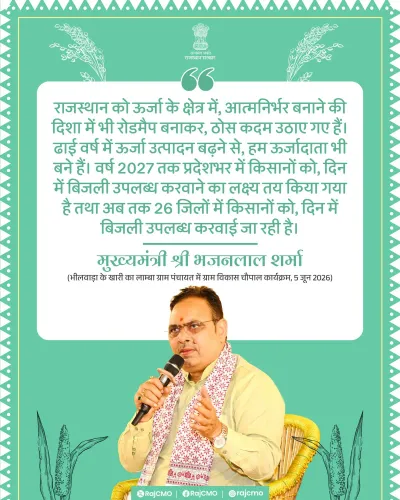
Daytime power for farmers now in 26 districts , to be extended statewide.
60 high-capacity grid substations commissioned in two-and-a-half years; 151 more under construction.
444 substations of 33 kV capacity energised; 211 in progress.
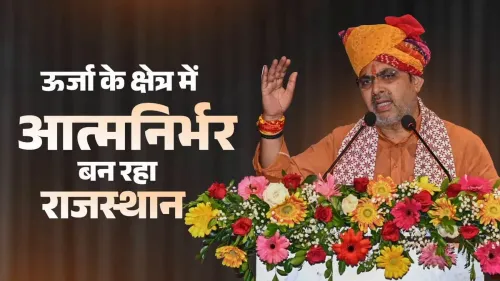
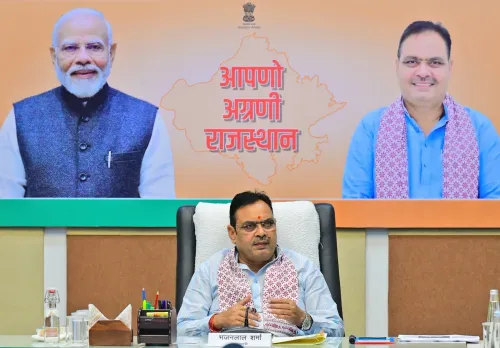
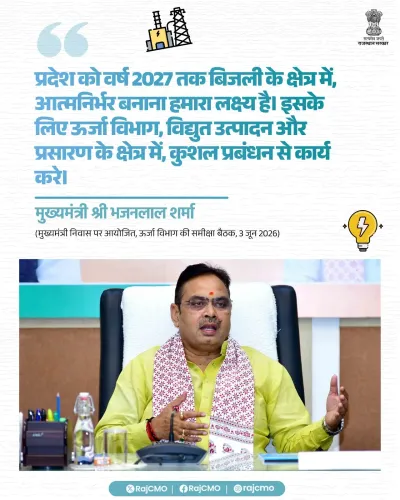
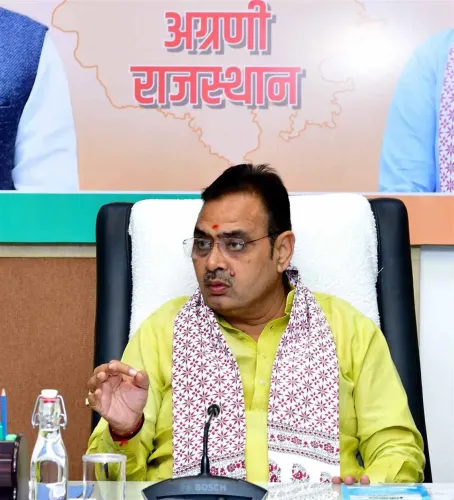
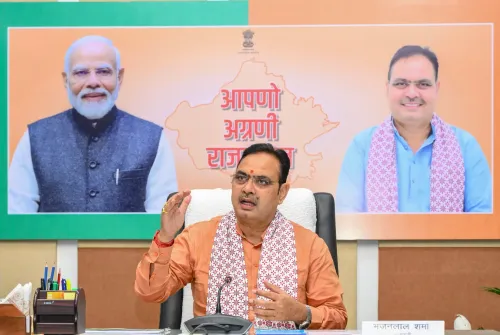
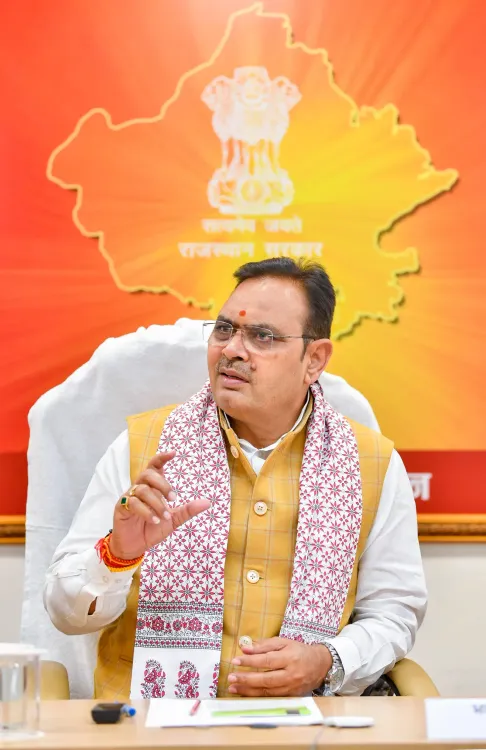
Chief Minister Bhajan Lal Sharma on 3 June 2026 reaffirmed the Rajasthan government's commitment to making the state self-reliant in the power sector by 2027, directing the Energy Department to ensure seamless management of generation, transmission and distribution for farmers, industries and households. Chairing a high-level review meeting at the Chief Minister's Residence in Jaipur, Sharma pushed officials to reposition Rajasthan as a leading power-producing state rather than a mere consumer.
Key directives from the review meeting
Sharma instructed officials to accelerate ongoing works to strengthen power infrastructure and complete pending tasks under the Revamped Distribution Sector Scheme (RDSS) in the Jodhpur DISCOM on priority. He also called for technology-driven upgrades to consumer grievance redressal systems for faster service delivery.
The Chief Minister emphasised extending daytime electricity supply for farmers — currently available in 26 districts — to the remaining districts at the earliest, while urging deeper outreach under the PM-KUSUM Scheme and PM Surya Ghar Scheme to maximise beneficiary participation.
Generation gains and falling import dependence
Officials told the meeting that on 2 June 2026, the state's thermal stations clocked a record generation of 7,171 MW at peak capacity utilisation. Rajasthan's dependence on external power purchases has reportedly dropped to about 2% in May 2026, compared with nearly 8% in May 2025 — a sharp narrowing attributed to higher in-state generation and tighter load management.
Grid build-out over two-and-a-half years
According to the briefing, Rajasthan has commissioned 60 grid substations of 400 kV, 220 kV and 132 kV capacities in the last two-and-a-half years, with work underway on 151 more. During the same period, 444 substations of 33 kV capacity have been energised, while 211 additional ones are in progress.
Why it matters
Rajasthan is among India's largest solar-potential states, and self-reliance by 2027 would mark a structural shift from its long-standing position as a net buyer on the inter-state grid. Reliable daytime supply is particularly critical for agriculture, which remains the state's largest power-consuming segment and a politically sensitive constituency.
Who was present
The meeting was attended by Minister of State for Energy (Independent Charge) Hiralal Nagar, Chief Secretary V. Srinivas, Additional Chief Secretary to the Chief Minister Akhil Arora, Energy Secretary Aarti Dogra and senior Energy Department officials. Sharma directed continued efforts to augment generation capacity and reinforce the state's energy security ahead of the 2027 deadline.
Point of View
It is a genuine shift, not just rhetoric. But self-reliance by 2027 will be judged on peak-summer evenings, not annual averages, and Rajasthan's farm-feeder demand is notoriously lumpy. The real test is whether daytime supply expands beyond the current 26 districts without straining the grid, and whether DISCOM finances can absorb the build-out without another round of subsidy arrears.
NationPress
20 Oct 2026
Frequently Asked Questions
What is Rajasthan's 2027 power self-reliance target?
It is the state government's commitment, reaffirmed by Chief Minister Bhajan Lal Sharma on 3 June 2026, to meet Rajasthan's full electricity demand from in-state generation by 2027. The plan involves expanding thermal and renewable capacity, strengthening transmission, and reducing reliance on inter-state power purchases.
How much has Rajasthan's power import dependence reduced?
Rajasthan's dependence on externally procured electricity has fallen to about 2% in May 2026, compared with nearly 8% in May 2025, according to officials at the review meeting. The drop is attributed to higher in-state generation and improved load management.
Which schemes is the state pushing for households and farmers?
The state is scaling up the PM-KUSUM Scheme for solar pumps and the PM Surya Ghar Scheme for rooftop solar, with the Chief Minister directing officials to maximise eligible beneficiary participation. Daytime electricity supply for farmers, currently available in 26 districts, will be extended to the remaining districts.
What infrastructure has been added in the past two-and-a-half years?
Rajasthan has commissioned 60 grid substations of 400 kV, 220 kV and 132 kV capacities, with 151 more under construction. An additional 444 substations of 33 kV capacity have been energised, and 211 are in progress.
Who attended the energy review meeting?
The meeting was chaired by Chief Minister Bhajan Lal Sharma and attended by Minister of State for Energy (Independent Charge) Hiralal Nagar, Chief Secretary V. Srinivas, Additional Chief Secretary Akhil Arora, Energy Secretary Aarti Dogra, and senior Energy Department officials.