CM Bhajan Lal: Rajasthan Now Exports Power to Other States
Synopsis
Rajasthan Chief Minister Bhajan Lal Sharma announced on 24 July 2026 that the state has moved from power-deficit to energy self-reliance, and is now supplying electricity to neighbouring states — a milestone driven by large-scale renewable expansion including the Bhadla Solar Park.
Key Takeaways
CM Bhajan Lal Sharma declared on 24 July 2026 that Rajasthan has achieved energy self-reliance in the power sector.
Rajasthan has transitioned from a power-importing state to one that exports electricity to other states.
The Bhadla Solar Park in Jodhpur district , the world's largest solar park developed since 2015 , has been central to this capacity expansion.
India's National Solar Mission (2010) and Rajasthan's Solar Energy Policy (2014) provided the policy framework enabling this shift.
The development mirrors similar transitions in Gujarat and Tamil Nadu , underscoring a national pattern of renewable-led power surplus.
Future focus is expected on inter-state power sale agreements and transmission infrastructure investment.
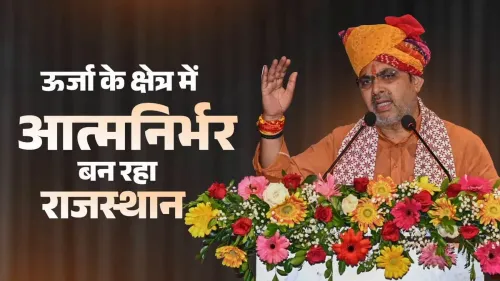
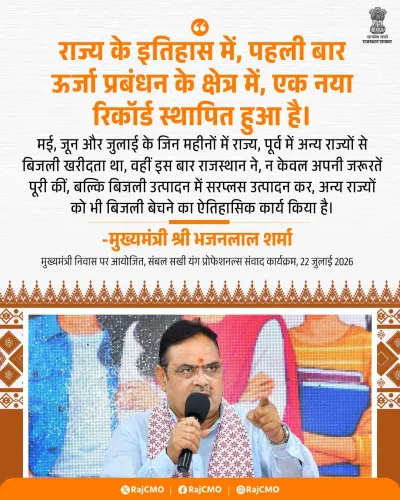
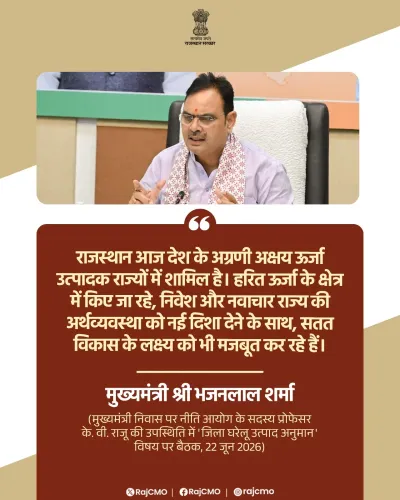
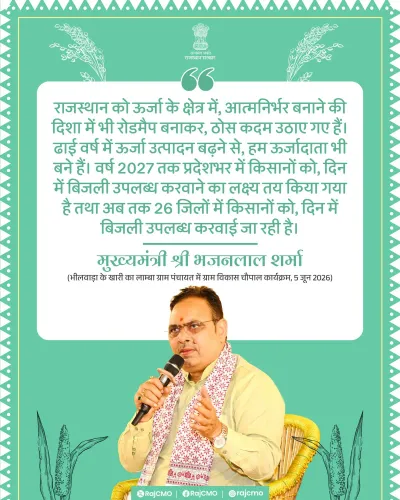
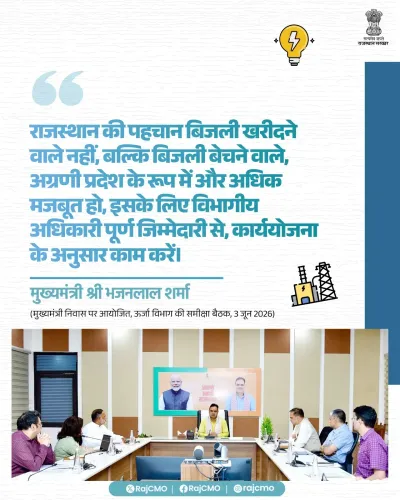
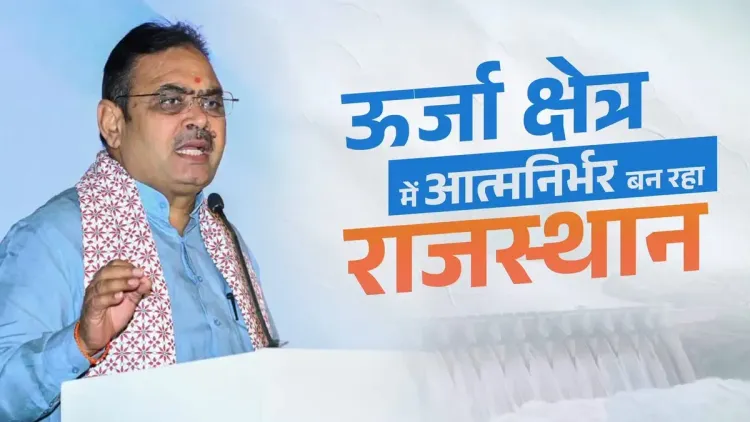
Rajasthan Chief Minister Bhajan Lal Sharma declared on Friday, 24 July 2026 that the state has achieved energy self-reliance and is now supplying electricity to other states, marking a significant shift from its historically power-deficit position.
In a post on X, CM Sharma stated: 'ऊर्जा क्षेत्र में राजस्थान आज आत्मनिर्भर बन रहा है' ['Rajasthan is becoming self-reliant in the energy sector today'], adding that while the state once depended on other states to meet its electricity needs, it is now not only meeting its own requirements but also supplying power to neighbouring states.
Context
Rajasthan has historically been a power-deficit state, relying on inter-state electricity purchases to bridge the gap between generation and demand. The state's vast arid geography — while a challenge for agriculture — gives it exceptional potential for solar and wind energy generation, a resource that successive governments have sought to harness.
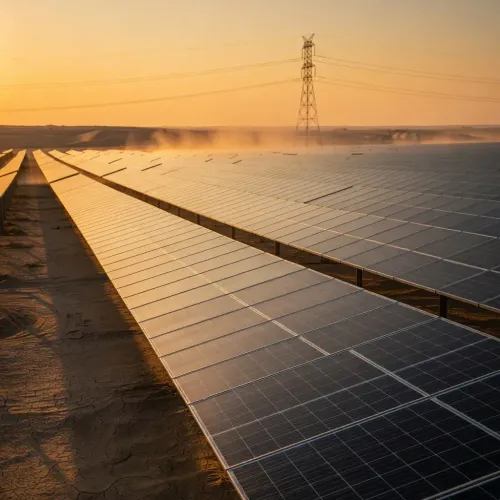
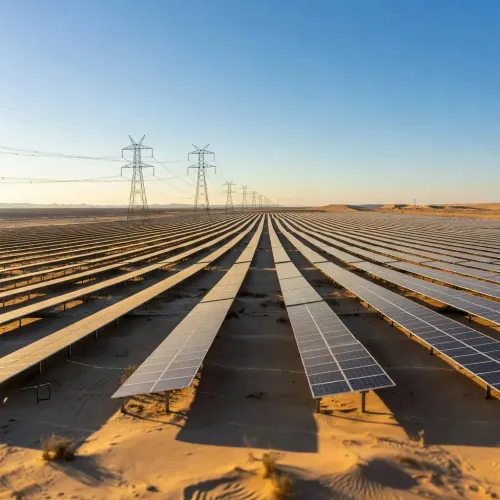
The Bhadla Solar Park in Jodhpur district, developed in phases since 2015, stands as the world's largest solar park and has been central to Rajasthan's capacity expansion. The park has added thousands of megawatts of renewable capacity to the state's grid, directly contributing to the surplus position the Chief Minister referenced.
Policy Backdrop
India's National Solar Mission, launched in 2010, set ambitious grid-connected solar targets and provided the federal policy scaffolding that encouraged states like Rajasthan to scale up capacity. Rajasthan's own Solar Energy Policy of 2014 — subsequently updated — was designed specifically to attract private investment into solar parks and reduce dependence on external power procurement.
CM Bhajan Lal Sharma, who assumed office in December 2023, has positioned energy self-sufficiency as a flagship achievement of his administration. The transition from importer to exporter aligns with the broader national goal of expanding non-fossil fuel capacity and reducing the carbon intensity of India's power sector.
Stakeholders and Impact
The shift to surplus generation has direct implications for Rajasthan's electricity consumers, who stand to benefit from more stable supply and potentially lower procurement costs. Renewable energy developers operating in the state — particularly in solar and wind — are among the primary beneficiaries of the policy environment that enabled this expansion.
Neighbouring states that now receive power from Rajasthan gain a cleaner, domestically produced energy source, while Rajasthan earns inter-state sale revenues that can be reinvested in grid infrastructure. This mirrors the trajectory of states like Gujarat and Tamil Nadu, which leveraged renewable expansion to move from deficit to surplus positions.
What's Next
Attention will turn to whether Rajasthan formalises new inter-state power sale agreements and invests in transmission infrastructure to sustain and expand exports. State assembly discussions on renewable purchase obligations and grid modernisation will be key indicators of how the government intends to consolidate this surplus position.
As India pushes toward its broader clean energy targets, Rajasthan's experience offers a replicable model for other high-potential states. The Chief Minister's statement signals that energy policy will remain a central plank of the BJP government's development narrative heading into the coming legislative cycle.
Point of View
The surplus position would give Rajasthan fiscal leverage through inter-state power sales while strengthening its pitch to renewable energy investors. The real test will be whether transmission capacity and grid stability keep pace with generation growth.
NationPress
23 Oct 2026
Frequently Asked Questions
Has Rajasthan become self-reliant in electricity?
Chief Minister Bhajan Lal Sharma stated on 24 July 2026 that Rajasthan is now meeting its own electricity needs and supplying power to other states, marking a shift from its historically power-deficit status.
Which solar park helped Rajasthan achieve power surplus?
The Bhadla Solar Park in Jodhpur district — the world's largest solar park, developed in phases since 2015 — has been a key driver of Rajasthan's expanded renewable generation capacity.
Which states does Rajasthan supply electricity to?
CM Bhajan Lal Sharma's post indicated that Rajasthan is supplying electricity to other states, but did not specify which states by name.
What is Rajasthan's solar energy policy?
Rajasthan introduced a Solar Energy Policy in 2014, subsequently updated, aimed at attracting investment in solar parks and reducing the state's dependence on power purchased from other states.
When did Bhajan Lal Sharma become Chief Minister of Rajasthan?
Bhajan Lal Sharma assumed office as Chief Minister of Rajasthan in December 2023, representing the BJP.