Rajasthan Now a Power-Surplus State, Says CM Bhajanlal
Synopsis
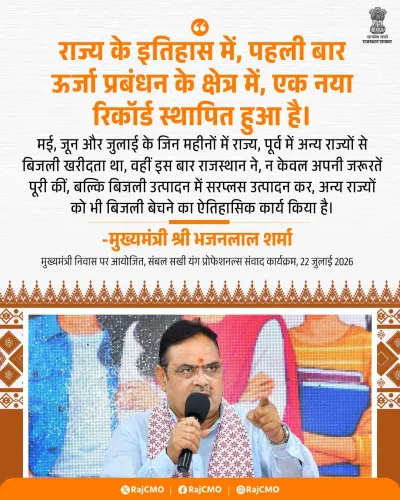
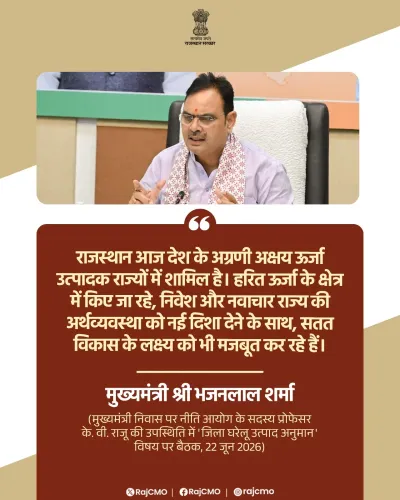
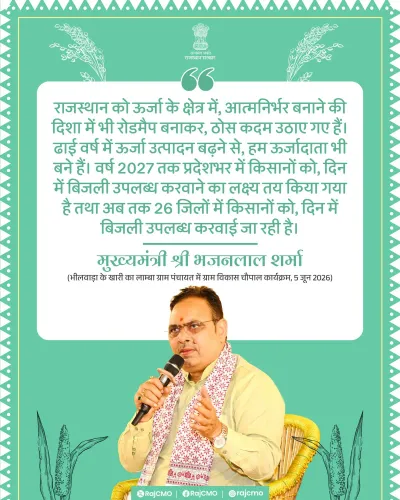
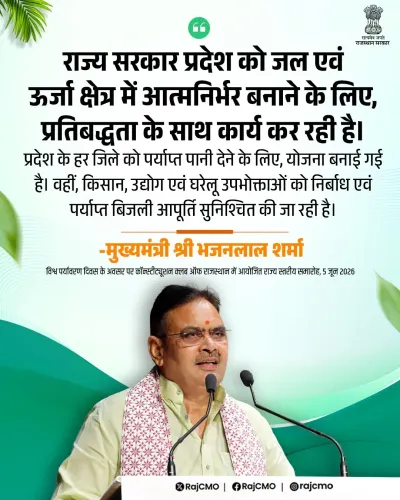
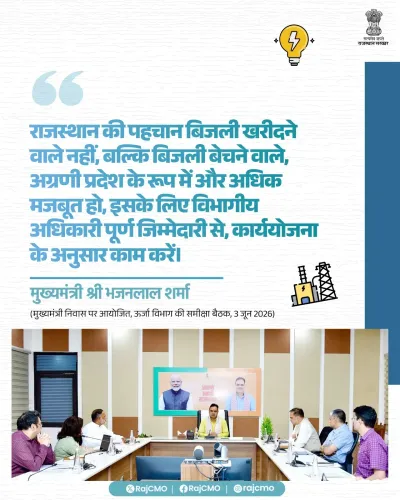
The Chief Minister's Office of Rajasthan declared on October 17, 2026 that the state has become a net electricity provider, a milestone attributed to large-scale renewable capacity additions under Chief Minister Bhajanlal Sharma's administration since December 2023.
Key Takeaways
Rajasthan's CMO announced on October 17, 2026 that the state has transitioned from a power-deficit consumer to a net electricity provider.
Chief Minister Bhajanlal Sharma is directly credited with the achievement, which is linked to the Rajasthan Renewable Energy Policy 2023 .
The announcement uses the phrase 'beyond self-reliance,' positioning Rajasthan as capable of exporting surplus power to other states.
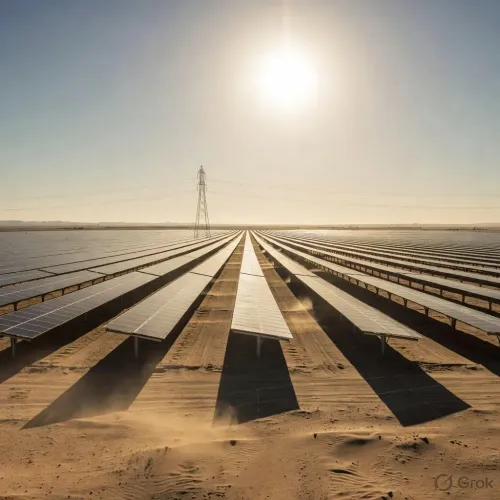
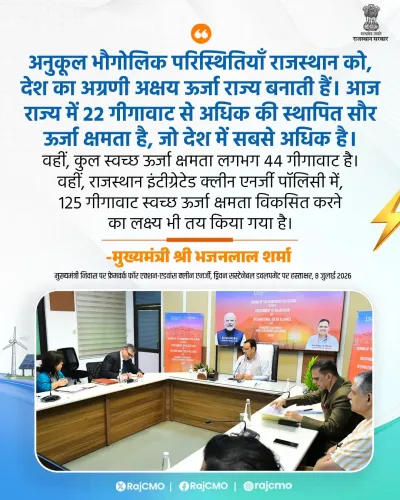
Rajasthan's geography — high solar irradiation and strong wind corridors — underpins its renewable energy potential.
Scaling transmission infrastructure for inter-state power sales is the critical next step for the state to fully realise the economic benefits of surplus generation.
Rajasthan has crossed a milestone that the state's energy planners have been working toward for years — moving from a power-deficit consumer to a net electricity provider, the Chief Minister's Office of Rajasthan announced on Saturday, October 17, 2026.
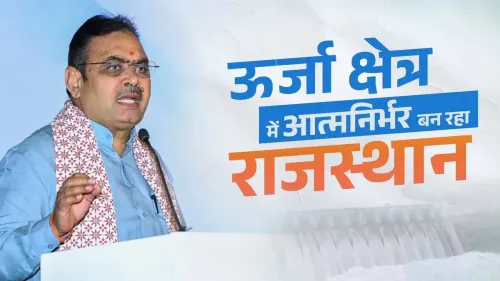
The post, shared by @RajCMO and addressed to Chief Minister Bhajanlal Sharma, declared: 'Bijli mein bhi aatmanirbharta se aage badhte hue, ab Rajasthan vidyut pradaata rajya ban gaya hai' — 'Moving beyond self-reliance in electricity, Rajasthan has now become an electricity provider state.' The hashtag #AapnoAgrani_Rajasthan ('Our Leading Rajasthan') underscored the government's framing of the achievement as a marker of the state's broader economic ascent.
From Deficit to Surplus: Rajasthan's Energy Turnaround
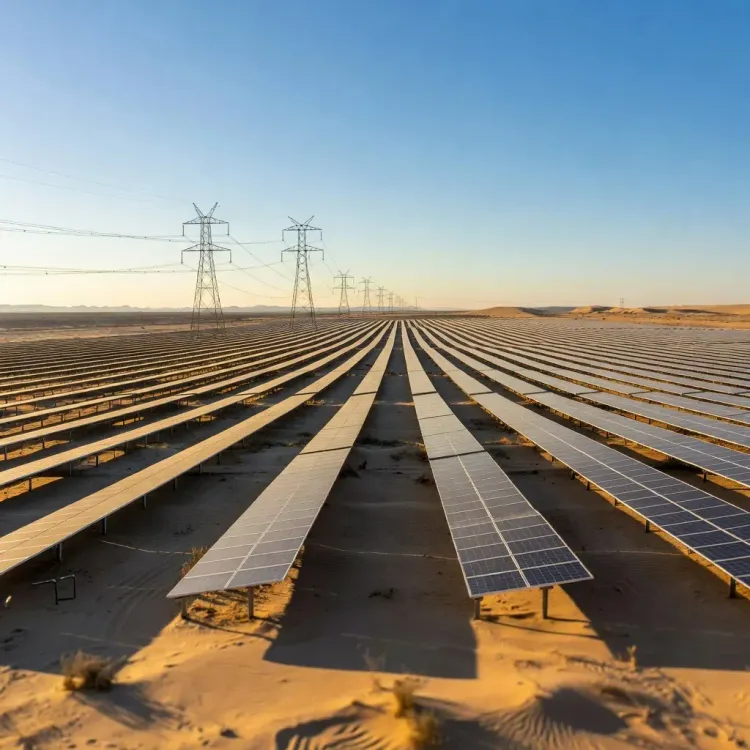
For much of the past two decades, Rajasthan — like several large Indian states — grappled with significant power shortfalls, particularly during peak summer months when agricultural and domestic demand surged. The state's vast desert geography, however, gave it an outsized natural advantage: among the highest solar irradiation levels in the country, and strong wind corridors in its western districts.
Rajasthan's Renewable Energy Policy 2023, introduced by the Bhajanlal Sharma government after it assumed office in December 2023, set an ambitious agenda for adding solar and wind capacity at scale. Power distribution companies and private renewable energy developers were aligned around targets designed not merely to meet domestic demand but to generate exportable surplus — a threshold few Indian states have cleared.
Why Becoming a 'Provider State' Matters
The designation of 'electricity provider state' carries real economic weight. States that produce surplus power can sell it to power-deficit neighbours through inter-state transmission corridors, generating revenue for the state exchequer and its distribution utilities. Several Indian states have pursued exactly this trajectory as part of the national energy transition push toward non-fossil fuel generation.
Rajasthan's geography makes it a natural candidate for becoming a major renewable energy exporter. The critical next step — one that analysts and grid planners have flagged — is scaling up transmission infrastructure capable of wheeling large volumes of power out of the state efficiently and at competitive tariffs.
Bhajanlal Government's Signature on the Achievement
Chief Minister Bhajanlal Sharma, who has positioned energy self-reliance as a pillar of his administration's governance narrative, is directly named in the announcement. The framing of the milestone as a step 'beyond self-reliance' — invoking the Atmanirbhar Bharat lexicon — signals a deliberate effort to align Rajasthan's achievement with the national economic self-sufficiency discourse championed by the BJP at the Centre.
If Rajasthan's surplus power finds buyers across state borders, it would mark a structural shift in the state's fiscal and energy profile — turning what was once a liability into a revenue-generating asset.
Point of View
If sustained, represents a significant inflection point in the state's fiscal and infrastructure story — transforming a legacy deficit into a potential export revenue stream. For the Bhajanlal government, the announcement is a political dividend on renewable energy investments made under the 2023 policy, timed to reinforce the BJP's Atmanirbhar Bharat narrative ahead of any state-level political cycle. The real test lies in transmission capacity: surplus generation without the grid infrastructure to wheel power out efficiently risks remaining a headline milestone rather than a durable economic shift. Rajasthan's trajectory is also a signal to other high-irradiation states watching whether a renewable-led leap to power surplus can translate into inter-state electricity trade at scale.
NationPress
17 Oct 2026
Frequently Asked Questions
Has Rajasthan become a power-surplus state?
The Chief Minister's Office of Rajasthan announced on October 17, 2026 that the state has become a net electricity provider, meaning it now generates more power than it consumes domestically.
What is Rajasthan's Renewable Energy Policy 2023?
The Rajasthan Renewable Energy Policy 2023, introduced by the Bhajanlal Sharma government after it took office in December 2023, set targets for large-scale solar and wind capacity addition aimed at achieving power surplus and enabling inter-state electricity sales.
What does it mean for Rajasthan to be an electricity provider state?
It means Rajasthan produces more electricity than it consumes and can sell the surplus to power-deficit states through inter-state transmission networks, generating revenue for the state.
Who is Bhajanlal Sharma and what is his role in Rajasthan's energy milestone?
Bhajanlal Sharma is the Chief Minister of Rajasthan, in office since December 2023. His administration's renewable energy policy is credited with driving the capacity additions that enabled the state to reach power-surplus status.
Which states in India have achieved power surplus through renewable energy?
Several Indian states have pursued renewable capacity expansion to achieve power surplus status and enable inter-state electricity sales, aligning with national non-fossil fuel generation targets. Rajasthan's announcement places it among this emerging group.