CM Bhajanlal's Rajasthan Pushes Water and Energy Self-Reliance
Synopsis
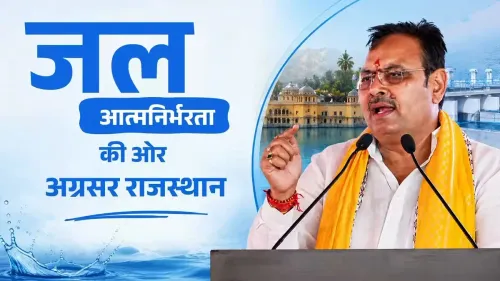
The Chief Minister's Office of Rajasthan declared on 6 June 2026 that the Bhajanlal Sharma-led BJP government is committed to achieving self-reliance in water and energy — two sectors critical to the state's arid geography, agricultural economy, and renewable energy potential.
Key Takeaways
The Chief Minister's Office of Rajasthan posted on 6 June 2026 affirming the government's commitment to water and energy self-reliance.
Chief Minister Bhajanlal Sharma has led the BJP government in Rajasthan since December 2023 .
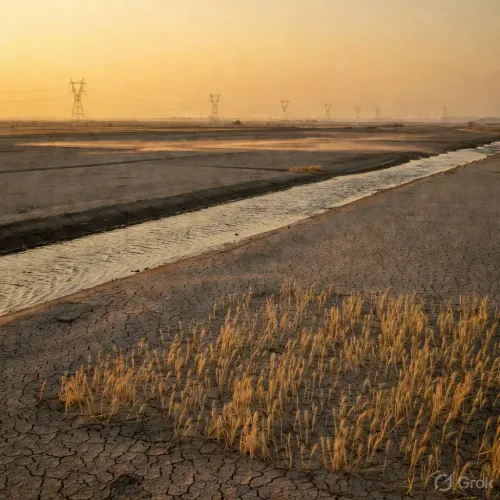
Rajasthan is India's largest state by area and faces acute water scarcity due to its arid climate.
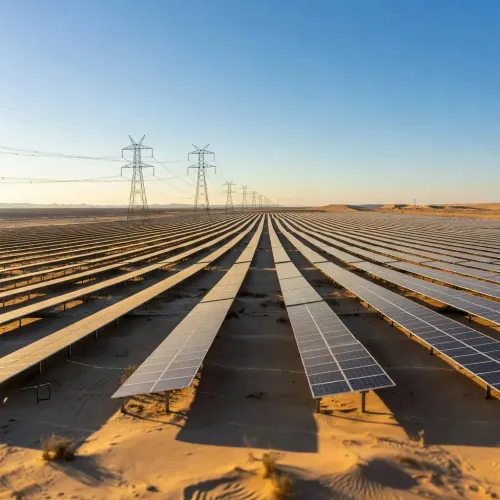
The state holds significant solar and wind energy potential and has pursued multiple renewable power policies.
Rajasthan participates in the national Jal Jeevan Mission (launched 2019) targeting piped water for every rural household.
Concrete scheme details and budget allocations for the 2026-27 fiscal cycle are awaited to substantiate the stated commitment.
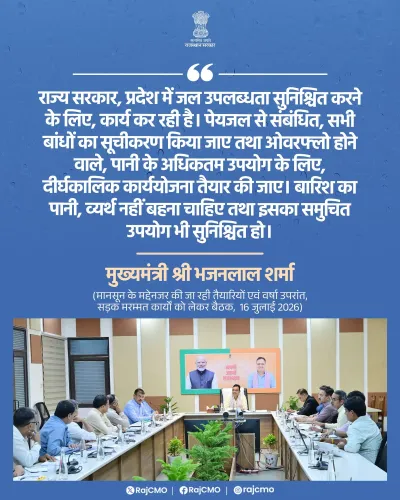
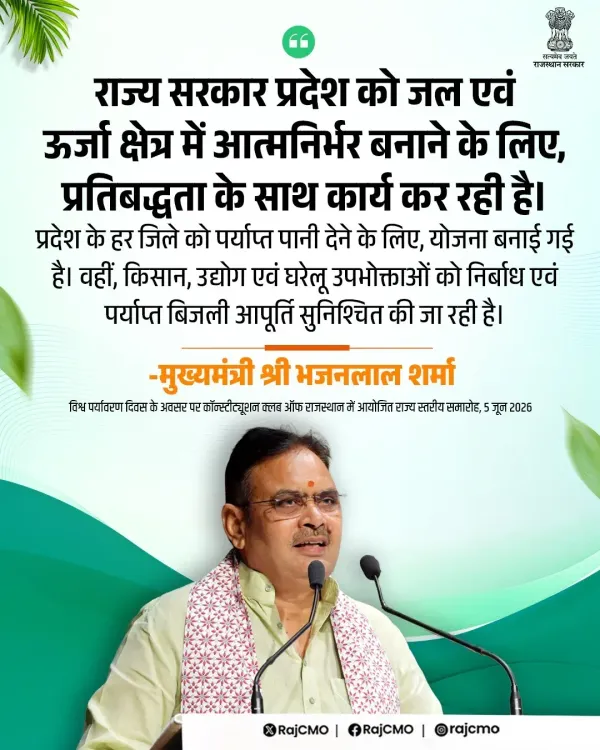
The Chief Minister's Office of Rajasthan reaffirmed on Saturday, 6 June 2026, that the state government is working with commitment to make Rajasthan self-reliant in the water and energy sectors, tagging Chief Minister Bhajanlal Sharma in the post under the hashtag #आपणो_अग्रणी_राजस्थान ('Our Leading Rajasthan').
Context
The post, shared from the official @RajCMO account, states in Hindi: 'राज्य सरकार प्रदेश को जल एवं ऊर्जा क्षेत्र में आत्मनिर्भर बनाने के लिए, प्रतिबद्धता के साथ कार्य कर रही है' — 'The state government is working with commitment to make the state self-reliant in the water and energy sector.' The message is directed at Bhajanlal Sharma, who has led the Bharatiya Janata Party government in Rajasthan since being sworn in during December 2023 following the assembly elections.
The framing of 'self-reliance' (aatmanirbhar) echoes the central government's Atmanirbhar Bharat framework introduced in 2020, which BJP-led state administrations have consistently adopted as a governance vocabulary across sectors including water and power.
Policy Backdrop
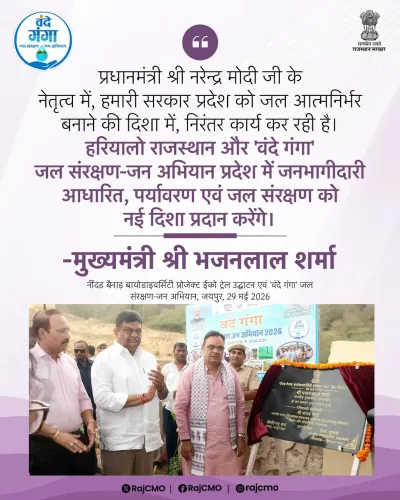
Rajasthan is India's largest state by area and faces chronic water scarcity driven by its predominantly arid geography. The state has been a participant in the national Jal Jeevan Mission since 2019, which targets piped water supply to every rural household. Large canal infrastructure and groundwater conservation have been policy priorities for successive governments over more than two decades.
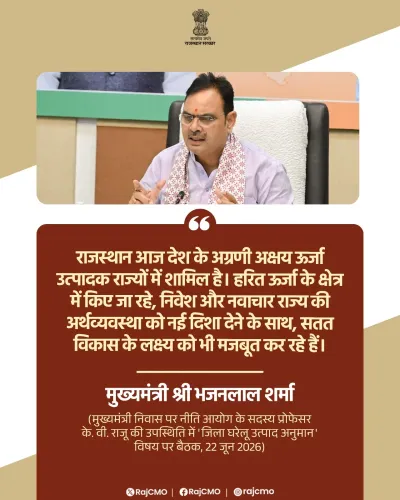
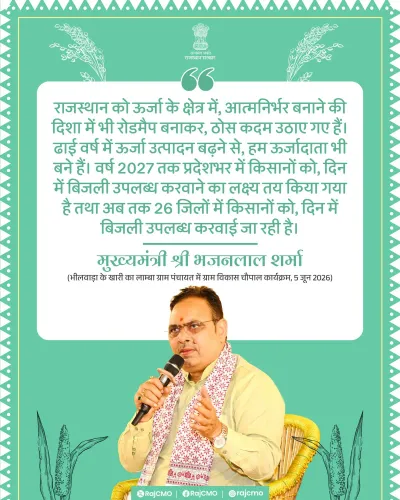
On the energy side, Rajasthan holds some of India's highest solar and wind energy potential, and the state has pursued multiple solar park policies to expand renewable generation capacity. The BJP government, after assuming office in late 2023, listed water conservation and renewable power among its stated priority sectors, aligning state goals with national energy transition targets.
Stakeholders and Impact
The sectors highlighted — water and energy — directly affect farmers, industries, and urban households across the state. For the agricultural community, reliable irrigation water and affordable electricity for pumps are existential concerns in a state where drought is a recurring challenge. Industrial growth corridors in Rajasthan similarly depend on stable power supply and water availability.
Urban consumers in cities such as Jaipur, Jodhpur, and Kota stand to benefit from improved water infrastructure, while the expansion of solar and wind capacity could ease the state's dependence on thermal power and reduce energy costs over time.
What's Next
The government's messaging signals continued policy focus on water and energy self-sufficiency heading into the 2026-27 fiscal cycle. Concrete targets, funding allocations, and project timelines are expected to emerge through state budget documents and new policy notifications in the coming months. Observers will watch whether the administration announces specific scheme launches or capital expenditure figures to back the stated commitment.
For a state that has long balanced resource scarcity with development ambitions, translating the self-reliance pledge into measurable infrastructure milestones will be the defining test of the Bhajanlal Sharma government's second full year in office.
Point of View
Which is a well-established BJP communication pattern — using the Atmanirbhar vocabulary to signal ideological continuity with the central government's framework. For Bhajanlal Sharma, now in his second full year in office, the messaging on water and energy serves a dual purpose: it speaks to Rajasthan's existential resource anxieties and simultaneously positions the state government as aligned with national infrastructure priorities. The absence of specific project names or figures, however, means the post is best read as political signalling ahead of what may be a consequential budget cycle. Whether the rhetoric translates into verifiable capital commitments will determine how this governance narrative ages.
NationPress
21 Oct 2026
Frequently Asked Questions
What did the Rajasthan government announce about water and energy on 6 June 2026?
The Chief Minister's Office of Rajasthan stated that the state government is working with commitment to make Rajasthan self-reliant in the water and energy sectors, tagging Chief Minister Bhajanlal Sharma in the post.
Who is the Chief Minister of Rajasthan in 2026?
Bhajanlal Sharma of the Bharatiya Janata Party is the Chief Minister of Rajasthan, having been sworn in during December 2023 following the state assembly elections.
What is Rajasthan's water supply situation?
Rajasthan is India's largest state by area and faces acute water scarcity due to its arid climate. The state participates in the national Jal Jeevan Mission launched in 2019, which aims to provide piped water to every rural household.
What is Rajasthan's renewable energy potential?
Rajasthan has some of India's highest solar and wind energy potential and has pursued multiple solar park policies over the years to expand renewable generation capacity.
What does 'Aatmanirbhar Rajasthan' mean in the context of water and energy?
'Aatmanirbhar' means self-reliant. In this context, the Rajasthan government is pledging to reduce the state's dependence on external water sources and non-renewable energy by developing its own water infrastructure and renewable power capacity.