Rajasthan CM Bhajanlal Sharma Pushes Water Availability Drive
Synopsis
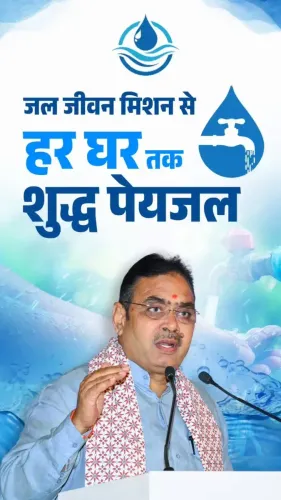
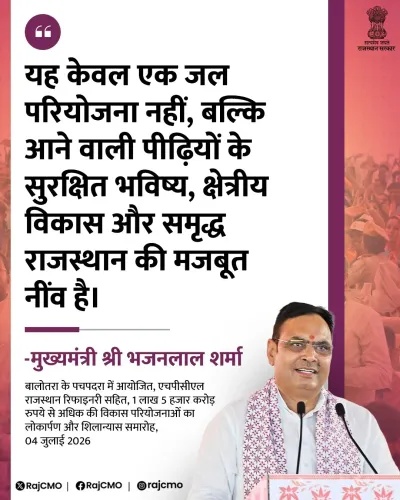
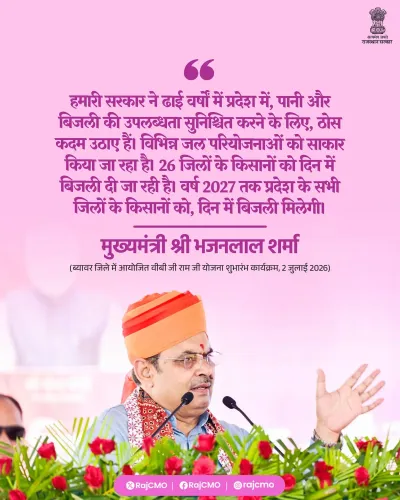
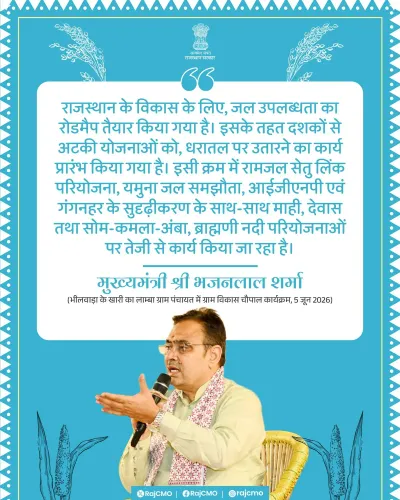
The Chief Minister's Office of Rajasthan on 17 July 2026 signalled the BJP government's ongoing push to ensure water availability across the arid state, tagging CM Bhajanlal Sharma under the 'Our Leading Rajasthan' campaign banner. The state has been implementing the Jal Jeevan Mission and developing canal infrastructure to address chronic water scarcity.
Key Takeaways
The Chief Minister's Office of Rajasthan posted on 17 July 2026 reaffirming the state government's work on ensuring water availability across the state.
Chief Minister Bhajanlal Sharma of the BJP was tagged, underlining his administration's ownership of the water security agenda.
Rajasthan , India's largest state by area, faces chronic water scarcity due to its arid and semi-arid climate.
The state has been implementing the Jal Jeevan Mission since 2019 to provide rural household tap water connections.
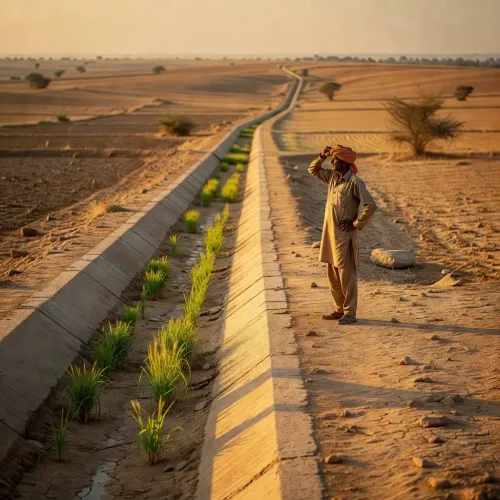
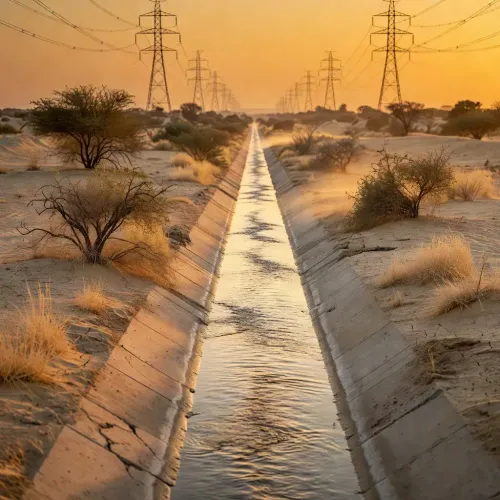
The Indira Gandhi Canal system continues to serve as a critical irrigation lifeline for western Rajasthan .
The post was published under the hashtag #आपणो_अग्रणी_राजस्थान ('Our Leading Rajasthan'), linking water security to a broader state development narrative.
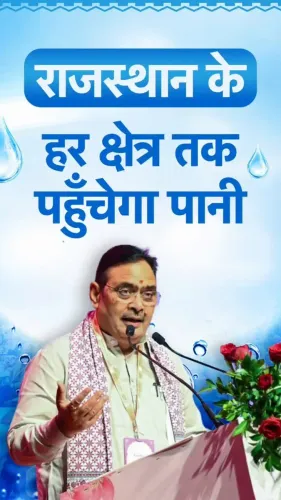
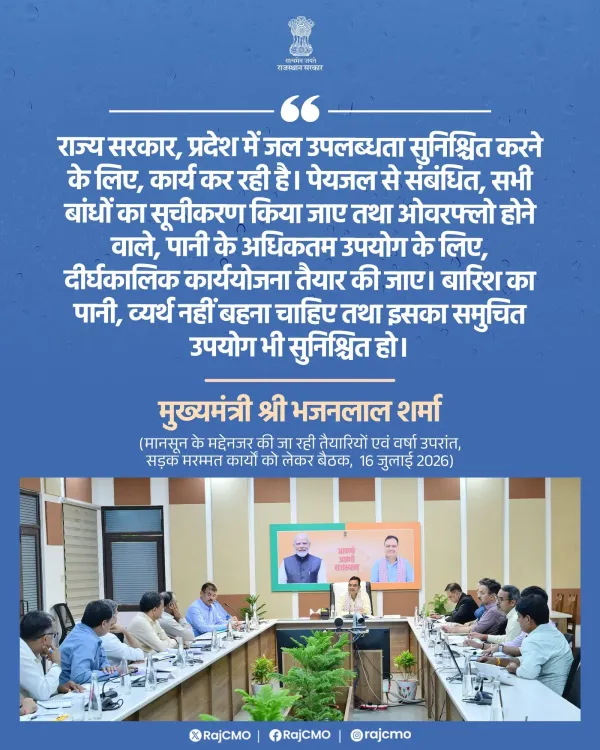
The Chief Minister's Office of Rajasthan on Friday, 17 July 2026, reaffirmed the state government's commitment to ensuring water availability across Rajasthan, tagging Chief Minister Bhajanlal Sharma in a post that carried the hashtag #आपणो_अग्रणी_राजस्थान ('Our Leading Rajasthan').
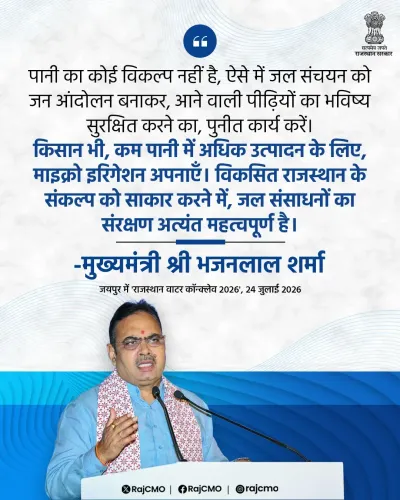
The post, published on the official CMO handle, stated: 'राज्य सरकार, प्रदेश में जल उपलब्धता सुनिश्चित करने के लिए, कार्य कर रही है' — 'The state government is working to ensure water availability in the state.' The brief but pointed message signals the administration's continued public emphasis on water security as a governance priority.
Context
Rajasthan is India's largest state by area and is characterised by an arid and semi-arid climate that has historically made water scarcity a persistent challenge for both agriculture and drinking water supply. The state's western districts in particular face acute shortages, with groundwater depletion compounding the problem over decades. Water availability therefore ranks among the most politically and socially sensitive issues for any Rajasthan administration.
Chief Minister Bhajanlal Sharma assumed office following the December 2023 state assembly elections, in which the BJP returned to power. Since then, the administration has sought to align state-level water infrastructure efforts with central government schemes, framing water security as a flagship development agenda.
Policy Backdrop
Rajasthan has been a participant in the Jal Jeevan Mission, the central scheme launched in 2019 aimed at providing functional household tap connections for drinking water in rural areas. The mission targets universal rural tap water coverage and has been under active implementation across the state's districts, with a focus on reaching underserved and remote communities.
Alongside the central mission, the state has continued development of the Indira Gandhi Canal system — originally conceived in the mid-20th century — which remains one of the most significant infrastructure lifelines for irrigation in western Rajasthan. Watershed development programmes and groundwater management initiatives have complemented these large-scale canal projects across successive administrations.
Stakeholders and Impact
The primary beneficiaries of Rajasthan's water security push are the state's rural households and farming communities, who bear the greatest burden of water stress. Reliable drinking water access directly affects public health outcomes, while irrigation availability shapes agricultural productivity and rural incomes across a predominantly agrarian population.
The broader pattern mirrors similar efforts in other water-stressed Indian states grappling with climate variability, erratic monsoons, and rising demand. Rajasthan's scale — both in geography and the severity of its aridity — makes its water governance model closely watched by policymakers nationally.
What's Next
Observers will watch for progress reports on Jal Jeevan Mission coverage targets in Rajasthan and any fresh state budget allocations directed at water conservation or canal modernisation in the next fiscal cycle. The CMO's public communication signals that water availability will remain a visible priority for the Sharma administration in the months ahead, with the hashtag 'Our Leading Rajasthan' framing it within a wider development narrative.
Point of View
The communication reinforces personal accountability for a policy area that is electorally sensitive in an arid state where water stress cuts across caste and community lines. The 'Our Leading Rajasthan' hashtag situates water security within a broader brand-building exercise, suggesting the administration intends to make infrastructure delivery — not just welfare — central to its political identity ahead of future electoral cycles. Whether the signalling translates into measurable gains in Jal Jeevan Mission coverage or canal modernisation will determine how durable this narrative proves to be.
NationPress
15 Oct 2026
Frequently Asked Questions
What is the Rajasthan government doing about water scarcity?
The Rajasthan government is working to ensure water availability across the state through initiatives including the Jal Jeevan Mission, which aims to provide rural household tap connections, and continued development of the Indira Gandhi Canal system for irrigation in western districts.
What is the Jal Jeevan Mission in Rajasthan?
The Jal Jeevan Mission is a central government scheme launched in 2019 to provide functional household tap water connections in rural areas. Rajasthan has been implementing the mission to address chronic drinking water shortages across its districts.
Who is Bhajanlal Sharma?
Bhajanlal Sharma is the Chief Minister of Rajasthan from the BJP, who assumed office after the December 2023 state assembly elections. His administration has prioritised water security as a key governance agenda.
Why is water scarcity a major issue in Rajasthan?
Rajasthan is India's largest state by area and is characterised by an arid and semi-arid climate, making water scarcity a persistent challenge. The state's western districts face particularly acute shortages, affecting both drinking water supply and agricultural irrigation.
What is the Indira Gandhi Canal and why is it important for Rajasthan?
The Indira Gandhi Canal is a large-scale irrigation infrastructure project originally conceived in the mid-20th century to bring water to western Rajasthan. It remains one of the most significant lifelines for agriculture in the region and continues to be developed under successive state governments.