Vaishnaw Hails India's First Hydrogen Train as Clean Mobility Leap
Synopsis
Union Minister Ashwini Vaishnaw has spotlighted India's first Hydrogen Train as a milestone in clean mobility, linking it to the National Green Hydrogen Mission and Indian Railways' net-zero roadmap. The fuel-cell powered train signals India's intent to decarbonise rail traction through indigenous innovation.
Key Takeaways
Union Minister Ashwini Vaishnaw on 17 July 2026 publicly highlighted India's first Hydrogen Train as a clean-energy breakthrough for the railways.
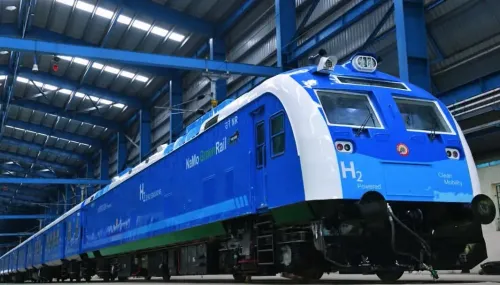
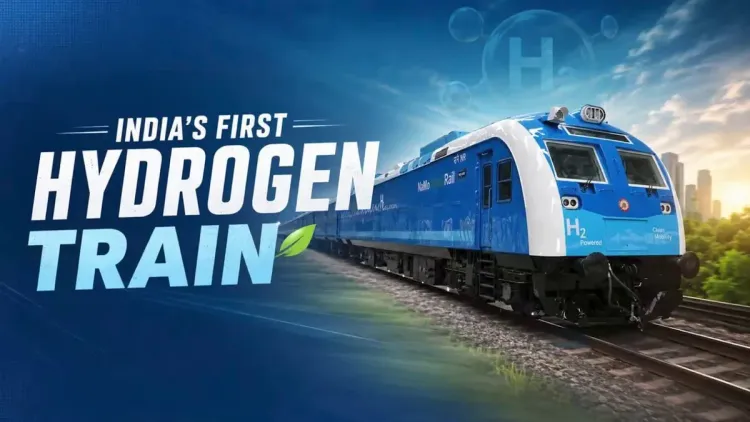
The hydrogen train runs on fuel cells, producing zero direct emissions, and can operate on non-electrified tracks.
The project is anchored in the National Green Hydrogen Mission announced in Union Budget 2021-22 .
Indian Railways has set a net-zero target by 2030 , with hydrogen traction identified as a key pillar.
Global precedents from Germany and Japan have informed India's hydrogen train development approach.
Route selection, commercial timelines, and budget allocations remain the critical next steps for scaling the programme.
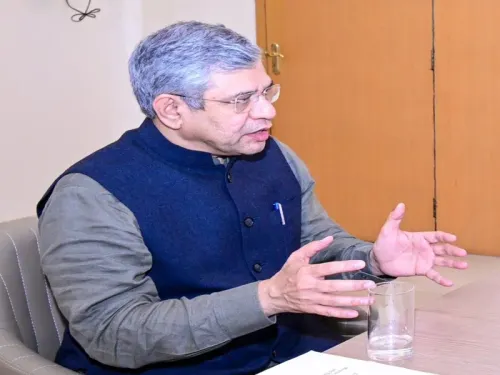
Union Minister Ashwini Vaishnaw on Friday, 17 July 2026, highlighted India's first Hydrogen Train as a landmark in the country's pursuit of sustainable mobility and world-class railway infrastructure, calling it a product of clean energy and homegrown innovation.
Context
Posting on X alongside a video, Vaishnaw described the hydrogen train as 'powered by clean energy and driven by innovation,' framing it as proof of Bharat's commitment to sustainable mobility. The minister oversees Indian Railways in his capacity as Union Minister of Railways, Electronics and Information Technology, and Information and Broadcasting — making the statement an official signal of the government's direction on zero-emission rail traction.
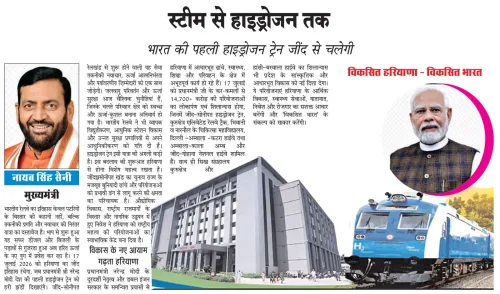
The hydrogen train project is a pilot initiative under Indian Railways to develop and operate the country's first hydrogen fuel-cell powered train for passenger services, producing zero direct emissions at the point of operation.
Policy Backdrop
The project sits within a layered policy architecture. The National Green Hydrogen Mission, announced in the Union Budget 2021-22, set the foundation for scaling green hydrogen across transport and industry. Indian Railways' corporate plan for 2022-23 subsequently identified hydrogen traction as a pillar of its net-zero roadmap by 2030.
India's broader decarbonisation framework — anchored to a 2070 net-zero pledge — has pushed the railways to accelerate the shift away from diesel traction. The Atmanirbhar Bharat framework has added a self-reliance dimension, with an emphasis on domestically developed rolling stock and propulsion systems rather than imported technology.
Globally, Germany and Japan have already conducted hydrogen train trials, providing technological benchmarks that Indian engineers have studied as the domestic programme took shape.
Stakeholders and Impact
For railway passengers, a successful hydrogen train rollout promises quieter, cleaner journeys on routes where full electrification of overhead infrastructure is either cost-prohibitive or logistically complex. Hydrogen trains can run on non-electrified tracks, potentially extending zero-emission services to regions underserved by the existing electrified network.
The renewable energy sector stands to benefit significantly: green hydrogen production — derived from electrolysis powered by solar or wind energy — would create upstream demand for clean power capacity. This positions the hydrogen train not merely as a transport project but as a demand anchor for India's green hydrogen ecosystem.
What's Next
Key questions now centre on commercial rollout timelines, the selection of initial routes, and the budget allocations that will determine how quickly the pilot scales into a fleet-level programme. Upcoming Railway Budget announcements and parliamentary sessions are expected to provide the next set of concrete milestones.
As India positions its railways as a flagship of its climate transition, the hydrogen train will be closely watched as a test of whether indigenous clean-energy technology can meet the operational demands of one of the world's busiest rail networks.
Point of View
Likely ahead of a formal announcement or rollout event. The framing around 'Bharat' and 'innovation' is consistent with the government's Atmanirbhar Bharat messaging, positioning a technology milestone as a national identity statement rather than a purely technical update. Placed within Indian Railways' net-zero-by-2030 roadmap, the hydrogen train serves a dual purpose: demonstrating climate ambition to international audiences while building a domestic green hydrogen demand base. The political timing — with railway modernisation a recurring BJP campaign theme — suggests this will feature prominently in the party's governance narrative ahead of electoral cycles.
NationPress
17 Jul 2026
Frequently Asked Questions
What is India's first Hydrogen Train?
India's first Hydrogen Train is a pilot project by Indian Railways to run a passenger train powered by hydrogen fuel cells, which generate electricity through a chemical reaction between hydrogen and oxygen, emitting only water vapour. It is designed to provide zero-emission rail services, including on non-electrified tracks.
What did Ashwini Vaishnaw say about the hydrogen train?
Union Minister Ashwini Vaishnaw on 17 July 2026 described the hydrogen train as 'powered by clean energy and driven by innovation,' calling it a reflection of India's commitment to sustainable mobility and world-class railway infrastructure.
How does the National Green Hydrogen Mission relate to the hydrogen train?
The National Green Hydrogen Mission , announced in Union Budget 2021-22 , is the overarching policy that supports green hydrogen production across sectors including transport. The hydrogen train project draws on this mission to source clean hydrogen fuel, making it part of India's broader decarbonisation strategy.
When will India's hydrogen train be commercially operational?
A confirmed commercial launch date has not been officially announced. Route selection, operational timelines, and budget allocations are expected to be clarified in upcoming Railway Budget announcements and parliamentary sessions.
Which countries already have hydrogen trains?
Germany and Japan have conducted hydrogen train trials and have operational hydrogen-powered rail services, providing technological benchmarks that have informed Indian Railways' hydrogen train development programme.