CM Saini Hails Launch of India's First Hydrogen Train by PM Modi
Synopsis
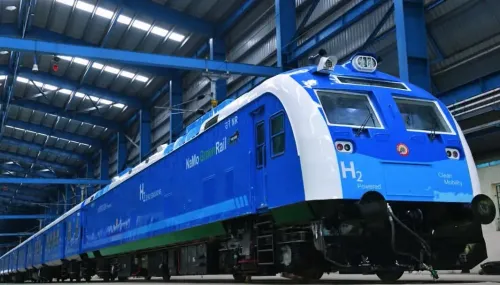
Prime Minister Narendra Modi inaugurated India's first hydrogen train on 17 July 2026, with Haryana CM Nayab Singh Saini live-streaming the event under #NaMoGreenRail. The launch advances the National Green Hydrogen Mission and India's 2070 net-zero goal, putting Indian Railways among early adopters of zero-emission rail technology.
Key Takeaways
Haryana CM Nayab Singh Saini shared a live broadcast on 17 July 2026 of PM Narendra Modi inaugurating India's first hydrogen train.
The event was promoted under the hashtag #NaMoGreenRail , signalling coordinated government communication around the launch.
The hydrogen train initiative is anchored in the National Green Hydrogen Mission , approved in 2023 to scale green hydrogen use across sectors including transport.
Indian Railways is pursuing both electrification and alternative-fuel pilots as part of its decarbonisation strategy.
India has a national commitment to reach net-zero emissions by 2070 , with transport a key sector in that roadmap.
Further deployment will depend on commissioning of green hydrogen production and refuelling infrastructure along rail corridors.
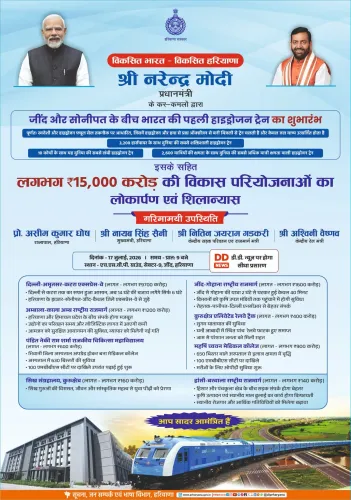
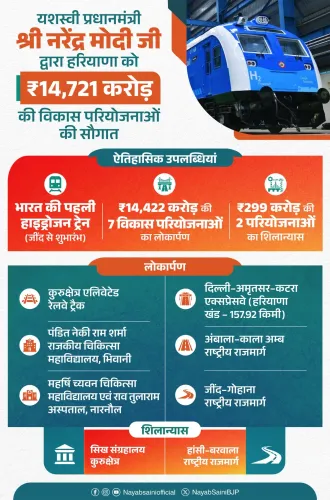
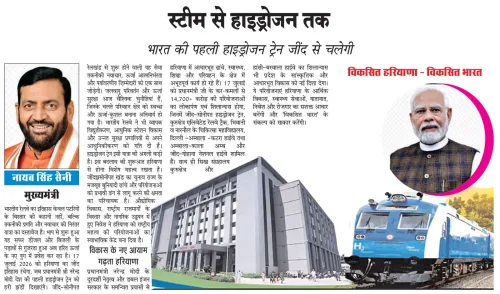
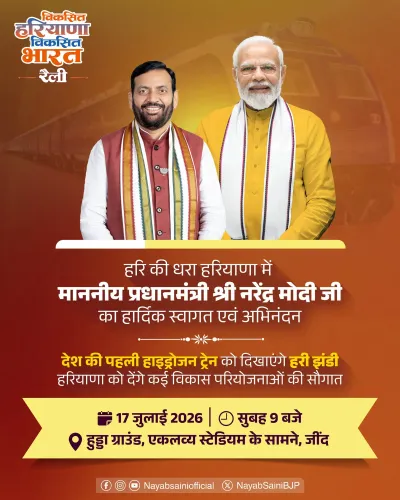
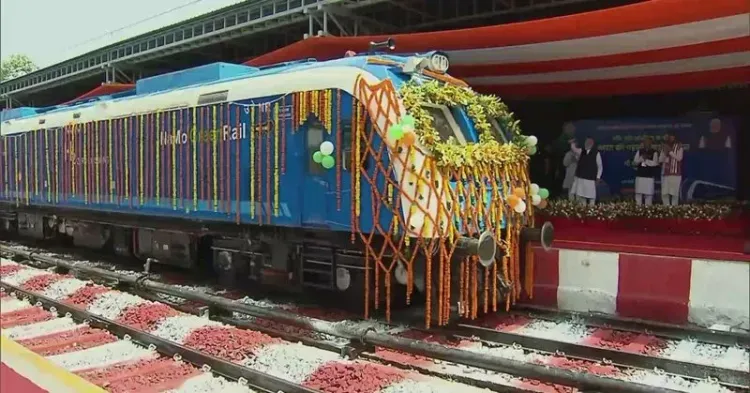
Haryana Chief Minister Nayab Singh Saini on Friday, 17 July 2026, shared a live broadcast of Prime Minister Narendra Modi inaugurating what the government has described as India's first hydrogen train, marking a significant milestone in the country's green transport ambitions.
Context
Saini posted the live stream on X with the caption 'LIVE: माननीय प्रधानमंत्री श्री नरेंद्र मोदी जी के कर कमलों से भारत की पहली हाइड्रोजन ट्रेन का शुभारम्भ' — meaning 'LIVE: The inauguration of India's first hydrogen train at the auspicious hands of Honourable Prime Minister Shri Narendra Modi Ji' — under the hashtag #NaMoGreenRail. The post carried an image from the event and linked to an official broadcast stream, signalling the high-visibility nature of the launch.
The inauguration places Indian Railways among a small group of national rail operators globally to pilot hydrogen-powered passenger trains, a technology that produces only water as a by-product and carries no direct carbon emissions at the point of use.
Policy Backdrop
The launch is rooted in the National Green Hydrogen Mission, approved by the Union Cabinet in 2023, which set out a framework to scale domestic green hydrogen production and channel it into hard-to-decarbonise sectors, including heavy transport and railways.
Indian Railways has pursued a twin-track decarbonisation strategy — accelerating electrification of its broad-gauge network while simultaneously piloting alternative-fuel technologies to reduce diesel dependence on routes where overhead electrification is not yet viable. The hydrogen train initiative sits at the frontier of that second track.
India has committed to reaching net-zero carbon emissions by 2070, and the transport sector — a major contributor to national emissions — is central to that roadmap. High-profile green infrastructure inaugurations have become a recurring feature of the current central government's communication of climate action.
Stakeholders and Impact
Railway passengers stand to benefit from quieter, cleaner rolling stock if the technology is scaled beyond the pilot phase. Domestic and international renewable energy firms and electrolyser manufacturers are watching closely, as broader hydrogen train deployment would create demand for green hydrogen production and purpose-built refuelling infrastructure along rail corridors.
For Haryana, whose political leadership has been vocal in amplifying central government infrastructure milestones, the launch also carries electoral and developmental symbolism, positioning the state's BJP administration as aligned with national green-growth priorities.
What's Next
The immediate question is whether the hydrogen train will move from a single inaugural service to regular scheduled operations, and on which routes. Analysts and industry stakeholders will look for announcements on the commissioning of dedicated green hydrogen production facilities and refuelling stations at railway depots.
Further deployment across additional corridors — particularly in regions with high diesel consumption and proximity to renewable energy capacity — will be the key indicator of whether this launch translates into a systemic shift or remains a high-visibility pilot.
Point of View
Timed to demonstrate tangible progress on the National Green Hydrogen Mission three years after its approval. By sharing the live stream, CM Saini aligns Haryana's BJP administration with a nationally resonant climate-action milestone ahead of any future electoral cycle. The launch follows a well-established pattern of high-visibility inaugurations that serve both policy communication and political consolidation. The harder test — whether hydrogen trains scale beyond a single pilot — will define whether this marks a genuine inflection point or a symbolic opener.
NationPress
17 Jul 2026
Frequently Asked Questions
What is India's first hydrogen train?
India's first hydrogen train is a zero-emission rail service inaugurated by Prime Minister Narendra Modi on 17 July 2026, powered by hydrogen fuel cells that emit only water as a by-product, under the National Green Hydrogen Mission.
What is the National Green Hydrogen Mission?
The National Green Hydrogen Mission is a central government scheme approved in 2023 to scale domestic green hydrogen production and its use in hard-to-decarbonise sectors, including railways and heavy transport.
Why did Haryana CM Nayab Singh Saini share the hydrogen train launch?
CM Nayab Singh Saini shared the live broadcast on X to highlight the central government's green infrastructure milestone, aligning his administration with the BJP-led national push on clean energy and transport decarbonisation.
How does the hydrogen train fit into India's climate goals?
India has committed to net-zero carbon emissions by 2070. The hydrogen train pilot is part of Indian Railways' dual strategy of electrification and alternative-fuel adoption to reduce diesel dependence and cut transport sector emissions.
What happens after the hydrogen train inauguration?
The next steps involve moving from a single inaugural service to regular scheduled operations, and commissioning green hydrogen production and refuelling infrastructure at railway depots to enable broader deployment.