Pradhan hails India's first Hydrogen Train launch from Haryana
Synopsis
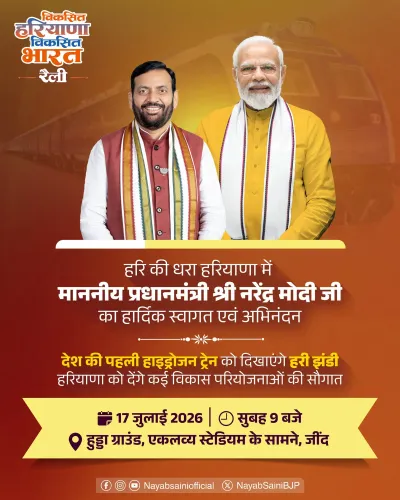
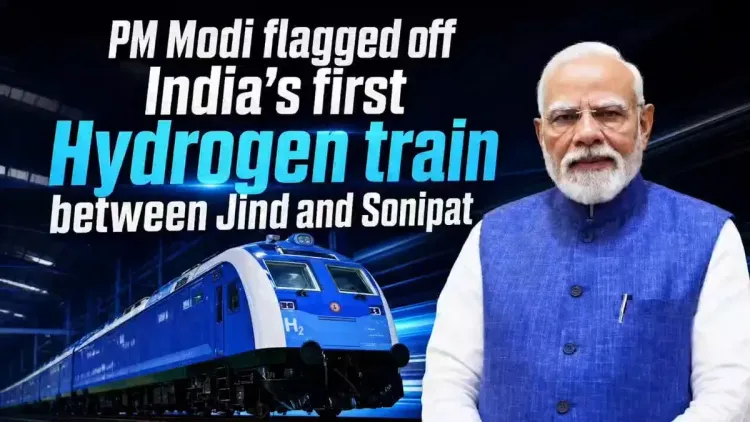
Union Education Minister Dharmendra Pradhan hailed PM Modi's dedication of India's first hydrogen-powered train from Haryana on 17 July 2026, calling green energy the country's 'new identity' and marking a landmark shift in Indian Railways' clean-energy ambitions.
Key Takeaways
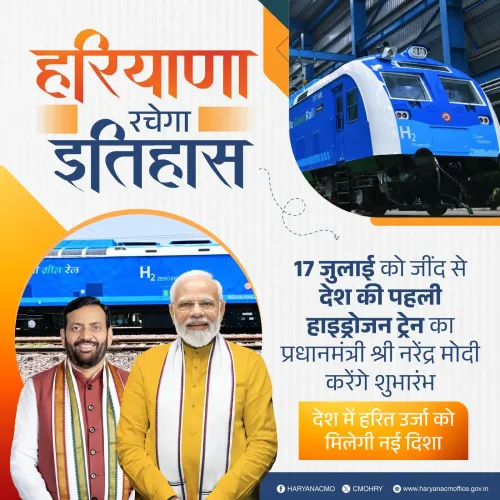
India's first hydrogen train was dedicated to the nation by PM Narendra Modi from Haryana on 17 July 2026 .
Union Education Minister Dharmendra Pradhan called green energy India's 'new identity', moving beyond a mere future aspiration.
Indian Railways committed to a net-zero target by 2030 , with hydrogen traction identified as a key pillar.
The National Green Hydrogen Mission (2023) provided policy and financial backing for hydrogen pilot projects in rail transport.
The launch sends a major demand signal to India's nascent green hydrogen production industry .
Further rollout will depend on route designation, fuelling infrastructure, and integration with green hydrogen hubs under the national mission.
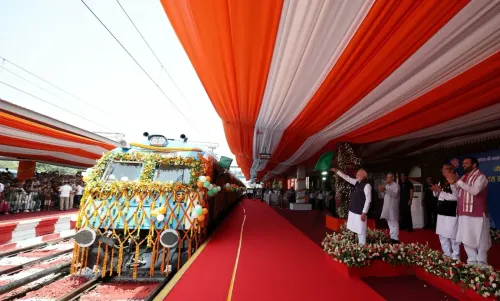
Union Education Minister Dharmendra Pradhan on Friday, 17 July 2026, celebrated the dedication of India's first hydrogen-powered train to the nation, calling it a defining moment in the country's clean energy journey. Prime Minister Narendra Modi launched the train from Haryana, marking what Pradhan described as the dawn of a new era for Indian Railways rooted in clean energy and modern technology.
Context
Posting in Hindi on X, Pradhan wrote: 'हरित ऊर्जा अब भारत के भविष्य का संकल्प नहीं, उसकी नई पहचान बन रही है' ('Green energy is no longer merely India's resolve for the future — it is becoming its new identity'). He credited PM Modi with dedicating the country's first Hydrogen Train to the nation from Haryana, heralding a 'new age of clean energy, modern technology and development' in Indian rail.
The launch positions Indian Railways — the world's fourth-largest railway network — as an early mover in hydrogen-based propulsion, a hard-to-abate sector that has historically depended heavily on diesel traction.
Policy Backdrop
Indian Railways committed to a net-zero carbon target by 2030 in its 2021–22 roadmap, which included trials of hydrogen fuel-cell trains on heritage and branch lines. The National Green Hydrogen Mission, approved in 2023, allocated dedicated funds for pilot projects in sectors such as rail transport, providing the policy and financial scaffolding for today's milestone.
India's broader transport decarbonisation push aligns with the 2070 net-zero pledge made at COP26. Railways, which account for a significant share of the country's diesel consumption, are being positioned as a showcase for scalable clean technology that can later be replicated across freight and long-haul passenger corridors.
Stakeholders and Impact
The immediate beneficiaries are railway passengers on the routes where hydrogen trains are deployed, who stand to gain from quieter, emission-free travel. The renewable energy and green hydrogen industry — still nascent in India — receives a major demand signal, as a fleet-level rollout would require sustained domestic hydrogen production at competitive costs.
Haryana, chosen as the launch state, gains visibility as a node in India's emerging green-mobility infrastructure. The event also reinforces the political salience of clean-energy milestones ahead of ongoing state-level policy cycles.
What's Next
Attention will now turn to the pace of further rollout: which routes are designated for hydrogen trains, how quickly the supporting fuelling infrastructure is built, and how the project integrates with upcoming green hydrogen production hubs under the National Green Hydrogen Mission. Policymakers and industry will watch whether the pilot can be scaled from a single train to a commercially viable fleet within the Railways' 2030 net-zero timeline.
If the hydrogen train programme scales as envisaged, it could reframe India's global standing in clean transport — turning a domestic infrastructure milestone into a template for other emerging economies seeking to decarbonise large rail networks.
Point of View
Future-facing infrastructure that transcends the conventional electrification narrative. By having a senior Cabinet minister amplify the event on social media, the BJP signals that clean transport is now a mainstream electoral asset, not just a technocratic goal. The choice of Haryana, a politically contested state, as the launch venue adds a regional dimension that is unlikely to be coincidental. If the hydrogen programme scales credibly, it could give India a rare first-mover story in green rail technology among large emerging economies.
NationPress
16 Oct 2026
Frequently Asked Questions
What is India's first hydrogen train and where was it launched?
India's first hydrogen-powered train was dedicated to the nation by Prime Minister Narendra Modi from Haryana on 17 July 2026 , marking a milestone in Indian Railways' shift to clean energy.
What is the National Green Hydrogen Mission?
The National Green Hydrogen Mission was approved in 2023 to scale domestic production and use of green hydrogen across hard-to-abate sectors, including rail transport, with dedicated funding for pilot projects.
What is Indian Railways' net-zero target?
Indian Railways committed to achieving net-zero carbon emissions by 2030 in its 2021–22 roadmap, with hydrogen fuel-cell trains and full electrification among the key strategies.
Why did Dharmendra Pradhan post about the hydrogen train?
Union Education Minister Dharmendra Pradhan , a senior BJP leader, posted on X to celebrate the launch as a symbol of India's clean energy identity, highlighting PM Modi's role in dedicating the train from Haryana.
What happens next after the hydrogen train launch in India?
The focus will shift to scaling the programme — designating more routes, building hydrogen fuelling infrastructure, and linking the initiative with green hydrogen production hubs under the National Green Hydrogen Mission before the Railways' 2030 net-zero deadline.