CM Saini Hails India's First Hydrogen Train Flagged Off from Jind
Synopsis
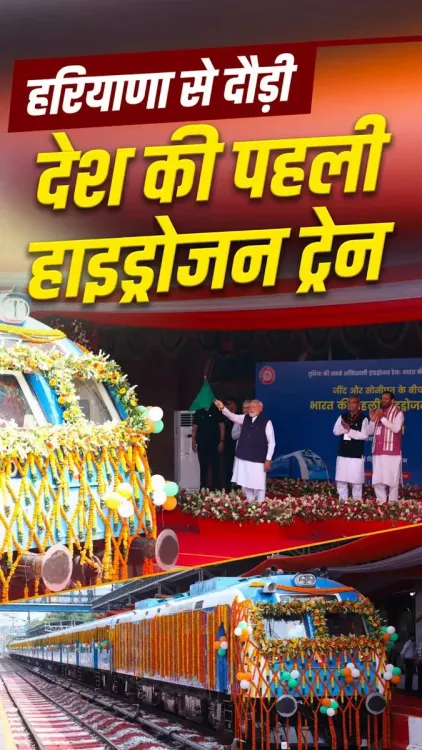
Prime Minister Narendra Modi flagged off India's first hydrogen-powered train from Jind, Haryana on 17 July 2026. Haryana Chief Minister Nayab Singh Saini celebrated the launch as a historic moment, connecting it to the National Green Hydrogen Mission and India's 2070 net-zero rail decarbonisation goals.
Key Takeaways
India's first hydrogen train was flagged off by Prime Minister Narendra Modi from Jind, Haryana on 17 July 2026 .
Haryana Chief Minister Nayab Singh Saini called the event a 'historic moment' in a post on X.
The launch builds on Indian Railways' 'Hydrogen for Heritage' prototype initiative begun in 2023 .
The project is anchored in the National Green Hydrogen Mission , approved in 2023 , targeting hydrogen use in transport including rail.
The deployment supports India's 2070 net-zero commitment by introducing zero-emission traction on low-density routes.
Further route expansions and National Green Hydrogen Mission 2030 targets will be the next milestones to watch.
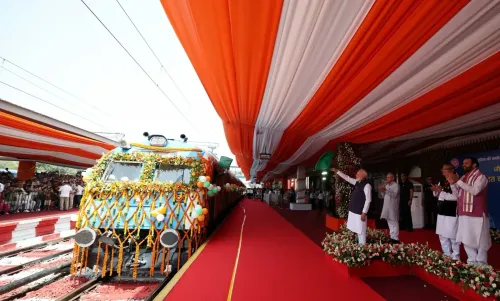
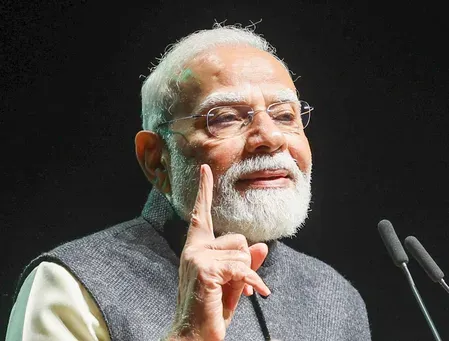
Haryana Chief Minister Nayab Singh Saini on Friday, 17 July 2026, celebrated the flagging-off of India's first hydrogen-powered train by Prime Minister Narendra Modi from Jind, Haryana, calling it a historic moment for the country's green mobility ambitions.
Posting on X, CM Saini wrote: 'Aitihasik kshaṇ!' ('A historic moment!'), noting that the Prime Minister had shown the green flag to the nation's first hydrogen train from Jind. The Chief Minister used the hashtags #HaryanaWelcomesModiJi, #HydrogenTrain, and #NaMoGreenRail, reflecting both state pride and the event's national significance.
Context
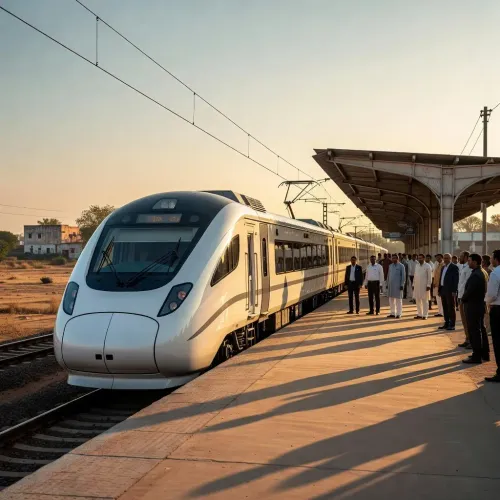
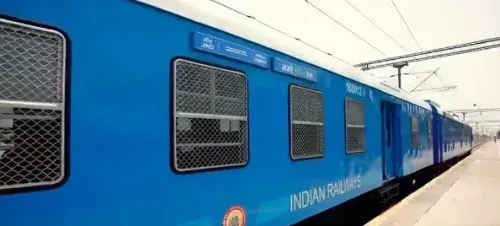
Jind, a district in central Haryana, served as the launch point for what the government has positioned as a landmark step in decarbonising Indian Railways. The event marks the first operational flagging-off of a hydrogen train on the national rail network, a milestone that has been in preparation since the railways unveiled a prototype under its 'Hydrogen for Heritage' initiative in 2023.
The choice of Haryana as the host state lends the inauguration a regional dimension, with CM Saini framing it as a moment of pride for the state's residents alongside its national importance.
Policy Backdrop
The hydrogen train project is rooted in the National Green Hydrogen Mission, approved by the Union Cabinet in 2023, which set out targets for scaling green hydrogen production and its application in transport, including rail. Indian Railways has been working toward zero-emission alternatives on heritage and low-density routes as part of India's 2070 net-zero commitment.
The 'Hydrogen for Heritage' initiative specifically targeted older, lower-traffic rail lines as candidates for hydrogen traction, where electrification costs are high and emission benefits are significant. The broader mission framework has already seen hydrogen pilots in buses and industrial refinery applications, making the rail inauguration the most visible mobility deployment to date.
Stakeholders and Impact
Railway passengers on the route and Haryana residents are the immediate beneficiaries, gaining access to a zero-emission mode of transport. For Indian Railways, the operational launch signals a transition from prototype trials to real-world deployment, with implications for procurement, maintenance ecosystems, and skilled workforce development around hydrogen technology.
The event also carries political weight: hosting a nationally significant green infrastructure launch strengthens Haryana's profile as a state aligned with the Centre's clean-energy agenda, and reinforces the BJP-led state government's association with the Prime Minister's flagship initiatives.
What's Next
Attention will now turn to the pace of route expansion for hydrogen trains across the national network and to the achievement of the National Green Hydrogen Mission's 2030 targets for mobility applications. Indian Railways is expected to announce further corridors where hydrogen traction will be introduced, with the Jind launch serving as the operational baseline for performance and cost benchmarking.
If the Jind deployment demonstrates reliable performance metrics, it could accelerate the case for hydrogen traction on a wider set of non-electrified routes, potentially reshaping the long-term decarbonisation roadmap for one of the world's largest rail networks.
Point of View
The event fuses two politically potent narratives: green modernisation and Haryana's development, with CM Saini visibly anchoring his state to a nationally celebrated milestone. The choice of a non-metro, non-electrified district like Jind as the launch site signals that hydrogen traction is being positioned as a solution for India's vast low-density rail network, not just a prestige project. How quickly the Railways can replicate and scale this deployment will determine whether the launch is remembered as a turning point or a one-off showcase.
NationPress
17 Jul 2026
Frequently Asked Questions
Where was India's first hydrogen train flagged off?
India's first hydrogen train was flagged off from Jind , a district in Haryana , by Prime Minister Narendra Modi on 17 July 2026 .
What is the National Green Hydrogen Mission?
The National Green Hydrogen Mission is a central government programme approved in 2023 to scale up green hydrogen production and its use in sectors including transport, with specific targets for rail and road mobility by 2030 .
What is the 'Hydrogen for Heritage' initiative?
Hydrogen for Heritage is an Indian Railways initiative launched in 2023 to introduce hydrogen-powered traction on heritage and low-density rail routes where full electrification is cost-prohibitive.
What did Haryana CM Nayab Singh Saini say about the hydrogen train?
CM Nayab Singh Saini called the event a 'historic moment' ( aitihasik kshaṇ ), noting that PM Modi had shown the green flag to the nation's first hydrogen train from Jind, Haryana.
How does the hydrogen train support India's climate goals?
Hydrogen trains produce zero direct emissions, supporting India's 2070 net-zero commitment . Deploying them on non-electrified routes allows Indian Railways to decarbonise segments of the network that cannot be cost-effectively served by electric traction.