Joshi hails India's first hydrogen train as Make in India triumph
Synopsis
Union Minister Pralhad Joshi hailed India's first hydrogen train as a Make in India milestone during PM Modi's Haryana visit, linking domestic engineering excellence and the National Green Hydrogen Mission to clean mobility goals and new employment for Haryana's youth.
Key Takeaways
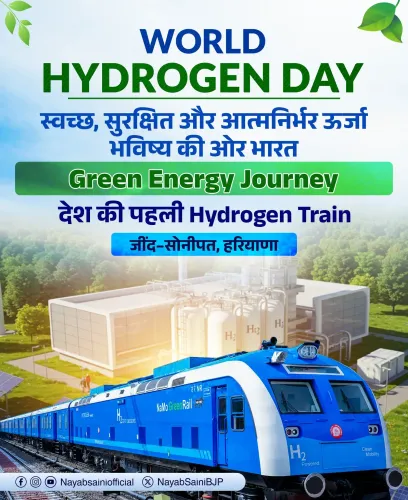
Union Minister Pralhad Joshi called India's first hydrogen train a 'shining example of Make in India' on 17 July 2026 .
The train was described as designed and built entirely by Indian engineers and an Indian company.
Joshi linked hydrogen infrastructure expansion in Haryana to new employment opportunities for the state's youth.
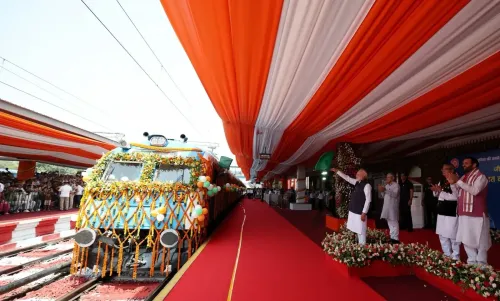
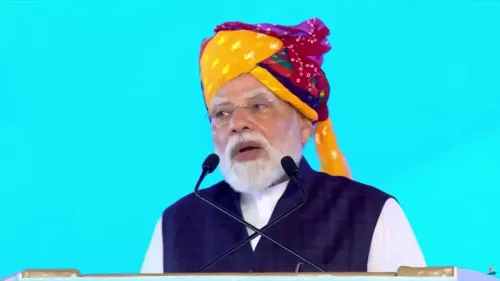
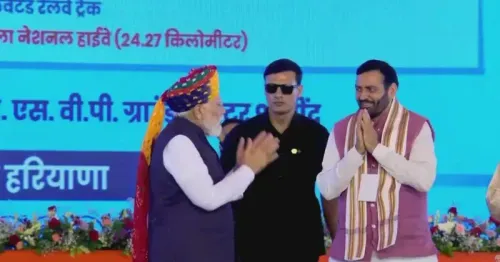
The statement was made in the context of PM Narendra Modi's visit to Haryana .
The National Green Hydrogen Mission (NGHM) , approved in 2023 , provides the policy framework for such clean mobility projects.
The Make in India initiative, launched in September 2014 , underpins the emphasis on domestic design and manufacturing of the hydrogen train.
Union Consumer Affairs and New and Renewable Energy Minister Pralhad Joshi on Friday, 17 July 2026, praised India's first hydrogen train as a landmark achievement in indigenous engineering, citing Prime Minister Narendra Modi's visit to Haryana as a backdrop for underscoring the country's clean mobility ambitions and commitment to self-reliance.
Context
Joshi's post, shared on the occasion of PM Modi's presence in Haryana, described the hydrogen train as 'not just smoke-free' but 'a shining example of Make in India.' He stressed that the train was 'designed by Indian engineers and built by an Indian company,' framing it as proof of the country's engineering excellence. The minister also linked the expansion of hydrogen infrastructure to new employment opportunities for the youth of Haryana.
The statement arrives at a moment when the government has been actively positioning green hydrogen as a cornerstone of India's transport decarbonisation strategy. By invoking both the Make in India campaign and the National Green Hydrogen Mission (NGHM), Joshi connected the train's debut to two of the government's flagship policy frameworks.
Policy Backdrop
The National Green Hydrogen Mission, approved in 2023, was designed to scale green hydrogen production and deployment across sectors including transport, heavy industry, and energy storage. It forms the institutional spine for projects like a domestically engineered hydrogen train, which would represent a convergence of the mission's mobility and manufacturing objectives.
The Make in India initiative, launched in September 2014, set the template for encouraging indigenous design and production in critical sectors. The hydrogen train, if it embodies both domestic engineering and clean propulsion, would mark a significant milestone in that two-decade-long push toward reducing import dependence in advanced technology segments.
India has pursued decarbonisation of transport through alternative propulsion technologies under renewable energy and self-reliance frameworks. Hydrogen, alongside electric mobility, has been identified as a key vector for achieving the country's net-zero commitments while building domestic industrial capacity.
Stakeholders and Impact
The primary beneficiaries cited by Joshi are the youth of Haryana, with the minister explicitly linking hydrogen infrastructure expansion to 'new employment opportunities.' Haryana has been identified as a state where hydrogen infrastructure is expected to grow, potentially creating skilled jobs in engineering, maintenance, and supply-chain roles.
Indian engineers and domestic manufacturers stand at the centre of this narrative. The emphasis on indigenous design and construction signals that the government intends to build a local hydrogen technology ecosystem rather than rely on imported systems. Railway sector workers and commuters on future hydrogen-powered corridors also form part of the broader stakeholder map.
What's Next
Attention will now turn to official announcements on deployment routes and operational timelines for hydrogen train services, as well as the integration of such projects with state-level renewable energy initiatives under the National Green Hydrogen Mission. Parliamentary scrutiny of budget allocations for green hydrogen infrastructure is expected in the next legislative session.
The government's ability to scale hydrogen mobility beyond a flagship demonstration will be the true test of the mission's ambitions. Sustained investment in hydrogen fuelling infrastructure, grid-linked green hydrogen production, and workforce training will determine whether the employment and clean-energy promises attached to this initiative translate into measurable outcomes for states like Haryana.
Point of View
A electorally significant state. The invocation of the National Green Hydrogen Mission alongside domestic engineering signals an effort to present India's hydrogen ambitions as a coherent, government-led industrial strategy rather than a one-off demonstration. The framing of youth employment as a direct outcome of infrastructure expansion is consistent with the government's broader pattern of linking green transition policy to job creation narratives. Whether the hydrogen train moves from flagship symbol to scalable network will ultimately determine the credibility of that promise.
NationPress
15 Oct 2026
Frequently Asked Questions
What is India's first hydrogen train?
India's first hydrogen train is a domestically designed and manufactured train that runs on hydrogen fuel, producing no direct emissions. Minister Pralhad Joshi described it as designed by Indian engineers and built by an Indian company, calling it a Make in India achievement.
What is the National Green Hydrogen Mission?
The National Green Hydrogen Mission (NGHM) is a central government programme approved in 2023 to scale up green hydrogen production and deployment across sectors including transport, industry, and energy storage in India.
How does the hydrogen train relate to Make in India?
The hydrogen train is being presented by the government as a product of indigenous engineering and domestic manufacturing, directly embodying the Make in India initiative launched in September 2014 to reduce India's dependence on imported technology.
What is the significance of Haryana in India's hydrogen plans?
Haryana has been cited by Minister Joshi as a state where hydrogen infrastructure expansion is expected to generate new employment opportunities for youth, making it a focal point in the government's clean mobility and job creation narrative.
What did Pralhad Joshi say about the hydrogen train?
Joshi said the hydrogen train is 'not just smoke-free' but 'a shining example of Make in India,' adding that the expansion of hydrogen infrastructure will 'accelerate clean mobility while generating new employment opportunities for the youth of Haryana.'