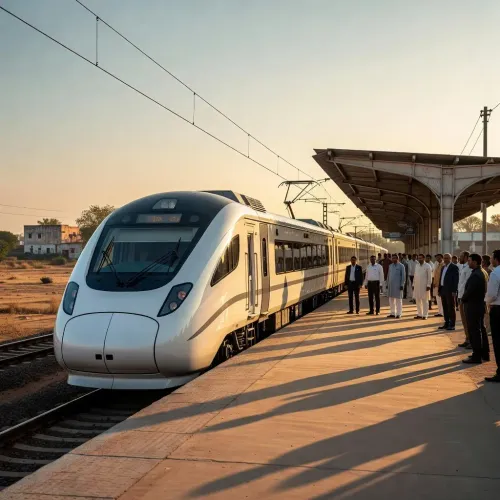
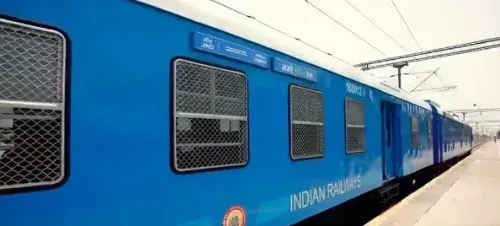
Chirag Paswan hails India's first hydrogen train flagged off from Jind

Synopsis
Prime Minister Narendra Modi flagged off India's first indigenous hydrogen-powered train from Jind, Haryana on 17 July 2026. The 10-coach rake runs on a 1,200 kW fuel-cell system, tops out at 75 km/h, and emits only water vapour — a major step in Indian Railways' net-zero mission.
Key Takeaways
Prime Minister Narendra Modi flagged off India's first indigenous hydrogen train from Jind, Haryana on 17 July 2026 .
The train comprises 10 coaches and is powered by a 1,200 kW hydrogen fuel-cell system .
Maximum operational speed is 75 km/h ; the only tailpipe emission is water vapour .
The launch advances Indian Railways' stated goal of achieving net-zero carbon emissions by 2030 .
The project aligns with the National Green Hydrogen Mission notified in January 2023 .
India joins a small group of nations — including Germany and China — to have deployed hydrogen rail technology.
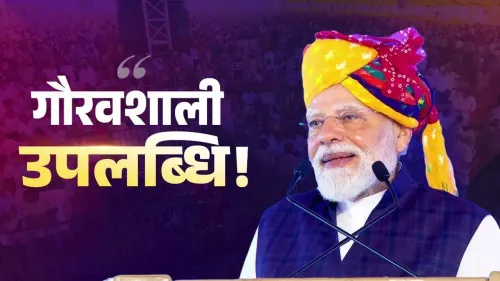
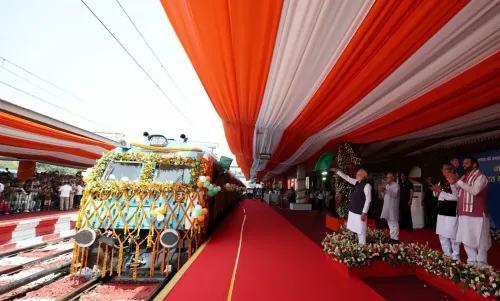
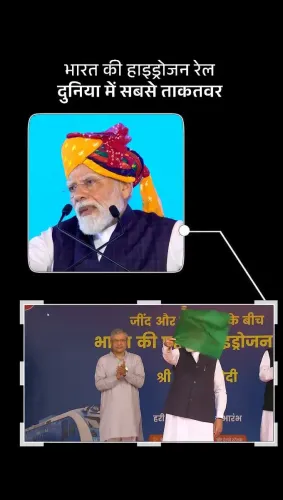
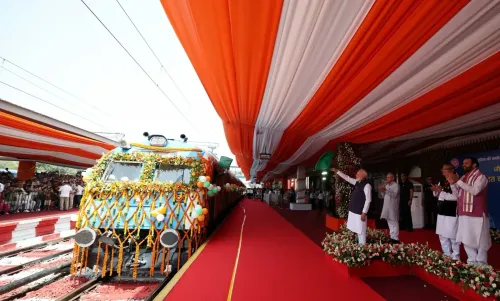
Union Food Processing Minister Chirag Paswan on Friday, 17 July 2026, took to X to mark a landmark moment in Indian transport history: Prime Minister Narendra Modi flagging off the country's first indigenous hydrogen-powered train from Jind, Haryana.
Paswan wrote that the train — a 10-coach rake powered by a 1,200 kW hydrogen fuel-cell system — would operate at a maximum speed of 75 km/h and emit only water vapour from its tailpipe. In his words, 'इसके टेलपाइप से केवल जलवाष्प का उत्सर्जन होगा' ('only water vapour will be emitted from its tailpipe'), underlining the train's zero-pollutant credentials. He described the launch as 'an important and environment-friendly step' toward Indian Railways' Green Transport Mission.
Context
Jind, a city in Haryana, was chosen as the flagging-off point for what the government is positioning as a milestone in indigenous technology development under the Atmanirbhar Bharat framework. Unlike diesel-electric or conventional electric traction, hydrogen fuel-cell trains generate electricity onboard through a chemical reaction between hydrogen and oxygen, with water vapour as the only exhaust product. The launch places India among a small group of countries — including Germany and China — to have deployed or tested hydrogen rail technology.
Policy Backdrop
The inauguration fits squarely within the National Green Hydrogen Mission, notified in January 2023, which earmarked resources to accelerate domestic production and deployment of green hydrogen across sectors including transport, industry, and shipping. Indian Railways, which operates the world's fourth-largest rail network, has committed to achieving net-zero carbon emissions by 2030 — an ambition first signalled at COP26. Hydrogen traction is one of several parallel decarbonisation tracks alongside mass electrification of routes and the use of compressed biogas and solar power at stations.
The project also reflects a broader push to indigenise critical clean-energy hardware. Developing a hydrogen train domestically reduces dependence on foreign technology suppliers and creates a potential export template for South Asian and Global South markets.
Stakeholders and Impact
For rail passengers, the immediate impact will be limited to the specific route and trial phase, but a successful deployment could accelerate the rollout of hydrogen rakes on non-electrified or partially electrified corridors across the country. Renewable energy firms and electrolyser manufacturers stand to benefit if Railways scales up green hydrogen procurement, since fuel-cell trains require a steady supply of hydrogen produced from clean sources to deliver genuine emissions savings.
Environmental groups and climate-policy advocates have long flagged diesel traction on branch lines as a persistent source of particulate and carbon emissions. A commercially viable hydrogen alternative could address that gap without the capital expenditure of full overhead electrification on low-traffic routes.
What's Next
The flagging-off marks the beginning of operational trials rather than a full commercial rollout. Observers will watch for data on route performance, refuelling infrastructure deployment, and any dedicated outlays in the next Railway Budget or revised targets under the Green Hydrogen Mission. Technology transfer arrangements with domestic production units and potential tie-ups with state governments for hydrogen supply chains will be key indicators of how quickly the programme can scale beyond a single prototype rake.
If trials validate the technical parameters announced at launch, India's hydrogen train programme could become a template for decarbonising branch-line and semi-urban rail corridors — and a significant proof-of-concept for the National Green Hydrogen Mission's transport pillar.
Point of View
Hydrogen traction offers a credible path to decarbonising the roughly 35 per cent of its network that remains non-electrified, without the time and cost of stringing overhead lines on low-density routes. Chirag Paswan's enthusiastic amplification of the event signals that the NDA coalition is keen to broaden ownership of the green-energy narrative beyond the ministries of Railways and New and Renewable Energy. The real test, however, lies ahead: scaling hydrogen supply chains, proving commercial viability, and translating a single prototype into a fleet.
NationPress
17 Jul 2026
Frequently Asked Questions
What is India's first hydrogen train and where was it launched?
India's first indigenous hydrogen-powered train was flagged off by Prime Minister Narendra Modi from Jind in Haryana on 17 July 2026. It is a 10-coach rake driven by a 1,200 kW hydrogen fuel-cell system and emits only water vapour.
How fast can India's hydrogen train go?
The train has a maximum operational speed of 75 km/h, according to details shared at the time of its inauguration.
What is the National Green Hydrogen Mission?
The National Green Hydrogen Mission is a central government scheme notified in January 2023 to promote the domestic production and use of green hydrogen across sectors including transport, industry, and shipping.
Why is a hydrogen train considered environment-friendly?
Hydrogen fuel-cell trains generate electricity by combining hydrogen and oxygen in a chemical reaction; the only by-product released from the tailpipe is water vapour, making them emission-free at the point of use.
What is Indian Railways' net-zero target?
Indian Railways has committed to achieving net-zero carbon emissions by 2030, a goal it has pursued through electrification of routes, use of renewable energy, and now hydrogen traction technology.