CM Manik Saha Hails India's First Hydrogen Train Launch

Synopsis
Tripura Chief Minister Dr. Manik Saha praised the launch of India's first hydrogen-powered train built on fully indigenous technology, calling it a historic milestone in Indian Railways' push for net-zero emissions and a symbol of Atmanirbhar Bharat under PM Narendra Modi.
Key Takeaways
Manik Saha celebrated the launch of India's first hydrogen-powered train on 17 July 2026 , crediting PM Narendra Modi .
The train is built entirely on indigenous Indian technology , reflecting the Atmanirbhar Bharat self-reliance policy.
Indian Railways has a stated target of achieving net-zero emissions by 2030 , with hydrogen propulsion as a key pillar.
The National Green Hydrogen Mission , launched in 2021 , laid the policy foundation for hydrogen applications in mobility.
The development benefits domestic rolling-stock manufacturers and opens a commercial pathway for next-generation Indian train technology.
Next steps include route expansion for hydrogen rakes and development of green-hydrogen refuelling infrastructure along rail corridors.
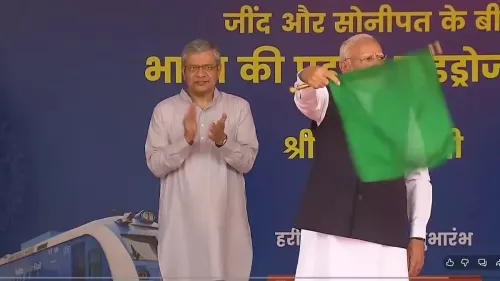
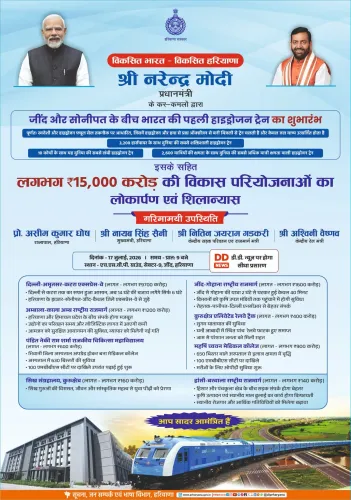
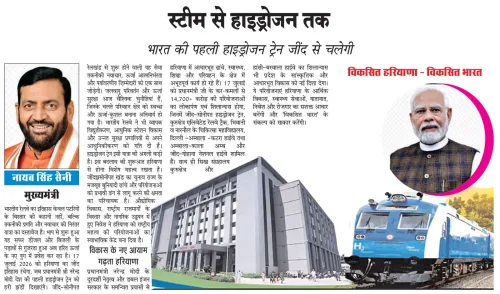
Tripura Chief Minister Dr. Manik Saha on Friday, 17 July 2026 celebrated the launch of India's first hydrogen-powered train, built entirely on indigenous technology, calling it a historic milestone in the country's railway sector. Crediting Prime Minister Narendra Modi, he described the development as a golden marker in the journey toward a self-reliant, modern, and environmentally conscious India.
Context
Writing in Bengali on X, Dr. Saha declared, 'এক নতুন ভারতের যাত্রা' ('A journey toward a new India'), framing the hydrogen train as emblematic of India's Atmanirbhar Bharat vision. He noted that the train was built using completely indigenous Indian technology, underlining its significance beyond mere infrastructure — as a statement of national industrial capability. The post was accompanied by a video, amplifying the announcement across his social media following.
Policy Backdrop
The launch is rooted in a policy arc stretching back several years. The National Green Hydrogen Mission, announced in 2021, set out to position India as a global hub for green hydrogen production and its application across industry and mobility sectors. Indian Railways, which has committed to achieving net-zero emissions by 2030, outlined plans to develop and trial hydrogen fuel-cell trains as a key pillar of its decarbonisation strategy during 2022–23. The hydrogen train now represents the translation of that policy intent into operational reality, driven by indigenous research and development rather than imported propulsion systems.
Successive railway budgets have prioritised cutting diesel dependence through alternative propulsion technologies. The development also aligns with India's international climate commitments, particularly its pledge to reduce the emission intensity of GDP under its updated Nationally Determined Contributions.
Stakeholders and Impact
Rail passengers across the network stand to benefit from cleaner, quieter train services as hydrogen propulsion emits only water vapour rather than greenhouse gases or particulate matter. Domestic rolling-stock manufacturers gain a significant boost, as the entirely indigenous build signals a viable commercial pathway for Indian firms in next-generation train technology. The project also sends a message to global markets about India's engineering depth in the green mobility space.
For Tripura and other states in the Northeast, improved and modernised rail connectivity has long been a political and developmental priority. Dr. Saha's enthusiastic endorsement reflects how central government infrastructure milestones are increasingly woven into the BJP's regional political narrative, particularly in states where rail access has historically been limited.
What's Next
Attention will now turn to the commercial deployment timeline and the selection of routes for additional hydrogen rakes beyond the inaugural service. Equally critical is the build-out of green-hydrogen refuelling infrastructure along dedicated corridors — a logistical challenge that will determine how quickly the technology can scale. Policymakers and industry will also watch whether the indigenous manufacturing model can be replicated at cost-competitive volumes to make hydrogen trains a mainstream rather than a showcase option for Indian Railways.
As India accelerates its clean-energy transition, the hydrogen train launch marks a convergence of climate policy, industrial ambition, and railway modernisation — a combination that the government is likely to highlight prominently in the lead-up to future electoral and diplomatic engagements.
Point of View
Amplified by a state chief minister rather than a railway official, illustrates how the BJP has made infrastructure milestones central to its political communication strategy — converting engineering achievements into electoral narratives. Dr. Saha's Bengali-language post is also a deliberate regional outreach, connecting Northeast India's aspirations for modern connectivity to central government delivery. The emphasis on 'completely indigenous technology' is not incidental: it positions India as a green-tech producer, not just a consumer, ahead of key multilateral climate forums. Whether the hydrogen train moves from showcase to scale will be the real test of the policy architecture built since 2021.
NationPress
17 Jul 2026
Frequently Asked Questions
What is India's hydrogen-powered train and when was it launched?
India's hydrogen-powered train is a fuel-cell locomotive built entirely on indigenous technology by Indian Railways. It was launched in July 2026 under the initiative of PM Narendra Modi , marking a first for the country's rail sector.
What did Tripura CM Manik Saha say about the hydrogen train?
Dr. Manik Saha called it 'a golden milestone' in India's journey toward a self-reliant, modern, and environmentally friendly nation, crediting PM Modi for the achievement in a post on X on 17 July 2026 .
What is the National Green Hydrogen Mission?
The National Green Hydrogen Mission is a central government scheme announced in 2021 to make India a global hub for the production and use of green hydrogen across industry and mobility, including railways.
What is Indian Railways' net-zero target?
Indian Railways has committed to achieving net-zero carbon emissions by 2030 , with hydrogen fuel-cell trains forming a key part of its strategy to eliminate dependence on diesel traction.
How does the hydrogen train connect to Atmanirbhar Bharat?
The train's fully indigenous construction directly embodies the Atmanirbhar Bharat ('self-reliant India') policy, demonstrating that India can design and manufacture advanced green-mobility technology domestically without relying on foreign propulsion systems.