Sitharaman Sanctions ₹3,216 Cr Credit in Palnadu Outreach
Synopsis
Finance Minister Nirmala Sitharaman attended the Credit Outreach Programme in Narasaraopeta, Andhra Pradesh on 17 July 2026, announcing over ₹3,216 crore sanctioned to more than 1 lakh Palnadu district beneficiaries and declaring India's shift from 'Phone Banking' to merit-based credit delivery.
Key Takeaways
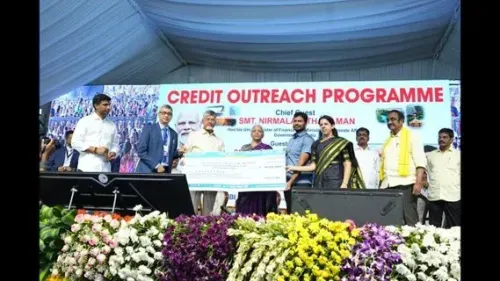
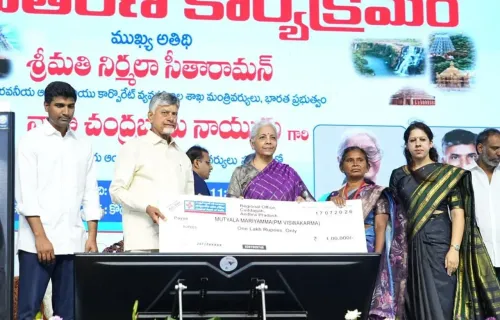
Over ₹3,216 crore has been sanctioned to more than 1 lakh beneficiaries in Palnadu district through the Credit Outreach Programme.
Finance Minister Nirmala Sitharaman attended the event in Narasaraopeta, Andhra Pradesh on 17 July 2026 .
Sitharaman declared India has moved from the era of 'Phone Banking' to merit-based, people-centric credit delivery.
The programme draws on a policy lineage including PM Jan Dhan Yojana (2014) and PM Mudra Yojana (2015) .
Both Prime Minister Narendra Modi and Andhra Pradesh CM N.
Chandrababu Naidu were credited for the vision and state-level execution respectively.
Beneficiaries were urged to grow enterprises and contribute to the Viksit Bharat 2047 national development goal.
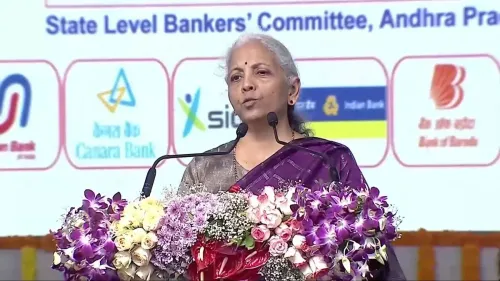
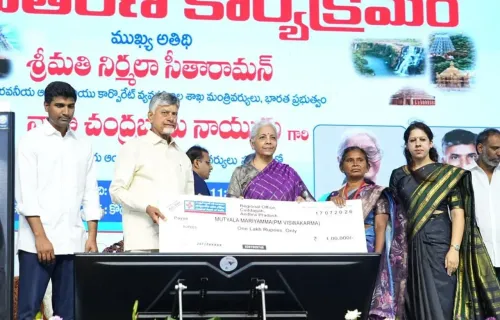
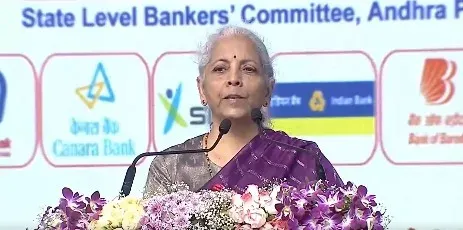
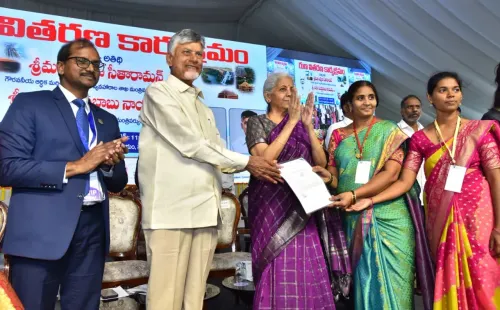
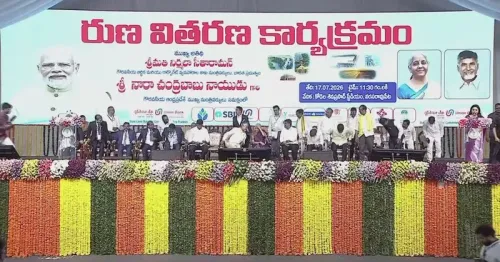
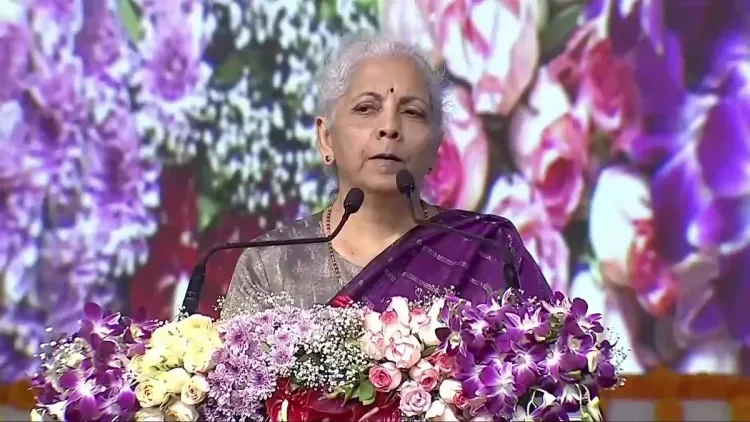
Union Finance Minister Nirmala Sitharaman on Friday, 17 July 2026, attended the Credit Outreach Programme in Narasaraopeta, Andhra Pradesh, announcing that over ₹3,216 crore has been sanctioned to more than 1 lakh beneficiaries in Palnadu district — marking what she described as India's shift from 'Phone Banking' to people-centric banking where credit reaches deserving citizens on merit.
Context
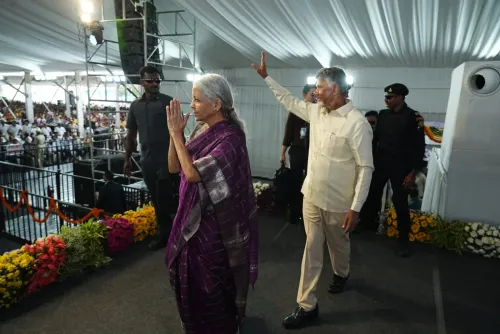
Sitharaman declared that India has moved away from the era of 'Phone Banking' — a pointed reference to the practice of politically connected individuals securing loans through informal calls to bank officials — toward a merit-based credit delivery model. Addressing beneficiaries in Narasaraopeta, she urged each recipient to 'grow their enterprise, create more opportunities and contribute to a Viksit Bharat by 2047.' She credited Prime Minister Narendra Modi for the overarching vision and Andhra Pradesh Chief Minister N. Chandrababu Naidu for driving implementation at the state level.
Policy Backdrop
The Credit Outreach Programme is part of a decade-long central government effort to extend formal credit directly to eligible citizens, bypassing legacy banking frictions. Its lineage includes the Pradhan Mantri Jan Dhan Yojana launched in 2014, which expanded bank account access across the country, and the Pradhan Mantri Mudra Yojana introduced in 2015, which provides collateral-free loans to micro and small enterprises. A post-2016 push for digital payments and direct benefit transfers further reduced dependence on conventional, relationship-driven banking channels.
The 'Phone Banking' phrase carries deliberate political weight in the Indian context, alluding to allegations — particularly from the 2014 general election campaign — that loans were routed to well-connected borrowers through telephone calls to public-sector bank heads, contributing to a surge in non-performing assets. The current programme is positioned as the institutional corrective to that era.
Stakeholders and Impact
The primary beneficiaries are small entrepreneurs and rural borrowers in Palnadu district, a largely agrarian region of Andhra Pradesh. With over 1 lakh individuals receiving sanctioned credit, the programme targets enterprise formation at the grassroots level. The coordination between the Union Finance Ministry and the Andhra Pradesh state government reflects a broader federal partnership model for localising national financial inclusion targets.
Chandrababu Naidu's Telugu Desam Party-led government has aligned closely with central financial inclusion drives since returning to power, making Andhra Pradesh an active implementation partner for such outreach events. For beneficiaries, the sanctioned amounts represent access to formal credit that may previously have been out of reach through conventional banking.
What's Next
Attention will now turn to the disbursement and repayment performance of loans sanctioned in Palnadu, and whether the programme will be extended to additional districts across Andhra Pradesh and other states. Aggregate outcomes from such credit outreach events are periodically reviewed by the Reserve Bank of India and parliamentary standing committees as indicators of financial inclusion progress. The government has framed these efforts as building blocks toward the Viksit Bharat 2047 goal of transforming India into a fully developed economy by the centenary of independence.
Point of View
And deploying it at a grassroots disbursal event reinforces the party's financial-governance narrative ahead of any future electoral cycle in Andhra Pradesh. The explicit crediting of both Modi and Chandrababu Naidu signals the importance of the TDP alliance to the BJP-led NDA's southern strategy. More substantively, the Credit Outreach Programme represents the Union Finance Ministry's attempt to demonstrate that Jan Dhan-era account creation has translated into actual credit flow — a metric that has historically lagged behind account-opening numbers. Whether Palnadu's sanction figures translate into sustained enterprise growth and timely repayment will be the harder test of the programme's merit-based promise.
NationPress
15 Oct 2026
Frequently Asked Questions
What is the Credit Outreach Programme in India?
The Credit Outreach Programme is a central government initiative to extend formal credit directly to eligible citizens on merit, bypassing traditional relationship-based banking channels. It is linked to schemes like PM Jan Dhan Yojana and PM Mudra Yojana.
How much credit was sanctioned in Palnadu district?
Over ₹3,216 crore has been sanctioned to more than 1 lakh beneficiaries in Palnadu district, Andhra Pradesh, as announced by Finance Minister Nirmala Sitharaman on 17 July 2026.
What did Nirmala Sitharaman mean by 'Phone Banking'?
'Phone Banking' refers to the alleged practice of politically connected individuals securing bank loans through informal calls to public-sector bank officials, which the current government associates with the rise in non-performing assets in the pre-2014 period.
What is Viksit Bharat 2047?
Viksit Bharat 2047 is the Indian government's national vision to transform India into a fully developed economy by 2047, the centenary of independence. Financial inclusion and enterprise creation are presented as key pillars of this goal.
What is Nirmala Sitharaman's role in banking policy?
As Union Finance Minister since 2019, Nirmala Sitharaman oversees banking regulation, the Union Budget, and financial inclusion programmes, and chairs the Financial Stability and Development Council.