Phone banking under UPA caused massive NPAs, pushed banks to losses: FM Sitharaman
Synopsis
Finance Minister Sitharaman used a credit outreach event in Andhra Pradesh to directly blame the UPA government's alleged 'phone banking' practice for the NPA crisis that crippled Indian banks. The political charge came alongside the disbursement of ₹3,216 crore to over 1 lakh beneficiaries — turning a banking event into a pointed electoral counter-narrative.
Key Takeaways
FM Nirmala Sitharaman alleged that 'phone banking' under the UPA government (2004–2014) directed ineligible loan disbursements, causing massive NPAs and bank losses.
At the Narasaraopet credit outreach, ₹3,216 crore in loans was distributed to 1,03,246 beneficiaries under Central Government schemes.
Sectoral breakdown: ₹2,363 crore for agriculture, ₹325 crore for MSMEs, ₹624 crore for housing, education, vehicles, and solar projects.
CM Chandrababu Naidu said Andhra Pradesh is set to receive ₹7,707 crore under the VB-G Ram G scheme and ₹40,000 crore for the Rayalaseema horticulture hub.
Loan rescheduling by the state government has reportedly generated savings of ₹1,538 crore .
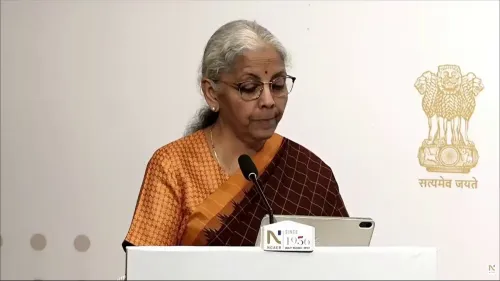
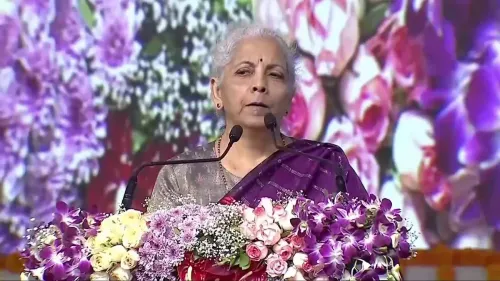
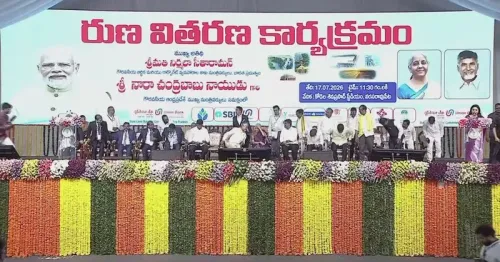
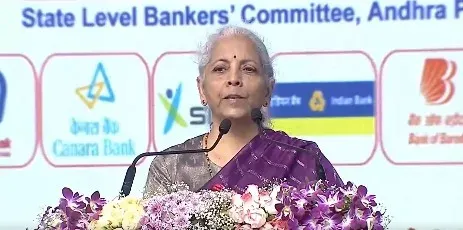
Union Finance Minister Nirmala Sitharaman on Friday, 17 July alleged that a practice of 'phone banking' during the United Progressive Alliance (UPA) government's tenure from 2004 to 2014 led to massive non-performing assets (NPAs) and drove public sector banks into deep financial losses. She made these remarks while addressing a credit outreach programme in Narasaraopet, Andhra Pradesh.
The 'Phone Banking' Allegation
Sitharaman claimed that during the UPA era, political leaders in Delhi would telephone bank officials and direct them to disburse loans to specific individuals who were not creditworthy or eligible. She alleged these loans were never repaid, triggering a cascade of bad debt across the banking system.
'They started the phone banking system. The loans that were given were never repaid. Banks fell into debt,' she said.
The Finance Minister argued that this politicisation of credit decisions was the root cause of the NPA crisis that burdened Indian banks for years — a crisis that required significant regulatory intervention and capital infusion to resolve.
What Changed After 2014, According to Sitharaman
Sitharaman contended that Prime Minister Narendra Modi's government, which took office in 2014, reversed this approach by envisioning a model where banks proactively reach citizens rather than responding to political pressure. She highlighted collateral-free lending to street vendors and women as a direct outcome of this shift.
'We launched this programme to support street vendors by having the government provide the necessary guarantees for their businesses. Banks are providing low-interest loans without requiring collateral, benefitting both traders and women,' she said.
She added that the initiative was driven by the observation that small traders were previously forced to depend on moneylenders and middlemen for micro-finance, paying exorbitant interest rates. 'The NDA government's goal is to encourage individuals by granting loans based simply on eligibility,' she said.
Key Disbursements at Narasaraopet Outreach
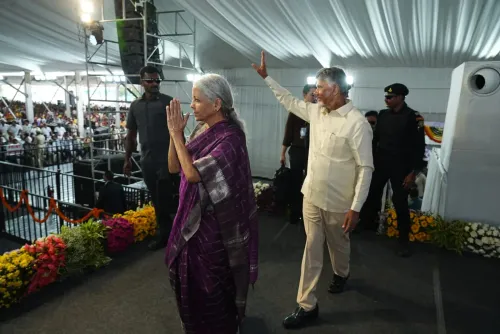
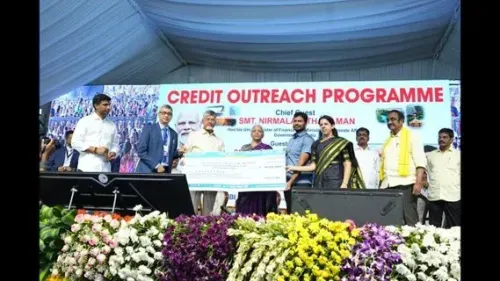
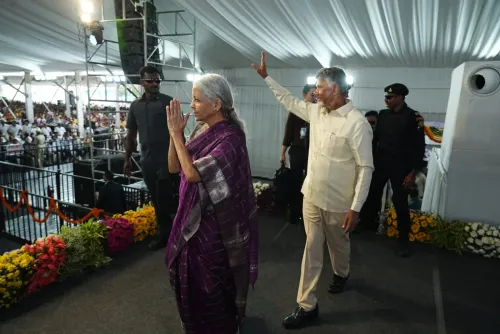
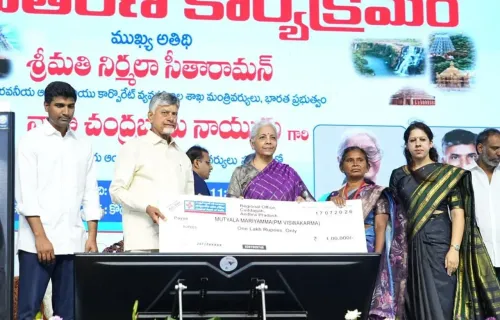
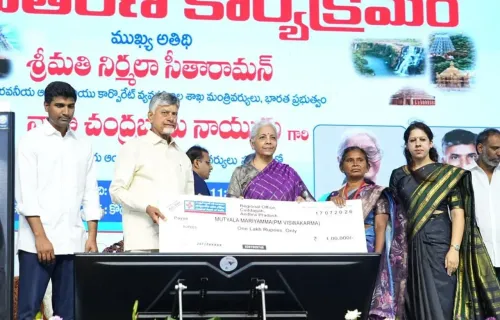
At the event, Chief Minister N. Chandrababu Naidu and Finance Minister Sitharaman jointly distributed loans worth ₹3,216 crore to 1,03,246 beneficiaries under Central Government schemes. The sectoral breakdown included ₹2,363 crore for agriculture, ₹325 crore for MSME units, and ₹624 crore for housing, education, vehicles, and solar power projects.
The duo also flagged off ambulances donated by Union Bank under its Corporate Social Responsibility (CSR) initiative and distributed bicycles to girl students.
Chandrababu Naidu on Centre-State Financial Support
Chief Minister Naidu described the credit outreach as commendable, noting it served Self-Help Groups (SHGs), entrepreneurs, street vendors, and farmers. He credited Sitharaman with taking a firm stand on NPAs and driving a digital banking revolution.
'Bank loans serve as a foundation for a farmer's future, a youth's aspirations, a woman's empowerment, and an entrepreneur's investment dreams,' Naidu said, adding that the 'Runa Mela' (loan fair) format was saving citizens from predatory moneylender rates.
Naidu also outlined several Centre-backed interventions for Andhra Pradesh, including financial support for Amaravati, Polavaram, and the Visakhapatnam Steel Plant. He said the state is set to receive ₹7,707 crore from the Centre through the VB-G Ram G scheme and ₹40,000 crore to develop Rayalaseema as a horticulture hub. He also noted that rescheduling high-interest loans inherited from the previous state administration had yielded savings of ₹1,538 crore.
State Finance Minister Payyavula Keshav, Energy Minister Gottipati Ravikumar, Member of Parliament Lavu Sri Krishnadevarayalu, and representatives from various banks attended the event. With large-scale credit disbursements now framed as a political counter-narrative to the UPA's banking record, the outreach programme signals the BJP-TDP alliance's intent to consolidate its economic messaging ahead of future electoral cycles.
Point of View
But its deployment at a live credit disbursement event gives it fresh political potency — the contrast between 'then' and 'now' is staged, not incidental. What the framing sidesteps is that the NPA crisis also involved regulatory forbearance, evergreening by banks, and corporate defaults that had little to do with phone calls from politicians. The ₹3,216 crore disbursed in Narasaraopet is substantive, but the BJP-TDP alliance's use of banking events as campaign platforms raises a fair question: if phone banking was wrong, what safeguards ensure today's outreach lending is insulated from political direction? That question went unasked at the event.
NationPress
16 Oct 2026
Frequently Asked Questions
What is the 'phone banking' allegation made by FM Nirmala Sitharaman?
FM Sitharaman alleged that during the UPA government's tenure from 2004 to 2014, political leaders in Delhi telephoned bank officials to direct loan disbursements to ineligible individuals. She claimed these loans were never repaid, resulting in massive NPAs and pushing banks into financial losses.
How much was disbursed at the Narasaraopet credit outreach programme?
Loans worth ₹3,216 crore were distributed to 1,03,246 beneficiaries at the event. The disbursement covered agriculture (₹2,363 crore), MSMEs (₹325 crore), and housing, education, vehicles, and solar projects (₹624 crore).
What financial support is the Centre providing to Andhra Pradesh?
According to CM Chandrababu Naidu, Andhra Pradesh is set to receive ₹7,707 crore under the VB-G Ram G scheme and ₹40,000 crore to develop Rayalaseema as a horticulture hub. The Centre has also supported Amaravati, Polavaram, and the Visakhapatnam Steel Plant, and helped reschedule state loans, yielding savings of ₹1,538 crore.
What is the 'Runa Mela' mentioned at the event?
'Runa Mela', meaning loan fair, is the format used for the credit outreach programme where banks disburse loans directly to beneficiaries including farmers, SHGs, street vendors, and entrepreneurs. CM Naidu described it as a mechanism to free citizens from dependence on private moneylenders charging exorbitant interest rates.
Who attended the Narasaraopet credit outreach event?
The event was attended by Finance Minister Nirmala Sitharaman, Chief Minister N. Chandrababu Naidu, State Finance Minister Payyavula Keshav, Energy Minister Gottipati Ravikumar, MP Lavu Sri Krishnadevarayalu, and representatives from various banks.