Anurag Thakur Champions Amrit Bharat Station Project
Synopsis
BJP MP Anurag Thakur on 17 July 2026 championed the Amrit Bharat Station Project — a Ministry of Railways initiative to redevelop 1,275 stations — framing railway modernisation as the foundation of national development under the current government.
Key Takeaways
BJP MP Anurag Thakur posted on 17 July 2026 linking railway development to national progress.
The Amrit Bharat Stations Scheme , announced in Union Budget 2023-24 , targets 1,275 stations for redevelopment.
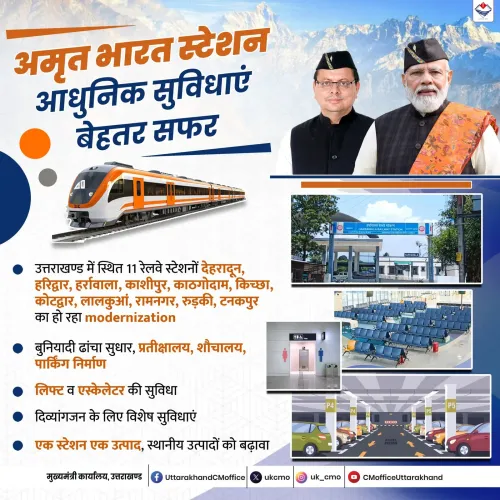
Upgrades include modern passenger amenities, multimodal integration, sustainability features, and locally inspired architecture.
The scheme builds on earlier efforts including the Adarsh Station Scheme (50 stations) and Dedicated Freight Corridors .
Key beneficiaries include daily railway passengers and local traders near major stations.
Parliamentary scrutiny of phased completion timelines for the first tranche of stations is expected to intensify.
BJP MP Anurag Thakur on Friday, 17 July 2026 invoked the Amrit Bharat Station Project as a symbol of modern India's infrastructure ambitions, linking railway development directly to national progress in a post on X.
Context
Thakur's post, written in Hindi, declared: 'रेल विकास से राष्ट्र विकास' ('From railway development, national development'), calling the Amrit Bharat Station Project a 'towering picture of a new India.' The framing positions station redevelopment not merely as a public-works exercise but as a marker of civilisational renewal — a rhetorical register the ruling party has consistently used around flagship infrastructure schemes.
The former Union Minister of Information and Broadcasting and Youth Affairs and Sports represents Hamirpur, Himachal Pradesh in the Lok Sabha. His amplification of the scheme signals continued political investment in communicating railway modernisation to voters ahead of any forthcoming electoral cycle.
Policy Backdrop
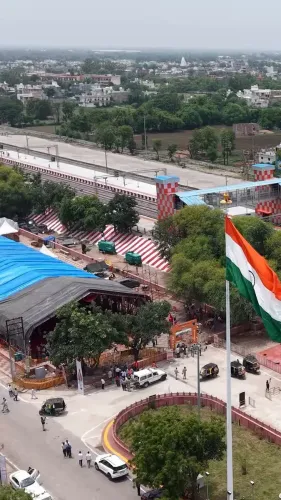
The Amrit Bharat Stations Scheme was announced in the Union Budget 2023-24 under the Ministry of Railways with a mandate to redevelop 1,275 stations across the country. The upgrades are designed to incorporate modern passenger amenities, multimodal transport integration, and sustainability features, while drawing on local architectural traditions to give each station a distinct regional identity.
The scheme is part of a longer arc of railway modernisation that includes the earlier Adarsh Station Scheme — which targeted 50 stations — and the ongoing rollout of Dedicated Freight Corridors. Together, these initiatives reflect a deliberate policy shift within Indian Railways toward passenger-centric upgrades alongside capacity and freight expansion.
The government has framed physical infrastructure investment as a primary engine of economic growth, and railway station redevelopment has become one of the most visible expressions of that argument, given the direct daily interface stations provide between citizens and the state.
Stakeholders and Impact
The scheme's most immediate beneficiaries are the millions of railway passengers who use the targeted stations daily. Improved waiting areas, sanitation, accessibility ramps, and digital facilities are among the amenities envisaged under the redevelopment blueprint.
Local traders and small businesses operating in and around major stations stand to gain from increased footfall and better-organised commercial zones that the redeveloped station precincts are expected to create. At the same time, civil society groups have called for transparent timelines and displacement safeguards for vendors currently operating in informal arrangements at older stations.
For Indian Railways as an institution, the project represents one of the largest simultaneous station-redevelopment exercises in the network's history, testing its project-management capacity and co-ordination with state governments and urban local bodies.
What's Next
Parliamentary scrutiny of railway budget allocations and phased completion reports for the first tranche of stations selected under the scheme will be closely watched by opposition benches and infrastructure analysts alike. The pace of delivery on the 1,275-station target will increasingly become a benchmark against which the government's infrastructure narrative is measured.
With Thakur and other senior BJP leaders continuing to highlight the project on public platforms, the Amrit Bharat Station Project is likely to remain a centrepiece of the party's governance communication, particularly in constituencies where a redeveloped station is a tangible, visible outcome voters can assess for themselves.
Point of View
' he frames physical modernisation as moral progress, a framing that has proved electorally durable in constituencies where a new station building is among the most visible signs of state investment. The Amrit Bharat scheme's scale — 1,275 stations simultaneously — is itself a political asset, ensuring that the project has geographic reach across nearly every parliamentary constituency. The critical test, however, will be whether delivery timelines hold; slippage on a programme this visible would hand the opposition a concrete counter-narrative.
NationPress
16 Oct 2026
Frequently Asked Questions
What is the Amrit Bharat Station Project?
The Amrit Bharat Stations Scheme is a Ministry of Railways initiative announced in Union Budget 2023-24 to redevelop 1,275 railway stations across India with modern passenger amenities, multimodal transport links, sustainability features, and architecture inspired by local traditions.
How many stations will be redeveloped under the Amrit Bharat scheme?
The scheme covers 1,275 stations nationwide, making it one of the largest simultaneous station-redevelopment programmes in Indian Railways history.
What did Anurag Thakur say about the Amrit Bharat Station Project?
On 17 July 2026, BJP MP Anurag Thakur posted on X calling the Amrit Bharat Station Project a 'towering picture of a new India' and declared that railway development drives national development.
Who benefits from the Amrit Bharat Station redevelopment?
The primary beneficiaries are daily railway passengers, who gain improved facilities, and local traders near stations, who are expected to see higher footfall and better-organised commercial spaces.
How does the Amrit Bharat scheme differ from earlier railway modernisation efforts?
Unlike the earlier Adarsh Station Scheme, which covered 50 stations, the Amrit Bharat scheme targets 1,275 stations and places greater emphasis on local architectural identity, multimodal integration, and sustainability alongside basic passenger-facility upgrades.