CM Bhupendra Patel Hails India's First Hydrogen Train Flag-Off

Synopsis
Gujarat CM Bhupendra Patel praised PM Narendra Modi's flag-off of India's first indigenous hydrogen-powered train on 17 July 2026. Driven by a 1,200 kW fuel cell system and emitting only water vapour, the train advances India's net-zero goals and places the country among a handful of nations pioneering hydrogen rail.
Key Takeaways
Gujarat CM Bhupendra Patel publicly celebrated the flag-off of India's first indigenous hydrogen-powered train by PM Narendra Modi on 17 July 2026 .
The train runs on a 1,200 kW hydrogen fuel cell propulsion system and emits only water vapour, producing zero direct carbon emissions.
India joins Germany and a small number of other nations as an early mover in hydrogen-powered rail, and is among the first in Asia .
The project is anchored in the National Green Hydrogen Mission , announced in 2021 to build India's hydrogen production and application ecosystem.
The initiative supports India's net-zero by 2070 commitment made at COP26 and the broader Aatmanirbhar Bharat push for indigenous technology development.
Further route deployments and cost reduction in green hydrogen production will determine the pace of mainstream adoption across Indian Railways .
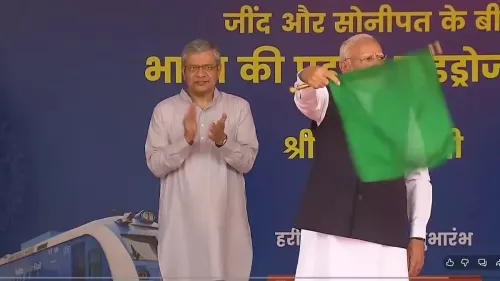
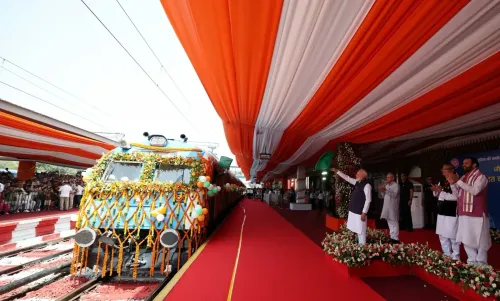
Gujarat Chief Minister Bhupendra Patel on Friday, 17 July 2026, celebrated the flag-off of India's first indigenous hydrogen-powered train by Prime Minister Narendra Modi, calling it 'a defining milestone in India's journey towards sustainable mobility.' The train, powered by a 1,200 kW hydrogen fuel cell propulsion system, emits only water vapour, marking a significant leap in the country's clean energy ambitions.
Context
PM Modi flagged off the train, which CM Patel described as an 'engineering marvel' that showcases India's growing capabilities in clean energy innovation. In his post on X, Patel wrote that the development ushers in 'a new era of green mobility and technological excellence,' underlining the symbolic weight the ruling establishment attaches to the project. The train's propulsion system produces zero direct emissions, with water vapour as its only by-product.
India joins a small group of nations — including Germany, which has operated hydrogen trains since 2022 — to deploy hydrogen-powered rail at a functional level, positioning itself as an early mover in Asia for rail decarbonisation.
Policy Backdrop
The hydrogen train fits squarely within the National Green Hydrogen Mission, launched by the central government to scale up green hydrogen production and its application across transport and heavy industry. The mission was announced in 2021 with the goal of establishing India as a global hub for green hydrogen. Indian Railways, the state-owned operator, has been pursuing indigenous low-emission technologies as part of a broader fleet modernisation drive.
The project also aligns with India's commitment to reach net-zero emissions by 2070, a target declared at the COP26 climate summit. Patel's post invoked both #AatmanirbharBharat and #ViksitBharat — twin policy frameworks championing domestic manufacturing capability and developed-nation status — framing the train as evidence of indigenous technological advancement rather than imported solutions.
Stakeholders and Impact
The most immediate beneficiaries are railway passengers on routes where hydrogen trains are eventually deployed, who stand to gain from quieter, cleaner operations compared to diesel-powered alternatives. For the clean energy industry, the flag-off signals a credible domestic market for hydrogen fuel cell technology, potentially attracting investment in production, storage, and distribution infrastructure.
For Indian Railways — the world's fourth-largest rail network — successful deployment could open a pathway to decarbonise sections of its vast non-electrified network without the capital intensity of full electrification. The emphasis on indigenous development also carries implications for domestic manufacturers and research institutions working in the hydrogen value chain.
What's Next
Attention will now turn to the scale and pace of further route deployments for hydrogen trains, as a single flag-off, however symbolically significant, represents only the beginning of a technology rollout. Progress on National Green Hydrogen Mission pilot projects — covering production targets, electrolyser manufacturing, and cost reduction — will determine whether hydrogen rail moves from milestone to mainstream within India's transport system. The government's ability to bring down the cost of green hydrogen production to competitive levels remains the central challenge for wider adoption.
Point of View
Future-facing infrastructure that reinforces the 'Viksit Bharat' narrative ahead of ongoing electoral cycles. CM Patel's enthusiastic amplification of a central government achievement is consistent with Gujarat's role as a showcase state for Modi-era development projects. The deeper test, however, lies not in the flag-off but in the rollout: hydrogen rail economics remain challenging globally, and India's ability to scale green hydrogen production cheaply will determine whether this milestone becomes a movement or remains a symbol. The invocation of Aatmanirbhar Bharat frames the technology as a sovereignty issue, raising the political cost of any future reliance on imported components.
NationPress
17 Jul 2026
Frequently Asked Questions
What is India's first hydrogen-powered train?
India's first indigenous hydrogen-powered train is a rail vehicle driven by a 1,200 kW hydrogen fuel cell propulsion system that emits only water vapour. It was flagged off by Prime Minister Narendra Modi and represents India's entry into hydrogen-powered rail, a technology so far deployed by only a handful of countries globally.
Who flagged off India's hydrogen train?
Prime Minister Narendra Modi flagged off India's first indigenous hydrogen-powered train. Gujarat Chief Minister Bhupendra Patel publicly celebrated the event, calling it 'a defining milestone in India's journey towards sustainable mobility.'
How does the hydrogen train work?
The train uses a hydrogen fuel cell propulsion system rated at 1,200 kW. Hydrogen reacts with oxygen inside the fuel cell to generate electricity, which powers the train's motors. The only by-product of this process is water vapour, making it a zero-direct-emission vehicle.
What is the National Green Hydrogen Mission?
The National Green Hydrogen Mission is a central government programme announced in 2021 to establish India as a global hub for the production and use of green hydrogen across sectors including transport and heavy industry. The hydrogen train is one of its flagship applications in rail.
Which countries have hydrogen trains?
Germany was among the first to operate hydrogen trains commercially, beginning in 2022. India now joins a small group of early movers globally and is among the first nations in Asia to deploy hydrogen-powered rail technology.