CM Saini Welcomes PM Modi for Jind Hydrogen Train Launch
Synopsis
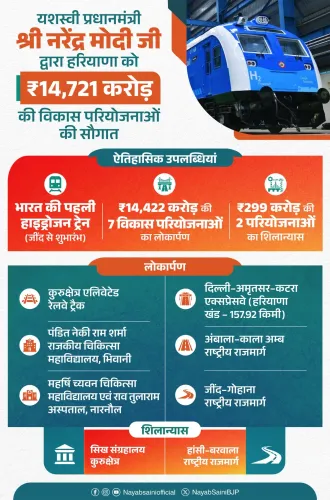
Haryana CM Nayab Singh Saini announced that PM Modi will flag off India's first hydrogen train from Jind on 17 July 2026, alongside multiple development projects for the state, marking a major milestone under the National Green Hydrogen Mission.
Key Takeaways
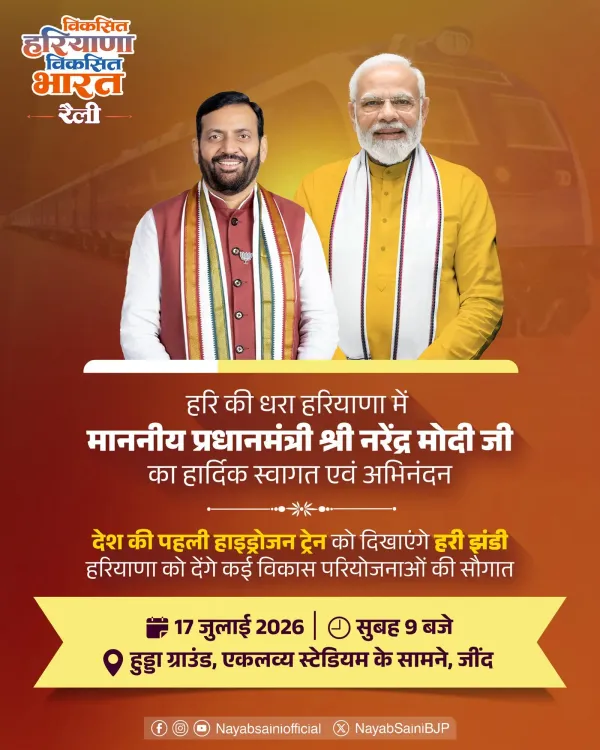
Haryana Chief Minister Nayab Singh Saini announced the visit of PM Narendra Modi to Haryana on 17 July 2026 .
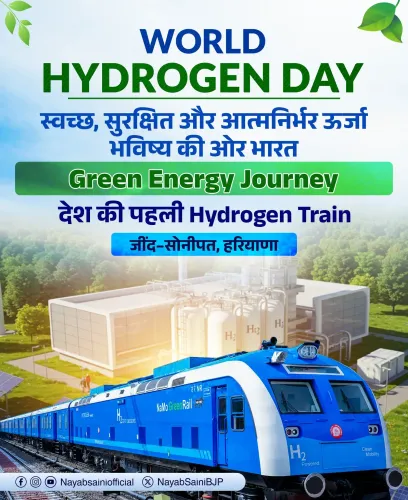
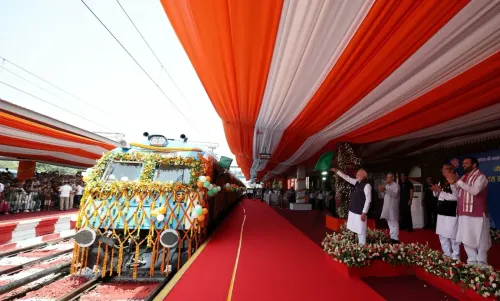
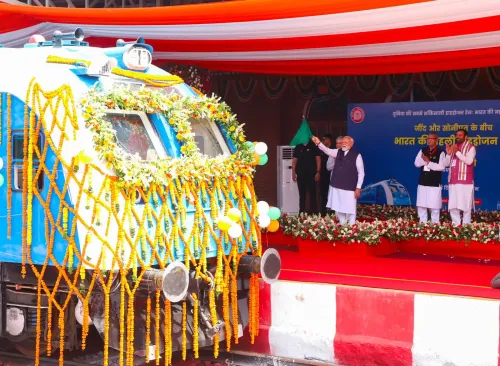
PM Modi will flag off India's first hydrogen train from Jind , Haryana.
The Prime Minister will also inaugurate multiple development projects for Haryana residents during the visit.
The launch is rooted in the National Green Hydrogen Mission , approved by the Union Cabinet in January 2023 .
Indian Railways has committed to a net-zero emissions target by 2030 , with hydrogen trains central to that roadmap.
The Jind event marks a significant step in India's broader 2070 net-zero decarbonisation agenda for the transport sector.
Haryana Chief Minister Nayab Singh Saini on Monday, 13 July 2026, announced that Prime Minister Narendra Modi will visit Haryana on 17 July 2026 to flag off India's first hydrogen train from Jind, marking what Saini described as another historic milestone for the state. The Prime Minister is also expected to inaugurate multiple development projects for residents of Haryana during the visit.
Context
Welcoming the Prime Minister to what he called 'hari ki pawan dhara Haryana' (the sacred land of Haryana), CM Saini posted on X that 17 July 2026 will be witnessed as a historic day for the state. He stated that PM Modi will flag off the country's first hydrogen train from Jind and gift residents numerous development projects. The announcement signals a high-profile centre-state event combining a national technology milestone with regional infrastructure rollouts.
Policy Backdrop
India's first hydrogen train launch is rooted in a series of policy decisions taken over the past few years. The Union Cabinet approved the National Green Hydrogen Mission in January 2023, aiming to scale up production and deployment of green hydrogen across hard-to-abate sectors, including transport. Indian Railways had separately outlined a roadmap for hydrogen fuel-cell trains as part of its commitment to achieving net-zero emissions by 2030, identifying hydrogen traction as a solution for routes where full electrification remains constrained.
The selection of Jind in Haryana as the launch site reflects the broader pattern of centre-state coordination on flagship green infrastructure projects. Such events serve a dual purpose: demonstrating cutting-edge technology at scale while anchoring visible development activity in specific states.
Stakeholders and Impact
The most immediate beneficiaries are Haryana's railway passengers and the state's residents, who stand to gain from both the hydrogen train corridor and the accompanying development projects to be announced. The green energy sector — particularly companies and research institutions invested in hydrogen fuel-cell technology — will be watching the launch closely as a signal of the government's pace of deployment.
More broadly, Indian Railways, which operates one of the world's largest rail networks, stands to use this launch as a template for rolling out hydrogen traction on other corridors where diesel locomotives currently dominate. The event also feeds into India's overarching 2070 net-zero pledge, with transport decarbonisation identified as a priority pillar.
What's Next
Following the 17 July 2026 launch from Jind, attention will turn to the rollout timelines for additional hydrogen train corridors and the development of associated refuelling infrastructure under the National Green Hydrogen Mission. Parliamentary updates on Indian Railways' capital expenditure allocations for green technologies will offer the clearest indicator of how quickly the hydrogen train programme scales beyond its inaugural run. If the Jind launch proceeds as announced, it would position India among a small group of countries to have operationalised hydrogen rail at a national level, reinforcing the government's push to make clean mobility a centrepiece of its infrastructure narrative.
Point of View
A state CM Saini leads, the centre-state partnership is put on prominent display, reinforcing federal coordination as a governance asset. The choice of hydrogen rail over incremental electrification signals an intent to leapfrog to frontier technology, aligning with India's positioning in global clean energy diplomacy. How quickly the hydrogen corridor scales beyond this inaugural run will determine whether the launch is remembered as a genuine inflection point or a well-staged demonstration.
NationPress
11 Oct 2026
Frequently Asked Questions
What is India's first hydrogen train and where will it be launched?
India's first hydrogen train is a fuel-cell-powered locomotive being flagged off by PM Modi from Jind in Haryana on 17 July 2026, as announced by Haryana CM Nayab Singh Saini.
What is the National Green Hydrogen Mission?
The National Green Hydrogen Mission is a central government programme approved by the Union Cabinet in January 2023 to scale up green hydrogen production and its use across sectors including transport and industry.
Why is Jind, Haryana chosen for the hydrogen train launch?
Jind in Haryana has been selected as the launch point for India's first hydrogen train, reflecting centre-state coordination on flagship green infrastructure projects and bringing a high-profile national milestone to the state.
What are Indian Railways' green energy targets?
Indian Railways has committed to achieving net-zero emissions by 2030, with hydrogen fuel-cell trains identified as a key solution for routes where full electrification is not feasible.
What other projects will PM Modi announce during his Haryana visit on 17 July 2026?
CM Nayab Singh Saini announced that PM Modi will gift Haryana residents numerous development projects during the 17 July 2026 visit, though specific details of those projects have not yet been disclosed.