Anurag Thakur Hails Launch of India's First Hydrogen Train
Synopsis
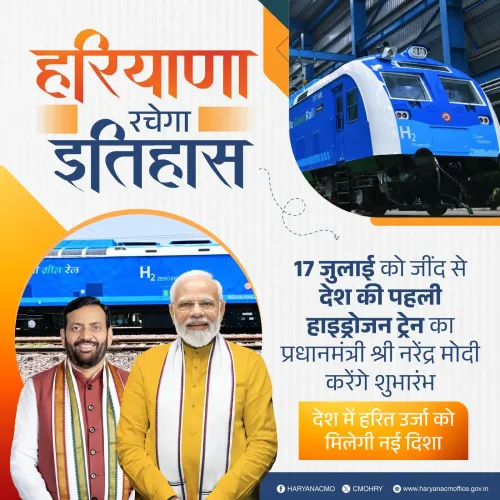
BJP MP Anurag Thakur celebrated PM Modi's inauguration of India's first hydrogen-powered train on the 89 km Jind–Sonipat corridor in Haryana on 17 July 2026, calling it a symbol of 'new India's new pace' and a leap toward pollution-free rail transport.
Key Takeaways
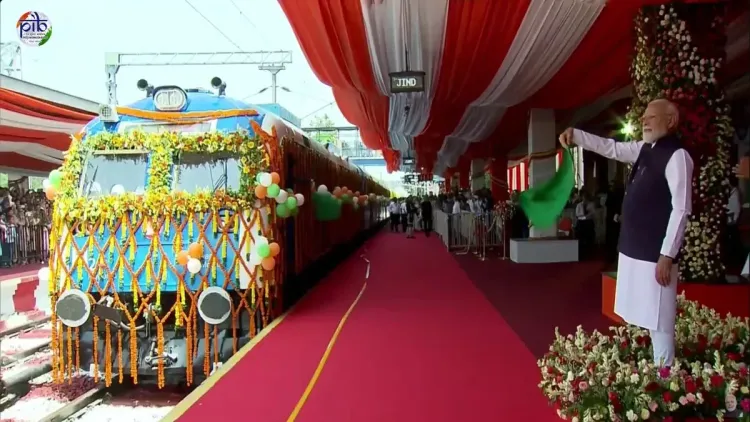
India's first hydrogen-powered train was inaugurated by PM Narendra Modi on 17 July 2026 .
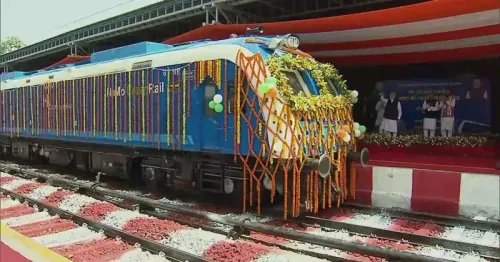
The train runs on an 89 km corridor between Jind and Sonipat in Haryana , entirely on hydrogen fuel-cell technology.
BJP MP Anurag Thakur hailed the launch on X, calling it 'new India's new pace' and 'freedom from pollution.' The launch is a key outcome of the National Green Hydrogen Mission , initiated by the central government in 2023 .
Indian Railways has targeted net-zero emissions by 2030 , with hydrogen trains forming part of its decarbonisation strategy.
The Jind–Sonipat pilot is expected to inform decisions on route extensions and wider hydrogen train procurement across the network.
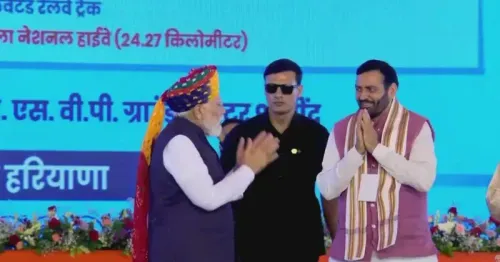
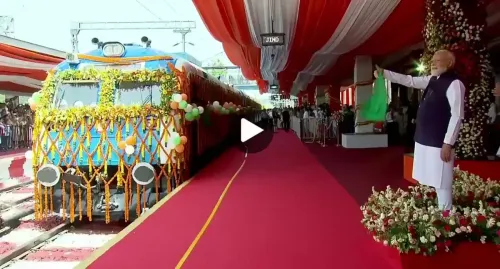
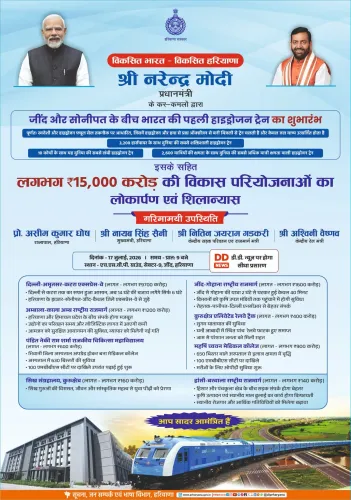
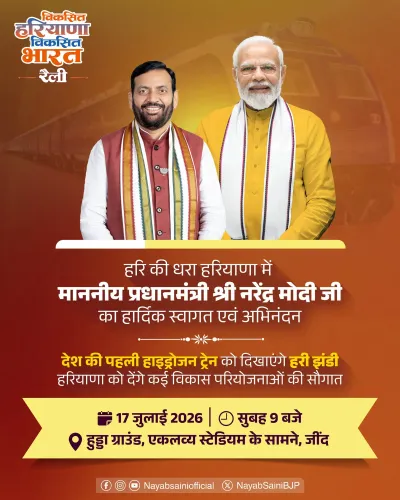
BJP MP Anurag Thakur on Friday, 17 July 2026 celebrated the inauguration of India's first hydrogen-powered train, launched by Prime Minister Narendra Modi on the Jind–Sonipat corridor in Haryana, spanning 89 kilometres. Thakur called the launch a symbol of 'new India's new pace,' describing it as a milestone in the country's shift toward clean-energy transportation.
Posting on X, Thakur wrote: 'नए भारत की नई रफ्तार' ('New India's new pace'), adding that the train, flagged off by PM Modi, would run entirely on hydrogen technology on the Jind-to-Sonipat route. He signed off with a couplet that translates as: 'Modern innovation, freedom from pollution.'Context
The Jind–Sonipat hydrogen train marks the first time Indian Railways has put a hydrogen fuel-cell train into passenger service on an identified corridor. The route, cutting through Haryana, was selected as the pilot section for the technology. The launch positions India among a small group of countries — including Germany and China — that have deployed hydrogen trains at a commercial or demonstration scale.
Policy Backdrop
The launch is a direct outcome of the National Green Hydrogen Mission, which the central government initiated in 2023 to scale hydrogen production and its application across sectors, including railways. Indian Railways had announced plans as far back as 2020–21 to develop and trial hydrogen fuel-cell rolling stock as part of its commitment to achieving net-zero emissions by 2030. The hydrogen train pilot also aligns with the broader Atmanirbhar Bharat framework, which encourages domestic clean-technology development to reduce import dependence on fossil fuels and foreign propulsion systems.
Multiple ministries — including Railways, New and Renewable Energy, and Environment — have been coordinating on production, storage, and refuelling infrastructure to support such trials. The 89 km Jind–Sonipat corridor is expected to serve as a proof-of-concept before any wider network rollout is considered.
Stakeholders and Impact
Railway commuters and residents of Jind and Sonipat are the immediate beneficiaries of the pilot service. For Haryana, the corridor brings a high-visibility infrastructure project that could attract follow-on investment in hydrogen refuelling and storage facilities in the state. Environmentally, hydrogen trains emit only water vapour during operation, making them a zero-emission alternative to the diesel multiple units still running on many non-electrified sections of the Indian rail network.
The broader clean-energy industry — including domestic electrolyser manufacturers and green hydrogen producers — stands to benefit if the pilot demonstrates operational viability and the government moves toward procurement at scale.
What's Next
Policymakers and industry observers will be watching for official data on the train's operational performance, energy efficiency, and passenger uptake on the Jind–Sonipat section. Key questions include the pace of hydrogen refuelling infrastructure build-out, budget allocations in upcoming railway plans, and whether parliamentary committees will set binding timelines for a wider network rollout. Route extensions and replication on other non-electrified corridors are likely to be the next major decision points for Indian Railways and the government.
Point of View
Giving the government a high-visibility clean-energy win ahead of India's 2030 net-zero railway deadline. Thakur's amplification of the event underscores the BJP's strategy of framing infrastructure milestones as proof of a transformed, technology-forward India. The choice of a Haryana corridor — a politically contested state — is unlikely to be incidental, signalling that green infrastructure investment is also being deployed as electoral optics. Whether the pilot translates into network-wide hydrogen adoption will depend on refuelling economics and Indian Railways' capital allocation in coming budget cycles.
NationPress
17 Jul 2026
Frequently Asked Questions
What is India's first hydrogen train and where does it run?
India's first hydrogen-powered train runs on the 89 km Jind–Sonipat corridor in Haryana . It operates entirely on hydrogen fuel-cell technology, emitting only water vapour during operation.
Who launched India's first hydrogen train?
Prime Minister Narendra Modi inaugurated India's first hydrogen train, as celebrated by BJP MP Anurag Thakur in a post on X on 17 July 2026 .
What is the National Green Hydrogen Mission?
The National Green Hydrogen Mission is a central government programme launched in 2023 to scale up hydrogen production and its use across sectors including transport and railways, supporting India's clean-energy and net-zero goals.
Why is Indian Railways testing hydrogen trains?
Indian Railways is piloting hydrogen trains to decarbonise non-electrified sections of its network and meet its net-zero emissions target by 2030 , replacing diesel-powered rolling stock with zero-emission alternatives.
What does Anurag Thakur have to do with the hydrogen train launch?
BJP MP Anurag Thakur , a former Union Minister, posted on X to celebrate the launch, framing it as evidence of 'new India's new pace' under PM Modi's leadership. He is not directly involved in the railway project but is a prominent BJP voice on governance milestones.