Punjab CMO: Mawan Dhiyan Satikar Yojana gives Rs 4,500 monthly
Synopsis
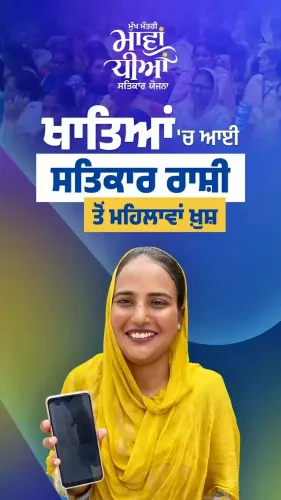
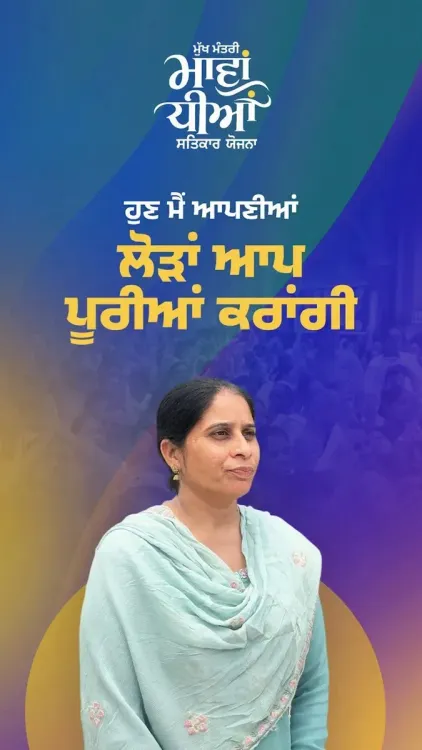
The Chief Minister's Office of Punjab shared a beneficiary testimonial on 17 July 2026 for the Mawan Dhiyan Satikar Yojana, which provides Rs 4,500 monthly to eligible women. A beneficiary says the amount now helps her meet her and her children's needs every month.
Key Takeaways
The Chief Minister's Office of Punjab publicised the Mawan Dhiyan Satikar Yojana on 17 July 2026 via a beneficiary video testimonial on X.
The scheme provides a monthly satikar rashi (honour amount) of Rs 4,500 to eligible women in Punjab .
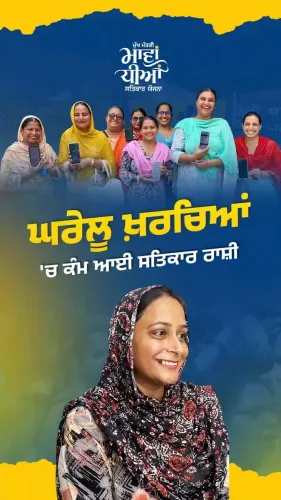
A beneficiary stated the monthly amount now enables her to meet her own and her children's recurring needs.
The scheme is structured as a recurring monthly transfer, distinguishing it from one-time welfare grants.
Primary stakeholders are low-income mothers and women from economically vulnerable households across Punjab.
Official beneficiary counts, eligibility criteria, and total outlay figures have not yet been released publicly.
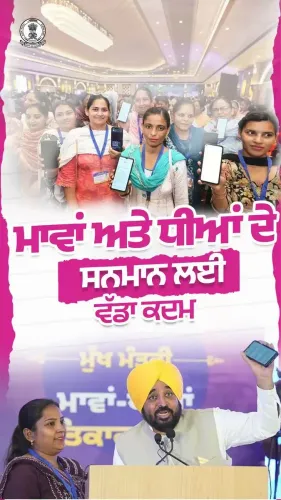
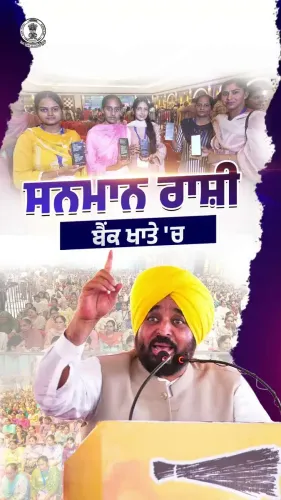
The Chief Minister's Office of Punjab on Friday, 17 July 2026, shared a beneficiary testimonial highlighting the impact of the Mawan Dhiyan Satikar Yojana, a state welfare scheme that provides eligible women a monthly assistance of Rs 4,500.
In the post, a woman beneficiary states — in Punjabi — that the monthly satikar rashi (honour amount) of Rs 4,500 she received under the scheme now allows her to meet her own needs and those of her children every month. The post was shared with the hashtags #CMOPunjab and #ਮੁੱਖ_ਮੰਤਰੀ_ਦਫ਼ਤਰ_ਪੰਜਾਬ, signalling an active outreach effort by the government to publicise the scheme's on-ground effect.
Context
The Mawan Dhiyan Satikar Yojana — which translates roughly to 'Mothers and Daughters Respect Scheme' — is a Government of Punjab welfare initiative designed to provide regular financial support to women in the state. The scheme's name draws on the cultural idiom of honouring mothers and daughters, framing the cash transfer as an act of dignity rather than charity. The beneficiary's account, as shared by the Chief Minister's Office, underscores the scheme's stated intent: to ensure that low-income women can independently manage household expenses on a predictable monthly cycle.Policy Backdrop
Punjab's scheme is part of a broader pattern across Indian states of deploying direct benefit transfers (DBTs) targeted specifically at women. Such programmes typically aim to supplement — rather than replace — national entitlements such as maternity benefits and food security provisions. The recurring monthly structure of Rs 4,500 distinguishes the Mawan Dhiyan Satikar Yojana from one-time grants, making it a predictable income support tool for low-income families. State-level women-centric cash transfer schemes have grown in political and policy salience across India in recent years, with several states competing to expand coverage and quantum of support.Stakeholders and Impact
The primary beneficiaries of the scheme are women — particularly mothers — from economically vulnerable households across Punjab. The testimonial shared by the Chief Minister's Office illustrates a common household-level outcome: the ability to budget for recurring needs such as food, healthcare, and children's education without depending on irregular income sources. For low-income families, a guaranteed monthly transfer of Rs 4,500 can represent a significant share of household cash income. The scheme also carries symbolic weight, positioning the Punjab government as actively investing in women's financial autonomy and dignity.What's Next
Official figures on total beneficiary enrolment, cumulative disbursements, and scheme coverage across districts of Punjab are yet to be released in the public domain. Scrutiny of the scheme's implementation — including eligibility criteria, last-mile delivery, and exclusion errors — is likely to emerge through assembly proceedings and civil society assessments. As the government continues its outreach through social media testimonials, independent verification of reach and impact will be key to evaluating whether the Mawan Dhiyan Satikar Yojana is achieving its stated goals at scale.Point of View
A tactic that has gained traction among state governments seeking to demonstrate welfare delivery ahead of electoral cycles. The Mawan Dhiyan Satikar Yojana fits within a competitive landscape of women-targeted cash transfers that have become a defining feature of state-level politics across India. The Rs 4,500 monthly figure is politically meaningful: it is tangible enough to be felt at the household level, yet the absence of publicly verified beneficiary data leaves the scheme's actual scale open to scrutiny. How the Punjab government responds to demands for transparency on enrolment and disbursement will determine whether this initiative is seen as substantive policy or electoral optics.
NationPress
15 Oct 2026
Frequently Asked Questions
What is the Mawan Dhiyan Satikar Yojana in Punjab?
The Mawan Dhiyan Satikar Yojana is a Punjab government welfare scheme that provides eligible women a monthly financial assistance of Rs 4,500, aimed at helping mothers and daughters meet household needs.
How much money do beneficiaries get under Mawan Dhiyan Satikar Yojana?
Beneficiaries receive Rs 4,500 per month under the scheme, described by the government as a 'satikar rashi' or honour amount.
Who is eligible for the Mawan Dhiyan Satikar Yojana?
The scheme targets women, particularly mothers, from low-income and economically vulnerable households in Punjab. Specific eligibility criteria have not been officially published in the public domain as of July 2026.
Is Mawan Dhiyan Satikar Yojana a central or state scheme?
It is a state government scheme launched by the Government of Punjab, not a central government programme, though it aligns with India's broader direct benefit transfer framework for women.
How can women apply for the Punjab Mawan Dhiyan Satikar Yojana?
Official application procedures and enrolment details have not been publicly confirmed as of July 2026. Interested beneficiaries should contact their local Punjab government offices or monitor official government communications for updates.