Punjab CMO launches Mawan Dhiyan Satkar Yojna for elderly women

Synopsis
The Chief Minister's Office of Punjab announced the Mawan Dhiyan Satkar Yojna on 8 July 2026, committing to end elderly women's financial dependence on others. The scheme prioritises women's dignity and self-sufficiency, building on Punjab's decades-long social security framework for the elderly.
Key Takeaways
The Chief Minister's Office of Punjab announced the Mawan Dhiyan Satkar Yojna on 8 July 2026 .
The scheme's stated goal is to ensure elderly women in Punjab no longer have to depend on anyone to meet their essential needs.
The government described women's dignity as its top priority in the official announcement.
The scheme builds on Punjab's social security pension frameworks that have been expanded since the 1990s .
Specific benefit amounts, eligibility criteria, and funding allocations have not yet been publicly confirmed.
The initiative aligns with a broader national trend of gender-specific social security measures introduced by Indian states.
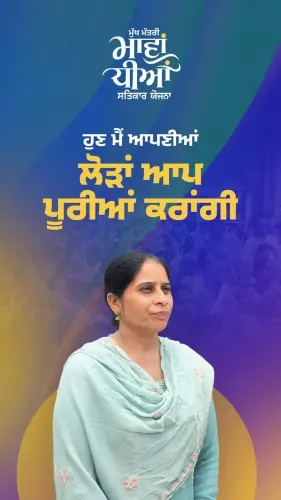
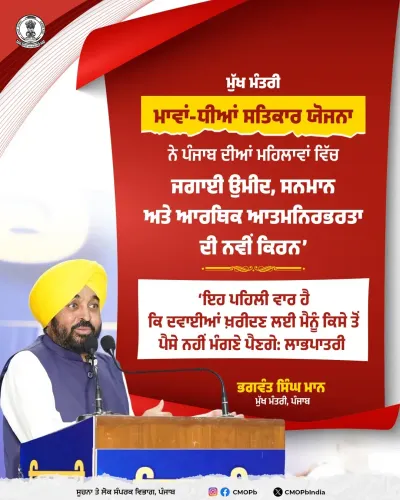
The Chief Minister's Office of Punjab announced on Wednesday, 8 July 2026 that the state government has launched the Mawan Dhiyan Satkar Yojna, a welfare scheme aimed at ensuring elderly women in the state no longer have to depend on others to meet their essential needs.
Posting in both Punjabi and English, the official CMO Punjab account stated: 'ਔਰਤਾਂ ਦੇ ਸਨਮਾਨ ਨੂੰ ਪੰਜਾਬ ਸਰਕਾਰ ਵੱਲੋਂ ਸਭ ਤੋਂ ਪਹਿਲਾਂ ਰੱਖਿਆ ਗਿਆ ਹੈ' ['The Punjab Government has placed the dignity of women above all else'], adding that under this scheme, elderly women will no longer have to depend on anyone to meet their essential needs.
Context
The Mawan Dhiyan Satkar Yojna — whose name translates roughly to 'Scheme for the Respect of Mothers and Daughters' — is positioned by the Punjab Government as a direct response to the financial vulnerability faced by elderly women in the state. The announcement underscores the government's stated priority of women's dignity and self-sufficiency.
The scheme is framed around reducing dependency, a persistent challenge for elderly women in Punjab who may lack independent income, property rights, or access to social security in their later years.
Policy Backdrop
Punjab has maintained social security pension schemes for the elderly since the 1990s, progressively expanding their scope over successive administrations. These earlier frameworks, partly aligned with the National Social Assistance Programme at the central level, laid the groundwork for targeted, gender-specific extensions such as this one.
Across India, states have increasingly introduced women-centric social security measures to address gaps in coverage for elderly women, who statistically face higher rates of financial dependence than their male counterparts. The Mawan Dhiyan Satkar Yojna follows this broader national pattern of disaggregating welfare delivery by gender.
Stakeholders and Impact
The primary beneficiaries of the scheme are elderly women in Punjab, particularly those without independent financial means. By pledging to cover their 'essential needs,' the government signals an intent to provide direct support — whether through cash transfers, in-kind benefits, or service access — though specific benefit amounts and eligibility criteria have not yet been publicly detailed.
Women's rights groups and social welfare organisations active in the state are likely to monitor the scheme's rollout closely, given the scale of the elderly female population in Punjab and the historical gaps in targeted support for this demographic.
What's Next
Key details — including the exact benefit quantum, eligibility thresholds, and the budgetary allocation underpinning the Mawan Dhiyan Satkar Yojna — are expected to become clearer during the next Punjab state budget cycle or assembly session. The government's ability to operationalise the scheme at scale will be the critical test of this announcement's impact on the ground.
As Punjab approaches future electoral cycles, welfare schemes targeting women are likely to remain a focal point of political messaging and policy competition among parties in the state.
Point of View
The government is attempting to shift the narrative on elderly women's welfare from passive relief to active empowerment. The announcement, however, remains light on operational specifics, and the scheme's real impact will depend on the benefit levels and delivery mechanisms that follow. In a state with a significant elderly female population and a competitive political landscape, the gap between announcement and implementation will be closely scrutinised.
NationPress
7 Oct 2026
Frequently Asked Questions
What is the Mawan Dhiyan Satkar Yojna in Punjab?
The Mawan Dhiyan Satkar Yojna is a Punjab government welfare scheme announced on 8 July 2026, designed to ensure elderly women in the state can meet their essential needs without depending on others.
Who benefits from the Mawan Dhiyan Satkar Yojna?
The primary beneficiaries are elderly women in Punjab who lack independent financial means and have historically depended on family members or others for their basic needs.
What does 'Mawan Dhiyan Satkar Yojna' mean in English?
The name translates roughly to 'Scheme for the Respect of Mothers and Daughters,' reflecting its focus on dignity and self-sufficiency for elderly women.
How much money will elderly women get under the Punjab scheme?
The exact benefit amount under the Mawan Dhiyan Satkar Yojna has not been officially confirmed yet; details on quantum, eligibility, and funding are expected to be announced during a future budget cycle or assembly session.
Is the Mawan Dhiyan Satkar Yojna a new pension scheme for women in Punjab?
It is a new women-focused welfare initiative announced by the Punjab government, building on existing social security pension frameworks the state has maintained since the 1990s, though its precise structure has not yet been fully detailed.