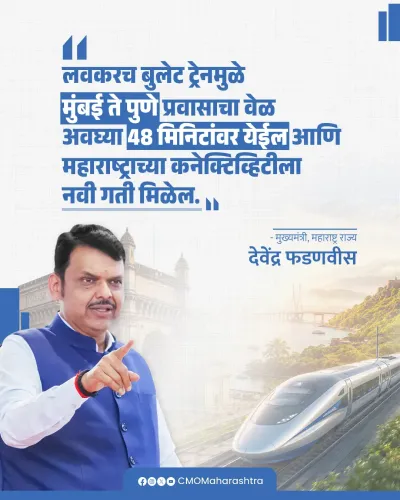
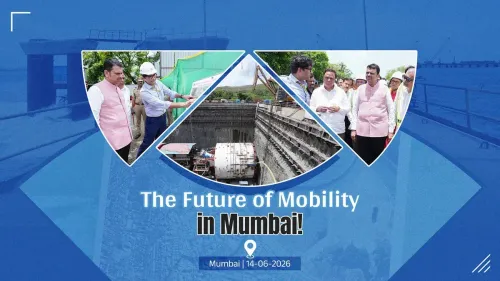
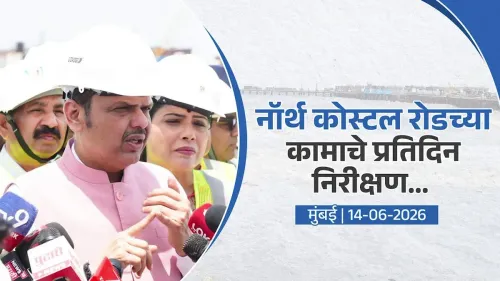
CM Fadnavis: Mumbai cross-city travel in 59 min within 3-4 years
Synopsis
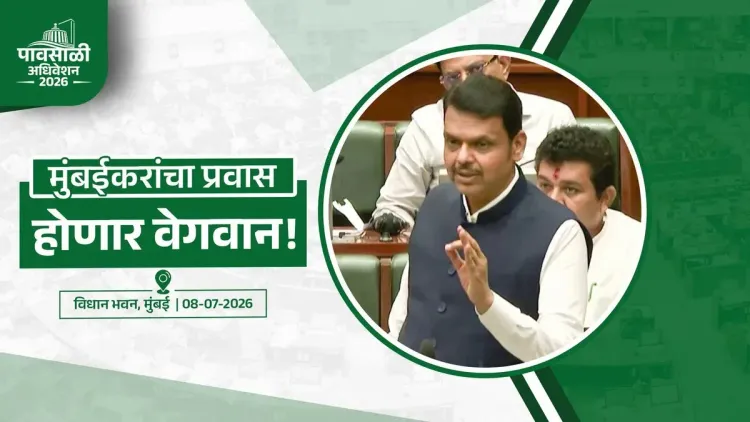
Maharashtra Chief Minister Devendra Fadnavis declared on 8 July 2026 that any cross-city Mumbai journey will be achievable in 59 minutes within three to four years, citing ongoing metro and transport expansion, in a statement made from the Maharashtra Legislative Assembly during the Monsoon Session.
Key Takeaways
CM Devendra Fadnavis made the 59-minute cross-city Mumbai travel pledge on 8 July 2026 from the Maharashtra Legislative Assembly.
The target is projected to be achieved within 3 to 4 years , implying a delivery window of approximately 2029-2030 .
The announcement was made during Maharashtra's Monsoon Session 2026 , a key legislative policy window.
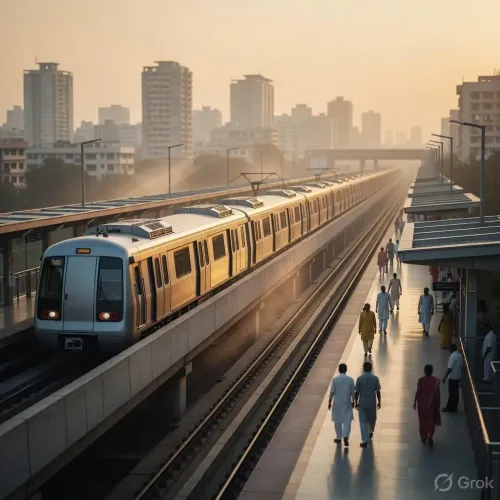
The Mumbai Metro network and other MMRDA-led projects form the backbone of the infrastructure push behind this claim.
Mumbai's 20 million-plus residents , particularly daily commuters, stand as the primary intended beneficiaries.
No single project was named; the target is framed as the cumulative outcome of multiple ongoing transport interventions.
Maharashtra Chief Minister Devendra Fadnavis on Wednesday, 8 July 2026 declared that commuters will be able to travel from any part of Mumbai to any other part in just 59 minutes within the next three to four years, making the announcement from the floor of the Maharashtra Legislative Assembly during the ongoing Monsoon Session.
Speaking in both English and Marathi, Fadnavis stated: 'पुढील 3 ते 4 वर्षांत मुंबईतील कोणत्याही भागातून दुसऱ्या भागात 59 मिनिटांत पोहोचणे शक्य होणार आहे' — 'In the next 3 to 4 years, it will be possible to travel from one part of Mumbai to another in just 59 minutes.' The remark was made inside Vidhan Bhavan, Mumbai, and shared publicly on the Chief Minister's official X account.
Context
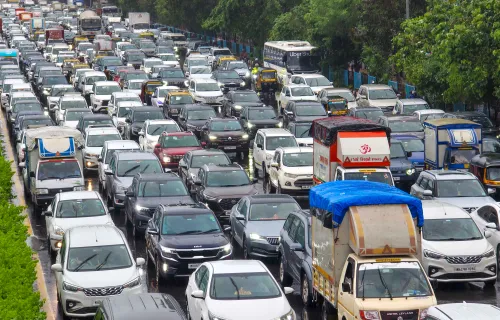
Mumbai is among India's most congested cities, where peak-hour road travel between distant suburbs — say, Borivali in the north and Colaba in the south — can routinely exceed 90 minutes to two hours by road. The city's suburban rail network, while carrying millions daily, is severely overcrowded and does not serve all corridors. Fadnavis's 59-minute benchmark, if achieved, would represent a transformative shift in daily commute experience for the city's estimated 20 million-plus residents.
The Chief Minister did not specify a single infrastructure project as the vehicle for this target, framing it instead as the cumulative outcome of multiple ongoing and planned transport interventions across the Mumbai Metropolitan Region (MMR).
Policy Backdrop
The claim sits against a dense backdrop of urban transport investment. The Mumbai Metro network — a multi-phase rapid transit system — has been under phased construction for over a decade, with Line 1 (Versova–Andheri–Ghatkopar) opening in 2014. Several additional lines are at various stages of construction or commissioning, aimed at linking the island city, eastern and western suburbs, and the extended MMR.
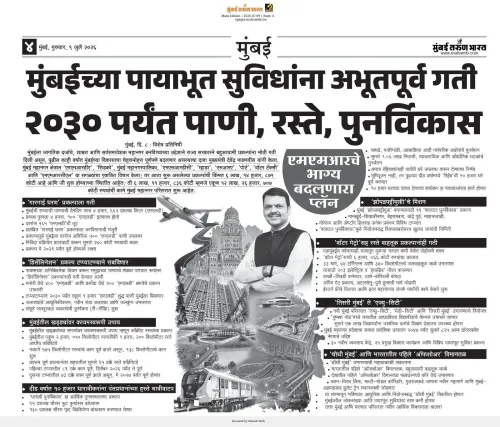
The Mumbai Metropolitan Region Development Authority (MMRDA), the nodal state agency for major infrastructure in the region, has been executing these metro corridors alongside the Mumbai Coastal Road and elevated highway projects. Successive Maharashtra governments — across party lines — have prioritised expanding this integrated mobility network, and the current administration under Fadnavis has positioned urban transport as a flagship governance deliverable.
The Monsoon Session of the Maharashtra Legislature, during which this statement was made, is a key policy-signalling window, with major infrastructure and budget commitments often announced or defended on the assembly floor.
Stakeholders and Impact
The primary beneficiaries of a 59-minute cross-city travel guarantee would be Mumbai's daily commuters — office workers, students, and inter-suburb travellers who currently lose significant productive hours to transit. Reduced commute times are also linked to lower vehicular pollution, eased pressure on the suburban rail network, and improved quality of urban life.
Real-estate analysts and urban economists have long noted that reliable rapid transit expands the effective labour market by making distant neighbourhoods viable for workers. For Mumbai's peripheral areas — including nodes in Thane, Navi Mumbai, and Mira-Bhayandar — faster connectivity to the commercial core could accelerate residential and commercial development.
Contractors, engineering firms, and public-sector units involved in the ongoing metro and road projects are also directly implicated, as the 3-4 year timeline implies an accelerated completion push for currently under-construction corridors.
What's Next
The political and administrative test will be whether the state government translates this legislative declaration into a concrete, publicly available project completion roadmap. Observers will watch for MMRDA updates on individual metro line commissioning dates, state budget allocations for remaining phases, and any integrated mobility policy document that operationalises the 59-minute target. The Monsoon Session 2026 may itself yield further specifics if opposition legislators press the Chief Minister for project-wise timelines on the assembly floor.
As Mumbai's infrastructure ambitions scale up, the credibility of the 59-minute promise will ultimately be measured on the ground — by commuters checking their watches.
Point of View
A shift in political communication that is harder to fact-check in the short run but easier to hold to account at election time. If the metro corridors and road projects under construction do converge by 2029-2030, the target is plausible; if they slip — as large urban infrastructure projects frequently do in India — the pledge becomes a liability. The broader significance is that Mumbai's urban mobility is now a centrepiece of state-level electoral politics, not merely a technocratic concern.
NationPress
7 Oct 2026
Frequently Asked Questions
What did CM Fadnavis say about Mumbai travel time?
Chief Minister Devendra Fadnavis stated on 8 July 2026 that within 3 to 4 years, it will be possible to travel from any part of Mumbai to any other part in just 59 minutes, speaking at the Maharashtra Legislative Assembly during the Monsoon Session.
Which projects will enable 59-minute travel across Mumbai?
Fadnavis did not name a single project; the target is framed as the result of multiple ongoing transport initiatives including the multi-phase Mumbai Metro network and other MMRDA-led road and transit corridor projects.
When will Mumbai's 59-minute cross-city travel become reality?
According to CM Fadnavis, the 59-minute cross-city travel target is expected to be achievable within 3 to 4 years from July 2026, placing the delivery window around 2029 to 2030.
What is MMRDA's role in Mumbai's transport expansion?
The Mumbai Metropolitan Region Development Authority (MMRDA) is the state agency responsible for planning and executing major transport infrastructure in Mumbai, including multiple metro lines, elevated corridors, and the coastal road project.
What is the current cross-city travel time in Mumbai?
Currently, peak-hour road travel between distant parts of Mumbai — such as the northern suburbs and the southern tip — can routinely exceed 90 minutes to two hours, making the 59-minute target a significant improvement if achieved.