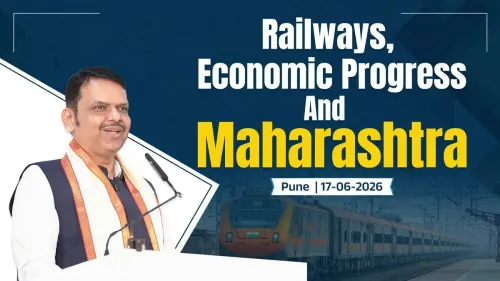
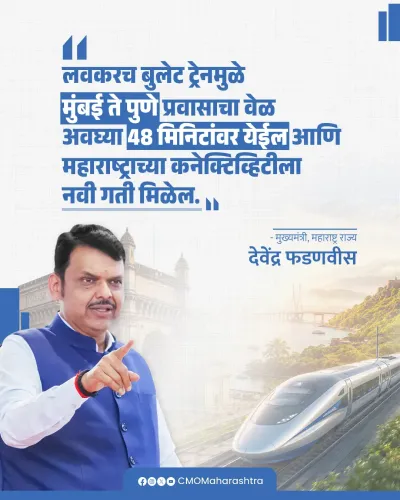
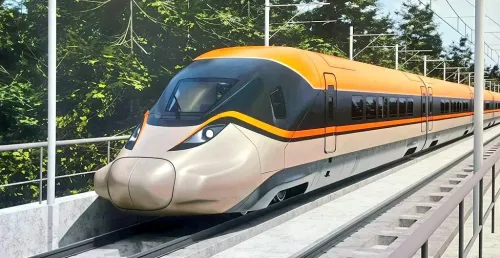
CM Fadnavis Flags Mumbai-Pune Bullet Train in 48 Minutes
Synopsis
The Chief Minister's Office of Maharashtra posted a claim on 18 June 2026 that a proposed bullet train could cover the Mumbai-Pune route in 48 minutes, amplifying CM Devendra Fadnavis's infrastructure push and reigniting debate over India's high-speed rail expansion beyond the flagship Mumbai-Ahmedabad corridor.
Key Takeaways
The Maharashtra CMO posted on 18 June 2026 that a bullet train could cover Mumbai-Pune in 48 minutes .
The post tags CM Devendra Fadnavis and is framed as a government infrastructure ambition.
Current fastest train travel between Mumbai and Pune takes roughly 3 hours 10 minutes ; road travel often exceeds 4 hours .
India's only active high-speed rail project remains the Mumbai-Ahmedabad corridor , approved in 2015 and under construction since 2017 .
A formal Mumbai-Pune bullet train corridor would require a detailed project report, land acquisition, and a state-central funding agreement — none yet confirmed.
The National High Speed Rail Corporation (NHSRC) is the central body responsible for executing such corridors.
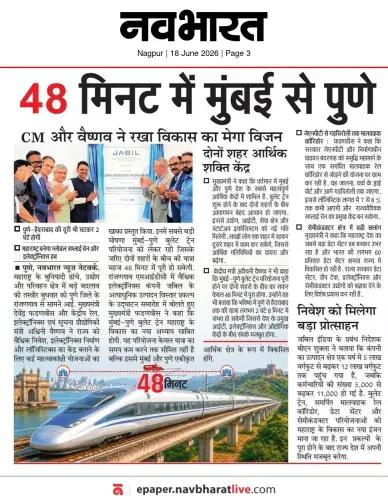
The Chief Minister's Office of Maharashtra posted on X (formerly Twitter) on Thursday, 18 June 2026, amplifying a claim attributed to Chief Minister Devendra Fadnavis that a proposed bullet train could cover the Mumbai-Pune route in just 48 minutes.
Context
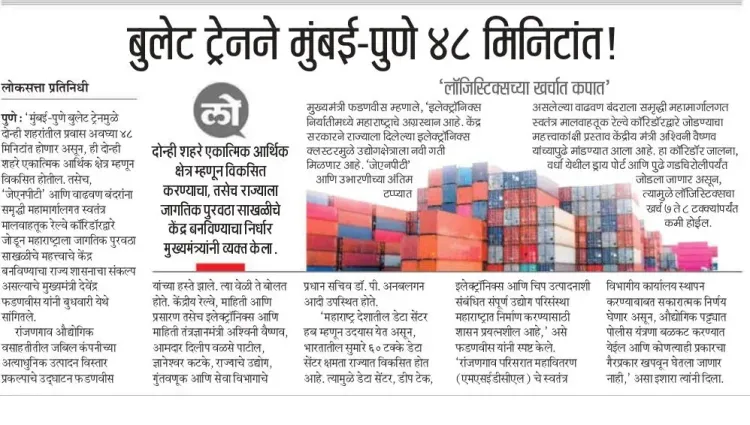
The post, shared from the official @CMOMaharashtra account, reads: 'बुलेट ट्रेनने मुंबई-पुणे 48 मिनिटांत!' — meaning 'Mumbai-Pune in 48 minutes by bullet train!' — and tags CM Devendra Fadnavis directly. The message is brief but pointed, positioning high-speed rail as a near-future reality for one of India's most congested inter-city corridors. Currently, the fastest express trains take roughly 3 hours 10 minutes for the approximately 190-kilometre journey, while road travel routinely exceeds 4 hours during peak periods.
Policy Backdrop
India's high-speed rail ambitions were formalised when the Mumbai-Ahmedabad High Speed Rail corridor received cabinet approval in 2015, with construction phases beginning in 2017. The project is being executed by the National High Speed Rail Corporation (NHSRC), a central public-sector undertaking set up specifically to plan and deliver bullet train infrastructure across the country. Maharashtra governments have repeatedly positioned a Mumbai-Pune corridor as a logical extension of or complement to that flagship line, given the economic weight of both cities and the volume of daily commuter and business traffic between them.
The broader National High Speed Rail network vision, pursued since the mid-2010s, aims to modernise inter-city travel, reduce logistics costs, and integrate with existing rail and metro systems across western India. A dedicated Mumbai-Pune high-speed corridor would serve not just leisure travellers but the large professional workforce that commutes between Mumbai's financial district and Pune's expanding technology and manufacturing hubs.
Stakeholders and Impact
The most immediate beneficiaries of such a corridor would be the estimated lakh-plus daily commuters who travel between Mumbai and Pune by train, bus, and private vehicle. Urban planners in both cities have long argued that dramatically faster inter-city connectivity could redistribute residential and commercial density, relieving pressure on Mumbai's saturated housing market and accelerating Pune's integration into a wider metropolitan economy. Industrial and logistics stakeholders along the Pune-Mumbai Expressway corridor would also stand to gain from faster passenger options that free road capacity.
For the state government, the announcement carries political significance: infrastructure delivery has been a central plank of CM Fadnavis's public messaging, and associating the Maharashtra CMO with a transformative connectivity milestone reinforces that narrative ahead of ongoing urban development debates.
What's Next
Any materialisation of a 48-minute Mumbai-Pune bullet train service would require completion of a detailed project report, formal land acquisition notifications, and a state-central funding agreement — none of which have been publicly confirmed at the time of this post. Observers will watch for whether NHSRC formally extends its mandate to include the Mumbai-Pune corridor, and whether the Maharashtra government tables a budgetary commitment or signs an MoU with the Union Ministry of Railways. The post signals political intent; the engineering and financial groundwork remains the critical next step.
Point of View
And the '48 minutes' figure does the same work that 'bullet train' does for the Mumbai-Ahmedabad corridor: it makes an abstract policy goal viscerally concrete for commuters. The timing matters too: with urban congestion and housing costs dominating Maharashtra's political conversation, a connectivity promise that effectively shrinks geography between the state's two largest cities is potent electoral currency. Whether this translates into a sanctioned project or remains a recurring talking point will depend on the pace of NHSRC mandate expansion and Union Railway Ministry buy-in.
NationPress
17 Sept 2026
Frequently Asked Questions
How long will Mumbai to Pune take by bullet train?
According to a post by the Chief Minister's Office of Maharashtra on 18 June 2026, the proposed bullet train is claimed to cover the Mumbai-Pune route in 48 minutes . No official project timeline or operational date has been confirmed publicly.
Is there a bullet train planned between Mumbai and Pune?
A Mumbai-Pune high-speed rail corridor has been discussed as an extension of India's broader National High Speed Rail network, but as of June 2026 no detailed project report or funding agreement has been officially announced. The only sanctioned high-speed rail project in India remains the Mumbai-Ahmedabad corridor .
What is the current fastest train time from Mumbai to Pune?
The fastest express trains currently cover the approximately 190-kilometre Mumbai-Pune route in roughly 3 hours 10 minutes , while road travel via the expressway can exceed 4 hours during peak hours.
Who is building India's bullet train?
The National High Speed Rail Corporation (NHSRC) is the central public-sector undertaking responsible for planning and executing India's high-speed rail corridors, including the flagship Mumbai-Ahmedabad line.
What did CM Devendra Fadnavis say about the bullet train?
The Maharashtra CMO's official X account posted on 18 June 2026 quoting a claim associated with CM Devendra Fadnavis that a bullet train would connect Mumbai and Pune in 48 minutes , signalling the state government's push for high-speed rail connectivity.