Assam Signs Pact for Rs 600 Cr Proton Therapy Unit at GMCH
Synopsis
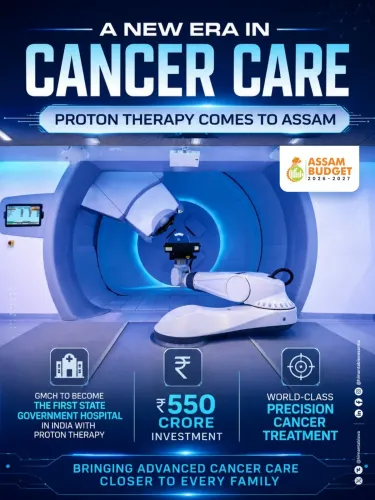
The Assam government has signed a Rs 600 crore agreement to establish a proton therapy cancer treatment facility at Gauhati Medical College and Hospital in Guwahati, aiming to bring affordable, precision oncology care to Northeast India and reduce the burden of patients travelling to distant metro cities.
Key Takeaways
The Assam government signed a Rs 600 crore pact on November 1, 2026 , for a proton therapy facility at GMCH, Guwahati .
Proton beam therapy offers more precise tumour targeting than conventional radiation, sparing healthy tissue — particularly vital for paediatric and brain cancers.
The facility is aimed at 'affordable cancer care,' addressing a chronic gap in advanced oncology access across northeastern India.
GMCH is Assam's oldest and largest government hospital, already serving as a referral centre for the wider Northeast region.
The project follows a public-private partnership model adopted by several Indian states to bring high-capital medical technology into government hospitals.
The private partner's identity, pricing for public patients, and integration with central schemes such as Ayushman Bharat remain key details yet to be publicly confirmed.
A Rs 600 crore agreement signed by the Assam government on Sunday, November 1, 2026, is set to bring one of medicine's most precise cancer-fighting technologies to Gauhati Medical College and Hospital (GMCH) in Guwahati — promising Northeast India its first credible shot at world-class radiation oncology without the punishing journey to a metro city.
What a proton therapy facility at GMCH actually means
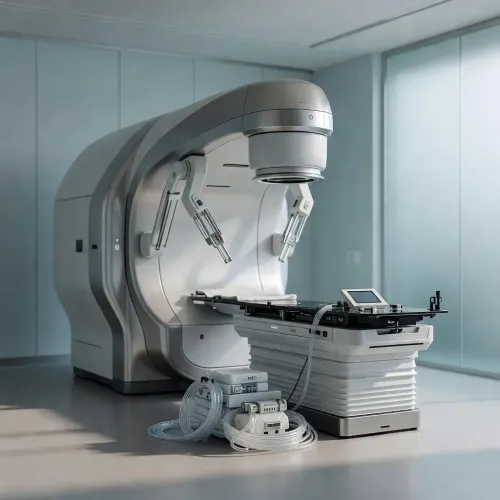
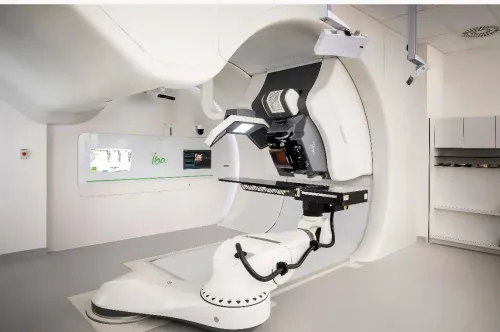
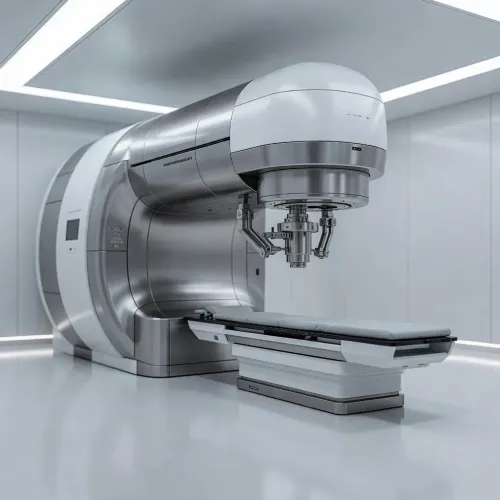
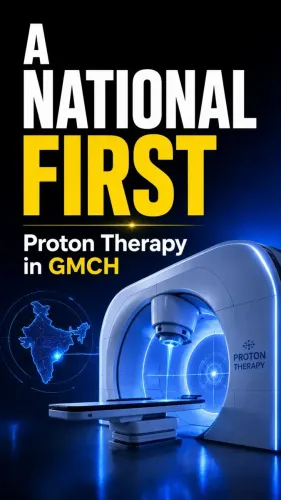
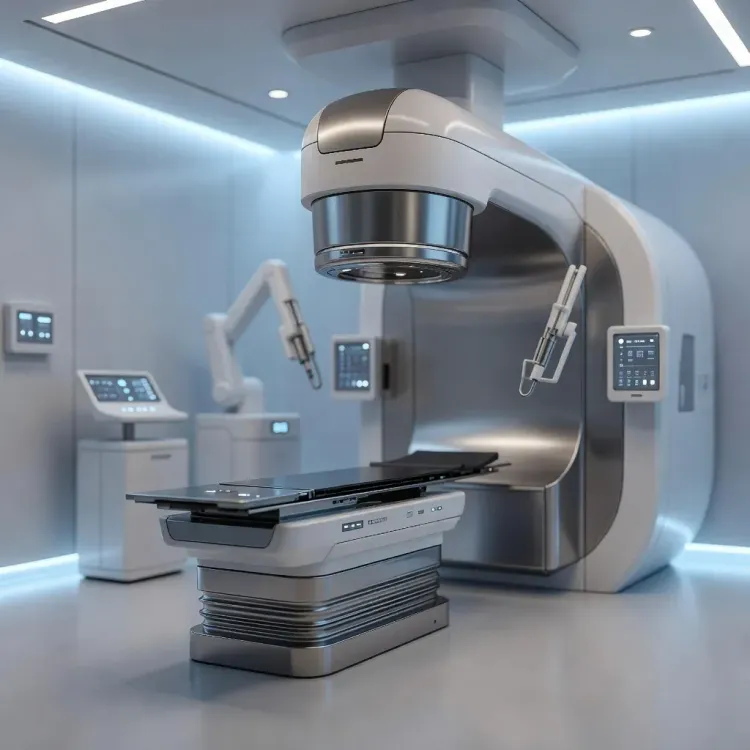
Proton beam therapy is not conventional radiation. Unlike standard X-ray-based radiotherapy, proton therapy delivers its lethal dose precisely at the tumour site and stops — sparing surrounding healthy tissue in a way that matters enormously for paediatric cancers, brain tumours, and cancers near the spine. It is the standard of care in advanced oncology centres globally, yet remains almost entirely absent from public hospitals across northeastern India.
Situating this facility at GMCH — Assam's oldest and largest government medical institution — gives it immediate credibility and catchment. The hospital already handles complex referral cases from across the seven sister states, meaning the proton unit would serve patients well beyond Assam's borders from the moment it opens.
Northeast's long journey to the nearest oncology centre — and why this changes it
For decades, cancer patients from Assam and neighbouring states have faced a grim arithmetic: travel thousands of kilometres to Kolkata, Mumbai, or Delhi for advanced treatment, burning through savings before a single session of therapy begins. The region's limited radiation oncology infrastructure has fed a cycle of late diagnoses, deferred treatment, and preventable deaths.
Several Indian states have already moved to close this gap through public-private partnerships that bring high-capital precision equipment into government hospital campuses. Assam's pact follows that model — pairing state commitment with private sector capability to build something that neither could finance alone. The broader national push, including the National Programme for Prevention and Control of Cancer, Diabetes, Cardiovascular Diseases and Stroke (NPCDCS) launched in 2010, laid policy groundwork for exactly this kind of state-level oncology investment.
The numbers that will determine whether 'affordable' holds
The Rs 600 crore project cost is substantial — proton therapy machines rank among the most expensive pieces of medical equipment on earth — but the government's stated aim of 'affordable cancer care' is the real test. The identity of the private partner, the agreed pricing structure for public patients, and the facility's integration with existing state and central cancer insurance schemes remain the crucial open questions.
What the government does with that partnership agreement — how it structures subsidised access for patients below the poverty line, how it links the facility to the Ayushman Bharat framework, and what timeline it sets for commissioning — will determine whether this becomes a model for the region or an elite unit that happens to sit inside a government campus.
Northeast India is watching. If Assam delivers proton therapy at a price that a family from rural Nagaland or Manipur can actually afford, the ripple effect on regional cancer care could be transformative. That is the promise on the table today.
Point of View
A strategy that can also double as political capital in a state with deep healthcare anxieties. The 'affordable' qualifier, however, is where the policy rubber meets the road: without binding price caps for public patients and clear integration with national insurance frameworks, a proton centre in a government campus can still function as a premium facility in practice. How Assam structures access — not just builds the machine — will determine whether this becomes a genuine model for regional health equity or a headline that outpaces its delivery.
NationPress
1 Nov 2026
Frequently Asked Questions
What is proton therapy and why does it matter for cancer patients?
Proton therapy is a precision form of radiation that targets tumours with a focused beam of protons, releasing most of its energy directly at the cancer site and minimising damage to surrounding healthy tissue. It is especially beneficial for paediatric cancers and tumours near critical structures like the brain or spine.
Where will Assam's proton therapy facility be built?
The facility will be built at Gauhati Medical College and Hospital (GMCH) in Guwahati , Assam's oldest and largest government medical institution.
How much is the Assam government investing in the proton therapy project?
The pact signed on November 1, 2026 , covers a project valued at Rs 600 crore .
Will the proton therapy centre at GMCH be affordable for ordinary patients?
The Assam government has stated the goal of 'affordable cancer care,' but the specific pricing structure, subsidies for low-income patients, and integration with schemes like Ayushman Bharat have not yet been publicly confirmed.
Why is this facility significant for Northeast India?
Northeastern India has long lacked advanced radiation oncology infrastructure, forcing patients to travel to distant metros like Kolkata or Delhi for treatment. A proton therapy centre at GMCH in Guwahati would give the entire region direct access to one of the world's most precise cancer treatment technologies.