CM Himanta: Assam to Order India's First Govt Proton Therapy Unit
Synopsis
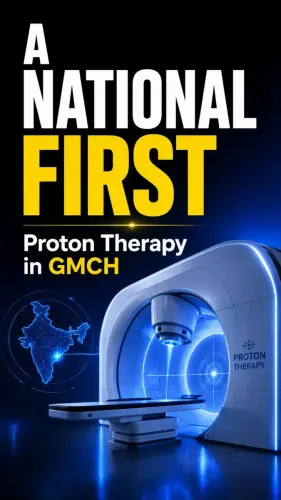
Assam Chief Minister Himanta Biswa Sarma has announced that the state will place an order for India's first government-sector proton beam therapy machine within 60 days, while also committing to integrate AI into day-to-day governance — a twin push on healthcare and digital administration for the Northeast.
Key Takeaways
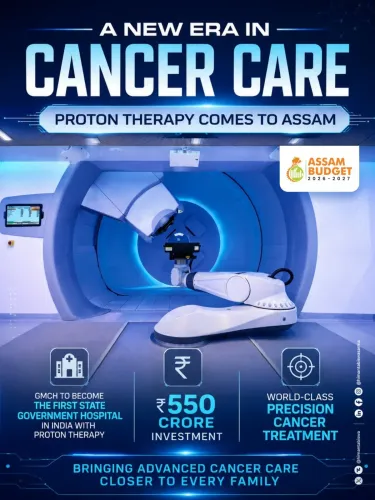
Assam aims to place an order for India's first government-sector proton beam therapy machine within 60 days , per CM Himanta Biswa Sarma.
Proton beam therapy is a high-precision cancer treatment currently available in India only at a limited number of private centres.
The announcement would make advanced oncology care accessible under public health insurance schemes for patients in the Northeast .
Assam also plans to integrate artificial intelligence into its day-to-day governance processes alongside the health initiative.
The move aligns with the national Digital India framework and builds on cancer care expansion under Ayushman Bharat PMJAY since 2018 .
If confirmed, Assam would set a precedent for other states to decentralise frontier medical technology beyond metro centres.
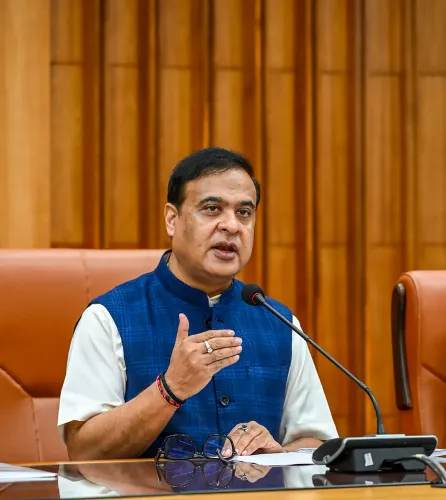
Assam Chief Minister Himanta Biswa Sarma announced on Friday, 10 July 2026 that the state government expects to place an order for India's first government-sector proton beam therapy machine within the next 60 days. He added that Assam would also integrate artificial intelligence into its day-to-day governance processes.
Context
Posting on X, CM Sarma stated: 'Within the next 60 days, we will be able to place an order for India's first Govt sector proton beam therapy machine. Assam will also leverage the power of AI in its day to day governance process.' The announcement positions Assam as the first Indian state to procure such a machine through the public health system — a significant step for a northeastern state that has historically depended on metro-based referral hospitals for advanced cancer care.
Proton beam therapy is a high-precision form of radiation treatment that targets tumours with minimal damage to surrounding healthy tissue. It is considered superior to conventional radiation for several cancers, particularly in children and cases near critical organs. Until now, proton therapy facilities in India have been confined to a handful of private institutions in major cities.
Policy Backdrop
The move builds on the foundation laid by Ayushman Bharat Pradhan Mantri Jan Arogya Yojana, launched in 2018, which expanded cancer care infrastructure across states including those in the Northeast. Central government schemes under the Digital India framework have simultaneously encouraged state administrations to adopt AI-driven tools for service delivery and administrative efficiency.
Assam has received targeted central support for health infrastructure upgrades in recent years, and this announcement signals an ambition to leapfrog incremental improvements in favour of frontier medical technology. Bringing a government-sector proton therapy unit to the Northeast would reduce the financial and logistical burden on cancer patients who currently travel thousands of kilometres for treatment.
Stakeholders and Impact
The primary beneficiaries would be cancer patients across Assam and the broader Northeast region, who face some of the highest rates of certain cancers — including those linked to tobacco use and environmental factors — in the country. Public-sector availability of proton therapy would make the treatment accessible under government health insurance schemes, dramatically lowering out-of-pocket costs compared with private facilities.
Healthcare providers and oncology specialists in the region would also gain access to equipment that is currently available only in a small number of centres nationwide. The parallel AI governance initiative is aimed at improving administrative responsiveness and reducing friction in public service delivery across state departments.
What's Next
The critical milestone to watch is the formal placement of the procurement order within the stated 60-day window. Subsequent state budget sessions and cabinet announcements are expected to detail the AI governance pilots, including which departments will be covered and the technology partners involved. If the proton therapy order is confirmed, Assam would set a precedent that other state governments — particularly those in underserved regions — may seek to replicate, accelerating the decentralisation of advanced oncology care beyond India's established metro centres.
Point of View
While less specific, tracks a broader pattern of state-level digital ambition that has accelerated since the national Digital India push. The 60-day procurement timeline is the key test of whether this remains an aspirational statement or translates into a binding government commitment.
NationPress
9 Oct 2026
Frequently Asked Questions
What is proton beam therapy and why is it significant for India?
Proton beam therapy is a high-precision cancer radiation treatment that minimises damage to healthy tissue surrounding a tumour. It is significant for India because government-sector access to this technology does not currently exist, meaning patients must rely on a small number of costly private facilities.
Which state is getting India's first government proton beam therapy machine?
Assam is set to become the first Indian state to procure a proton beam therapy machine for the government health sector, according to Chief Minister Himanta Biswa Sarma .
When will Assam place the order for the proton therapy machine?
CM Himanta Biswa Sarma stated on 10 July 2026 that the order would be placed within the next 60 days .
How will AI be used in Assam's governance?
CM Sarma announced that Assam would 'leverage the power of AI in its day to day governance process,' though specific departments and implementation details are yet to be officially announced.
How does this fit into India's broader healthcare policy?
The initiative builds on the Ayushman Bharat Pradhan Mantri Jan Arogya Yojana launched in 2018 , which expanded cancer care across states, and reflects a broader trend of decentralising advanced medical technology beyond India's major metro cities.