CM Himanta Signs MoU for India's First Public-Sector Proton Beam Therapy Centre in Assam
Synopsis
Assam CM Himanta Biswa Sarma has signed an MoU for India's first public-sector Proton Beam Therapy centre at ₹600 crore, ending a landscape where this advanced cancer treatment — costing up to ₹50 lakh — existed only in private hospitals.
Key Takeaways
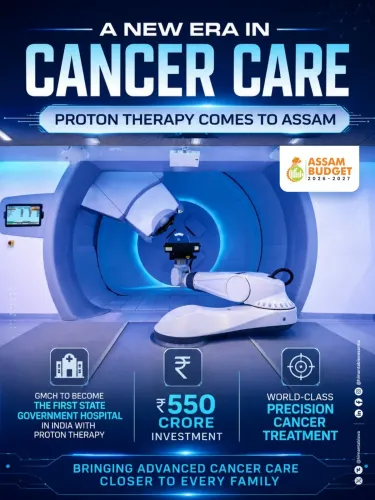
India's first public-sector Proton Beam Therapy centre will be set up in Assam at a cost of ₹600 crore .
Proton beam therapy has until now been available only in private hospitals in India, at costs of up to ₹50 lakh per patient .
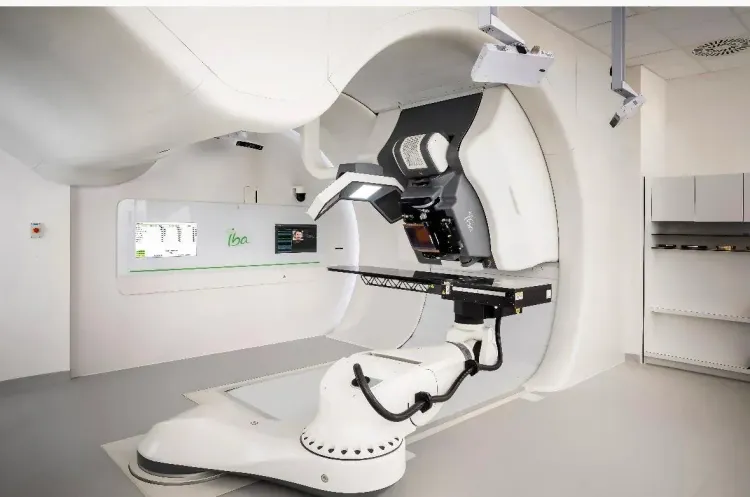
The technology targets tumours with pinpoint precision while sparing healthy tissue — particularly beneficial for children with cancer .
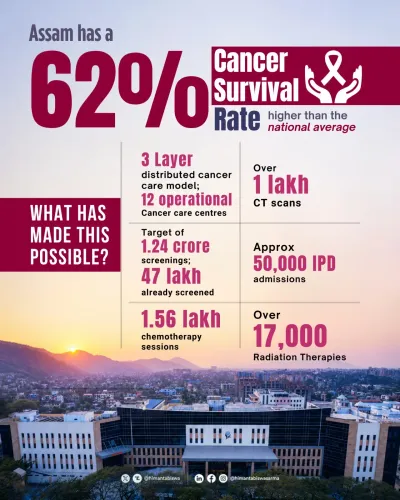
Assam already has 17 cancer hospitals under development across the state, with 12 operational .
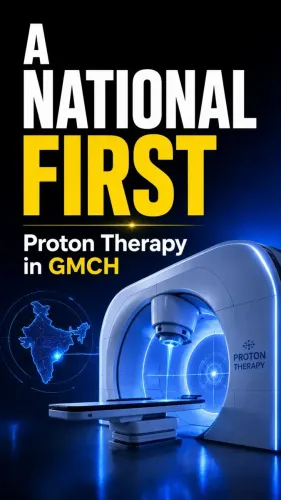
Gauhati Medical College Hospital (GMCH) is tagged in the announcement, indicating a likely anchor institution for the new centre.
CM Sarma has declared Assam's ambition to become a global centre for cancer care , with potential to serve patients from neighbouring countries.
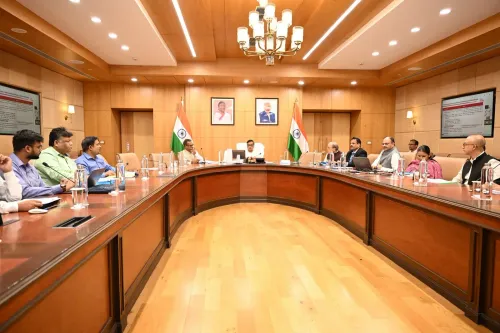
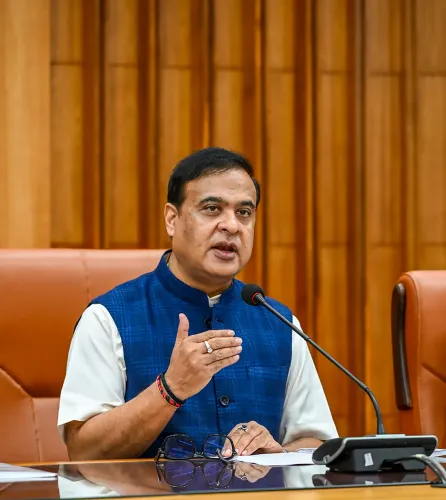
A treatment that costs up to ₹50 lakh in India's private hospitals — and has never existed in the public sector anywhere in the country — is coming to Assam. Assam Chief Minister Himanta Biswa Sarma announced on Saturday, 31 October 2026 that the state has signed a memorandum of understanding to establish India's first Proton Beam Therapy centre in the public health sector, at a project cost of ₹600 crore.
The announcement carries a triple distinction: a first for Assam, a first for the North East, and a first for India. Proton beam therapy is among the most sophisticated radiotherapy technologies in the world — it targets tumours with sub-millimetre precision while leaving surrounding healthy tissue largely intact. That specificity matters most for paediatric patients, where conventional radiation can cause lasting developmental damage. By bringing this technology into the public sector, Assam is attempting to make a treatment currently accessible only to the wealthiest patients available to anyone who needs it.
Why Proton Beam Therapy Changes the Stakes for Cancer Patients
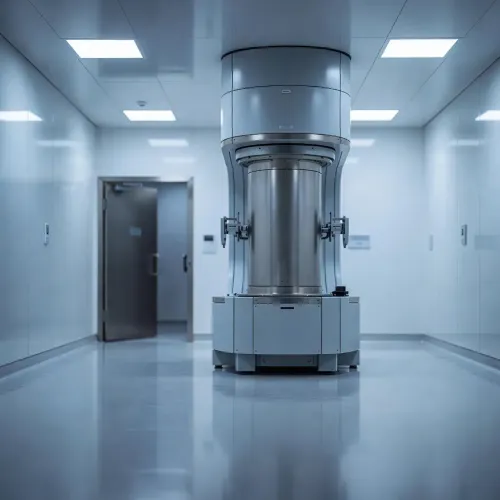
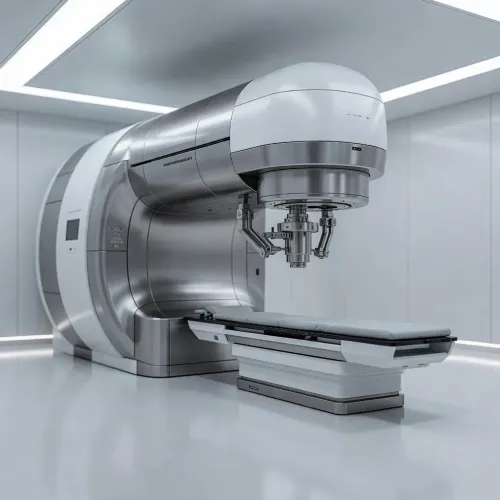
Conventional radiation therapy delivers energy through X-rays that pass through the body, exposing healthy tissue on both sides of a tumour. Proton beams, by contrast, deposit the bulk of their energy at a precise depth — a phenomenon known as the Bragg peak — and stop. The clinical result is a dramatically reduced dose to surrounding organs. For brain tumours, spinal cancers, and paediatric cases in particular, this can mean the difference between cure and long-term disability.
Until now, proton beam therapy in India has been the exclusive preserve of a handful of private centres, with treatment costs reaching ₹50 lakh per patient. The overwhelming majority of India's cancer patients — especially those in the Northeast, far from the metro-based private facilities — have had no realistic access. The ₹600 crore public-sector facility in Assam is designed to break that barrier.
Assam's Cancer Infrastructure Push: 17 Hospitals and Counting
The proton centre is not a standalone gesture. CM Sarma pointed to a broader architecture already taking shape: 17 cancer hospitals are rising across the state, with 12 already functional. A community-level outreach programme runs in parallel, designed to catch cancers early — the stage at which advanced therapies like proton beam are most effective.
The announcement tagged Gauhati Medical College Hospital (GMCH), one of Assam's premier public medical institutions, signalling that the centre is likely to be anchored within the established public-health ecosystem rather than set up as an isolated facility. GMCH already serves as the region's principal referral destination for complex medical cases, giving the future proton centre an immediate patient catchment across Northeast India's eight states.
The Larger Ambition: Assam as a Global Cancer Care Hub
The language CM Sarma used is deliberate and expansive. 'Our ambition is clear,' he wrote: 'Assam will be a global centre for cancer care.' That framing — global, not merely regional — signals an intent to attract patients not just from the Northeast but potentially from neighbouring countries like Bangladesh, Bhutan, and Myanmar, which currently send patients abroad for advanced oncology.
The pattern here fits a broader state-level strategy: invest in specialised infrastructure to reduce the need for patients to travel to Delhi, Mumbai, or Chennai for care they cannot afford once they get there. Every rupee saved on travel and accommodation is a rupee that goes toward treatment. For a region where out-of-pocket health expenditure pushes families into poverty, that arithmetic is not abstract — it is life-altering.
The MoU is signed. The clock is now running on execution — construction timelines, equipment procurement, and clinical staffing will determine how quickly this promise translates into a patient on a treatment table. But the direction is set, and it is pointing somewhere no Indian public hospital has pointed before.
Point of View
The announcement reinforces a political identity built around transforming the Northeast from a recipient of central welfare to a self-sufficient provider of specialised services. The 'global hub' framing also carries a geopolitical undertone: positioning Assam as a medical destination for Bangladesh, Bhutan, and Myanmar aligns with India's Act East Policy at the healthcare level. The real test, however, will be in execution — proton therapy facilities are among the most complex and expensive to commission, and the gap between MoU and operational centre can stretch years.
NationPress
31 Oct 2026
Frequently Asked Questions
What is Proton Beam Therapy and why is it significant?
Proton Beam Therapy is an advanced form of radiation treatment that uses proton beams to target tumours with high precision, minimising damage to surrounding healthy tissue. It is especially beneficial for children and patients with tumours near critical organs.
How much does Proton Beam Therapy cost in India currently?
Currently, Proton Beam Therapy is available only in private hospitals in India, with treatment costs reaching up to ₹50 lakh per patient, making it inaccessible for most Indians.
Where will India's first public-sector Proton Beam Therapy centre be set up?
The centre will be set up in Assam, making it the first such facility in the public health sector in India as well as the first in the Northeast. Gauhati Medical College Hospital is tagged in the announcement as a likely anchor institution.
What is the cost of the Proton Beam Therapy centre in Assam?
The Assam government has signed an MoU to set up the Proton Beam Therapy centre at a cost of ₹600 crore.
How many cancer hospitals does Assam have currently?
Assam has 17 cancer hospitals under development across the state, of which 12 are already functional, as part of the state government's broader cancer care infrastructure push.