Dr. Jitendra Singh Highlights India's Most Powerful Hydrogen Train
Synopsis
Union Minister Dr. Jitendra Singh amplified PM Modi's claim that India's hydrogen-powered train from Jind, Haryana, is the world's most powerful at 3,200 horsepower — placing India among only three or four nations with operational hydrogen train capability.
Key Takeaways
Jitendra Singh shared PM Modi's statement on 17 July 2026 highlighting India's hydrogen train achievement.
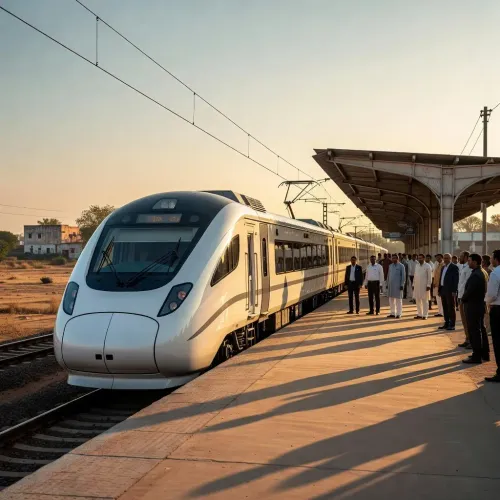
The hydrogen train operating from Jind, Haryana , is claimed to be the world's most powerful hydrogen train at 3,200 horsepower .
It is also described as the longest hydrogen-powered train in India .
Only three or four countries globally currently have the capability to run hydrogen-powered trains, according to PM Modi.
The development is linked to the National Green Hydrogen Mission (2023) and Indian Railways' net-zero decarbonisation targets.
The initiative supports India's broader goal of achieving net-zero emissions by 2070 and reducing diesel import dependence.
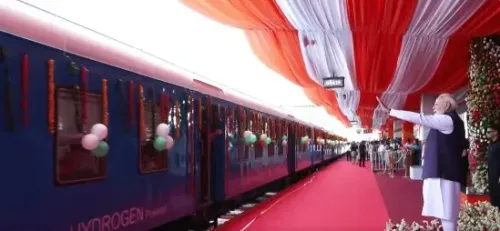
Union Science and Technology Minister Dr. Jitendra Singh on Friday, 17 July 2026, shared remarks by Prime Minister Narendra Modi on X, spotlighting India's hydrogen-powered train operating from Jind, Haryana, as the world's most powerful hydrogen train, generating 3,200 horsepower.
Context
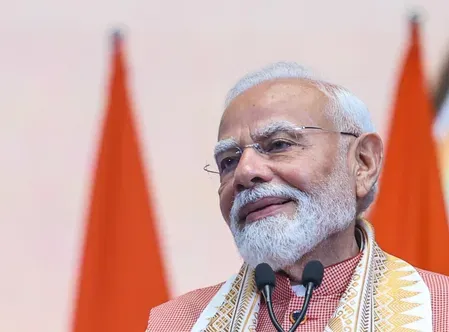
The post quotes PM Modi directly: 'Hydrogen trains have only recently come into existence in the world. At present, only three or four countries in the world have the capability to run hydrogen-powered trains, but they are still in the initial stage.' The Prime Minister added that India's hydrogen train from Jind is not only the most powerful in the world at 3,200 horsepower, but also the longest hydrogen-powered train in the country.
The statement positions India among a very small group of nations — currently estimated at three or four — that have developed operational hydrogen train capability, while asserting that India's variant surpasses them in power output and length.
Policy Backdrop
Indian Railways outlined plans in 2022–23 to introduce hydrogen fuel cell trains on heritage and unelectrified routes as part of its broader net-zero decarbonisation strategy. These efforts are closely tied to the National Green Hydrogen Mission, approved in 2023, which allocated funds for pilot projects across transport and industrial sectors.
The mission is a central plank of India's commitment to achieving net-zero emissions by 2070, and reducing dependence on imported diesel for rail traction. The hydrogen train programme also aligns with the government's push for indigenous rolling stock development and 100% electrification of broad-gauge routes.
Stakeholders and Impact
Rail commuters on routes currently served by diesel locomotives stand to benefit most directly from a successful hydrogen train rollout, with cleaner, quieter operations and no direct greenhouse gas emissions at the point of use. The domestic green hydrogen industry — including electrolyser manufacturers and fuel cell developers — also gains visibility and potential procurement pipelines from a high-profile government endorsement of this scale.
India's claim of global leadership in hydrogen train power output mirrors the government's parallel assertions in semiconductors, space, and defence manufacturing. The emphasis on indigenisation and world-record specifications is consistent with the broader 'Aatmanirbhar Bharat' narrative that has shaped technology policy in recent years.
What's Next
Attention will now turn to whether Indian Railways announces further route expansions beyond the Jind corridor, and whether upcoming railway budget sessions include dedicated allocations for scaling the hydrogen train fleet. Technology transfer arrangements, international certifications, and commercial service timelines will be closely watched by industry stakeholders and green mobility advocates alike.
If India's specifications are independently validated, the Jind hydrogen train could become a significant reference point in global clean rail transport discussions, reinforcing India's ambition to be a net exporter of green hydrogen technology and solutions.
Point of View
Signalling India's intent to be counted among global clean-energy leaders rather than merely fast followers. The framing — world's most powerful, world's longest — follows a well-established pattern in which the government uses superlatives to build domestic confidence and international credibility simultaneously. The Jind corridor, if it delivers on these specifications, could serve as a proof-of-concept that accelerates the National Green Hydrogen Mission's transport pillar. The political calculus is clear: clean rail technology, rooted in indigenous capability, is being positioned as a legacy achievement ahead of the 2070 net-zero deadline.
NationPress
17 Jul 2026
Frequently Asked Questions
What is the world's most powerful hydrogen train?
According to statements by PM Narendra Modi shared on 17 July 2026 , India's hydrogen-powered train operating from Jind, Haryana , is the world's most powerful hydrogen train, with a rated output of 3,200 horsepower .
Which country has the most powerful hydrogen train in the world?
India has claimed this distinction with its hydrogen train running from Jind in Haryana , which PM Modi described as the world's most powerful hydrogen train at 3,200 horsepower .
What is India's National Green Hydrogen Mission?
The National Green Hydrogen Mission was approved by the Indian government in 2023 to scale up green hydrogen production and its applications across sectors including transport, with pilot projects in Indian Railways .
How many countries have hydrogen trains?
As of 2026 , only three or four countries in the world have the capability to run hydrogen-powered trains, according to PM Modi , with most still in the initial stage of development.
What is India's net-zero target for railways?
Indian Railways is working towards net-zero carbon emissions by 2070 , with hydrogen fuel cell trains, 100% broad-gauge electrification, and indigenous rolling stock development forming key pillars of that strategy.