India's first hydrogen train flagged off by PM Modi in Jind, Haryana
Synopsis
India joined a select group of nations deploying hydrogen rail technology as PM Modi flagged off the country's first hydrogen-powered train from Jind, Haryana. Running on the Jind-Sonipat section, the zero-emission train is a tangible step toward Indian Railways' 2030 net-zero target — and a signal that green hydrogen is moving from policy paper to platform.
Key Takeaways
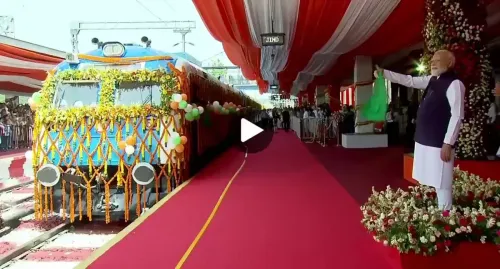
PM Narendra Modi flagged off India's first hydrogen-powered train from Jind, Haryana on 18 July 2025 .
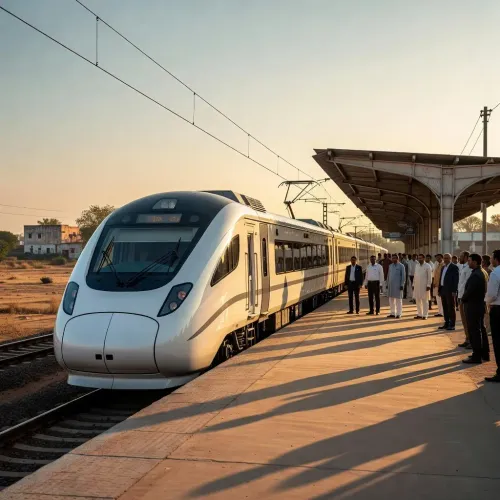
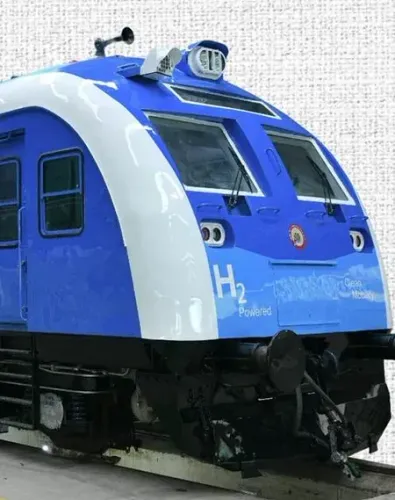
The train operates on the Jind-Sonipat railway section and emits only water vapour, making it a zero-emission alternative to diesel trains.
Haryana CM Nayab Singh Saini personally reviewed venue and station arrangements ahead of the launch.
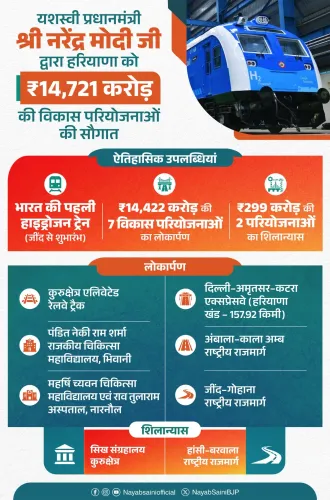
PM Modi also inaugurated Bhiwani Medical College and Koriawas Medical College in Mahendragarh during the same visit.
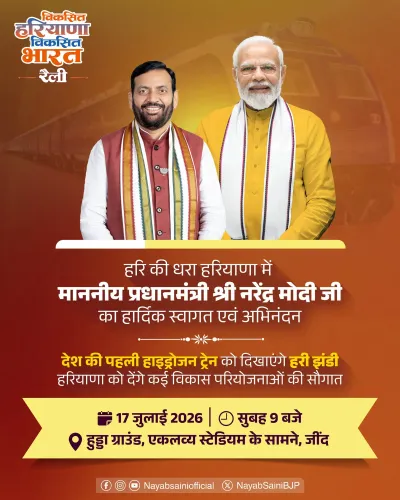
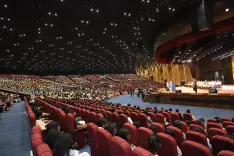
A 'Viksit Bharat-Viksit Haryana' eco-friendly rally was held at Eklavya Stadium grounds in Jind as part of the programme.
Indian Railways has a stated target of achieving net-zero carbon emissions by 2030 .
Prime Minister Narendra Modi on 18 July 2025 flagged off India's first hydrogen-powered train from Jind in Haryana, marking a significant milestone in the country's push toward clean and sustainable rail transportation. The launch on the Jind-Sonipat railway section was part of a wider programme in the state that also included the inauguration of two new medical colleges.
Preparations and the Eco-Friendly Drive
Haryana Chief Minister Nayab Singh Saini on 17 July 2025 personally reviewed arrangements at Chaudhary Ranbir Singh University, the primary venue, and at Jind railway station, where the hydrogen train launch was to take place. Saini inspected entry arrangements for the public and VIPs, the executive lounge, cafeteria, and the railway track, and issued directions to officials to ensure smooth conduct of the event.
All programmes associated with the Prime Minister's visit were designed to be fully eco-friendly, according to the Chief Minister. A special cleanliness drive under the 'Swachhata Se Swagat' campaign was also conducted at the Gohana railway junction, led by Tourism Minister Arvind Sharma. Sharma described the hydrogen train's arrival at Gohana as 'a golden moment in the history of modern India.'
The Hydrogen Train: What It Means for India
The hydrogen-powered train operating on the Jind-Sonipat section is India's first of its kind, positioning the country alongside a small group of nations — including Germany and China — that have commercially deployed hydrogen rail technology. Unlike conventional diesel trains, hydrogen trains emit only water vapour, making them a zero-emission alternative suited to non-electrified rail corridors.
This launch is part of a broader national strategy to decarbonise the Indian Railways network, which is among the world's largest by route length. The Indian Railways has set an ambitious target of achieving net-zero carbon emissions by 2030.
Other Key Inaugurations in Haryana
Beyond the train launch, PM Modi's programme in Haryana included the inauguration of Bhiwani Medical College and Koriawas Medical College in Mahendragarh. Health Minister Arti Singh Rao said the two institutions are expected to significantly improve healthcare access in south Haryana, reducing the need for residents to travel to larger cities for treatment.
The new colleges will also expand opportunities for local students pursuing medical education, she added. The event also featured the 'Viksit Bharat-Viksit Haryana' rally at the Haryana Urban Development Authority ground opposite Eklavya Stadium in Jind.
What Comes Next
The hydrogen train's commercial deployment on the Jind-Sonipat section will be closely watched as a pilot for potential expansion across other non-electrified corridors in India. The success of this launch could accelerate procurement and domestic manufacturing of hydrogen train technology, which aligns with the Centre's broader green hydrogen mission announced in recent years. Stakeholders in the rail and clean energy sectors will be tracking ridership data, operational reliability, and cost metrics in the months ahead.
Point of View
But the harder question is scale. India has thousands of kilometres of non-electrified track where hydrogen could replace diesel — yet a single pilot on one short corridor does not a transition make. The real test will be whether domestic manufacturing capacity for hydrogen trains develops fast enough to make expansion economically viable, or whether this remains a showcase project. With the green hydrogen mission still in early stages and electrolyser costs yet to fall sharply in India, the gap between the launch optics and a genuine rail decarbonisation pathway is worth watching closely.
NationPress
15 Oct 2026
Frequently Asked Questions
What is India's first hydrogen train and where does it run?
India's first hydrogen-powered train was flagged off by PM Modi from Jind, Haryana, and operates on the Jind-Sonipat railway section. It runs on hydrogen fuel cells and emits only water vapour, making it a zero-emission alternative to conventional diesel trains.
When did PM Modi launch the hydrogen train in Haryana?
PM Modi flagged off the hydrogen train on 18 July 2025 from Jind, Haryana. Preparations for the event were reviewed by Haryana Chief Minister Nayab Singh Saini on 17 July 2025.
Why does India's hydrogen train launch matter?
The launch makes India one of a small group of countries — alongside Germany and China — to commercially deploy hydrogen rail technology. It supports Indian Railways' target of achieving net-zero carbon emissions by 2030, particularly on non-electrified corridors where electrification is not cost-effective.
What other projects did PM Modi inaugurate in Haryana?
Alongside the hydrogen train, PM Modi inaugurated Bhiwani Medical College and Koriawas Medical College in Mahendragarh. Both institutions are expected to improve healthcare access in south Haryana and expand opportunities for local medical students.
Who led preparations for PM Modi's Jind programme?
Haryana Chief Minister Nayab Singh Saini led preparations, personally inspecting Chaudhary Ranbir Singh University and Jind railway station. Tourism Minister Arvind Sharma also organised a cleanliness drive at Gohana railway junction under the 'Swachhata Se Swagat' campaign.