CM Himanta frames NijutBabuMoina as Assam's edu-hub blueprint
Synopsis
Assam CM Himanta Biswa Sarma says the NijutBabuMoina schemes — stacking free admissions, uniforms, textbooks, better infrastructure and direct financial services — form a holistic push to make Assam India's next education destination and curb outward student migration from the Northeast.
Key Takeaways
Assam CM Himanta Biswa Sarma positioned the #NijutBabuMoina schemes as a comprehensive, multi-tier education reform on 15 October 2026 .
The scheme stack covers free admission, uniforms and textbooks, infrastructure upgrades, and direct financial services for students.
Assam's free-admission policy for undergraduate government college students dates to around 2017 and has been expanded since.
The overarching goal is to reduce outward student migration and develop the Northeast as a self-sufficient education destination.
State budget allocations and new national-institute announcements will be the key metrics to watch for progress on the 'edu hub' ambition.
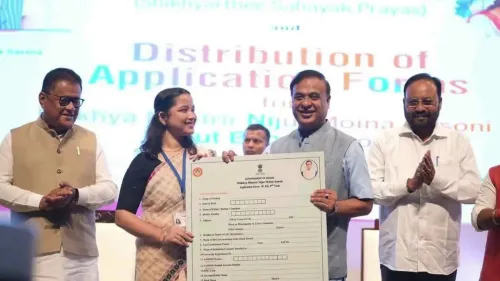
From free textbooks in primary classrooms to premier national institutes on the northeastern horizon, Assam Chief Minister Himanta Biswa Sarma is pitching a single, unified vision — and on Thursday, 15 October 2026, he put it plainly on X: Assam is poised to become the country's next education hub.
What the NijutBabuMoina umbrella actually covers
Sarma described the #NijutBabuMoina schemes as part of a 'holistic' stack — free admission, uniforms and textbooks at the entry level, improved school and college infrastructure in the middle, and direct financial services reaching students at the top. The layering is deliberate: each tier is meant to remove a different barrier that historically pushed Assam's students to study elsewhere.
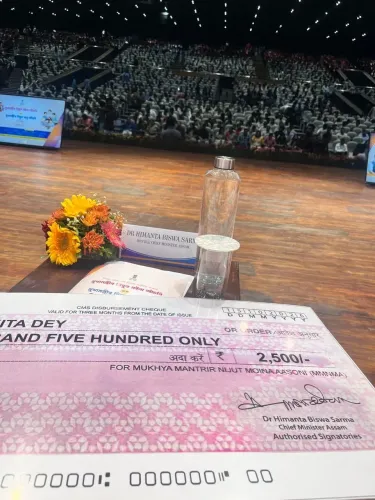
The financial-support component is the newest piece in this architecture. Direct benefit transfers to students address what fee waivers alone cannot — the cost of living, transport, and incidentals that quietly drive dropout rates even after tuition is free.
A reform arc that began with free admissions
The policy lineage here stretches back to around 2017, when Assam first introduced free admission to undergraduate courses in government colleges and universities. Subsequent administrations — including Sarma's since 2021 — expanded the model, adding material support and pushing for the establishment of national-level institutions such as IITs and AIIMS in the region.
The broader strategic logic is straightforward: every student who leaves Assam for Pune, Bengaluru, or Delhi represents lost human capital and remittance pressure on a family. Build the ecosystem at home, and the calculus flips.
The 'edu hub' ambition and what it demands
Calling Assam the 'next edu hub' is a political and economic claim that will be tested in coming state budget cycles. Two indicators will tell the story faster than any press release: the size of the education allocation in the next Assam budget, and any fresh announcements on new or upgraded national institutes in the state.
The Northeast already has a geography problem — connectivity costs are real, and competing with established education corridors in southern and western India demands more than subsidies. But Sarma's framing signals that the government sees education infrastructure as a long-game economic anchor, not just a welfare measure. If the bet lands, it could redefine the region's talent pipeline for a generation.
Point of View
Not merely a welfare footnote. By bundling disparate schemes under a single aspirational brand, the CM is trying to shift the public narrative from subsidy-distribution to institution-building — a harder but more durable pitch. The real test is whether budget allocations and national-institute placements follow the rhetoric, since the Northeast's connectivity constraints mean competing with established education corridors requires structural investment, not just fee waivers. If Assam can genuinely reduce outward student migration, it would mark a meaningful shift in the region's economic and demographic trajectory.
NationPress
15 Oct 2026
Frequently Asked Questions
What is the NijutBabuMoina scheme in Assam?
The NijutBabuMoina scheme is an Assam government education initiative that provides direct financial support to students alongside free admissions, uniforms, and textbooks in government schools and colleges. It is part of a broader effort to make education accessible and retain students within the state.
When did Assam introduce free admission to government colleges?
Assam introduced free admission to undergraduate courses in government colleges and universities around 2017 , and the policy has been progressively expanded under subsequent administrations including that of CM Himanta Biswa Sarma since 2021.
What is Himanta Biswa Sarma's vision for Assam's education sector?
CM Himanta Biswa Sarma has stated he wants Assam to become India's next education hub by combining free admissions and materials, better school and college infrastructure, national-level institutes, and direct financial services to students — a layered approach under the NijutBabuMoina umbrella.
How does Assam plan to stop students from leaving the state for education?
Assam's strategy to curb outward student migration includes fee waivers, material support, upgraded infrastructure, attraction of national institutes such as IITs and AIIMS, and direct financial transfers to cover costs beyond tuition, making the state a viable alternative to education hubs in southern or western India.
What should we watch to gauge Assam's edu hub progress?
The two clearest indicators will be the education budget allocation in upcoming Assam state budgets and any new announcements about national-level institutes being established or upgraded in the state.