Puri Launches CBM Bid Rounds 2025-26 and India Hydrocarbon Outlook
Synopsis
Union Petroleum Minister Hardeep Singh Puri signed contracts for Special Coal Bed Methane Bid Rounds 2025 and 2026 and launched the India Hydrocarbon Outlook 2026 on October 15, signalling a push into unconventional gas and deepwater exploration under the Samudra Manthan programme.
Key Takeaways
CBM Bid Rounds 2025 and 2026 contracts were signed on October 15, 2026 at a Ministry of Petroleum and Natural Gas event attended by Petroleum Minister Hardeep Singh Puri .
The government cited an estimated CBM resource base and positioned unconventional gas as a key pillar of domestic production growth.
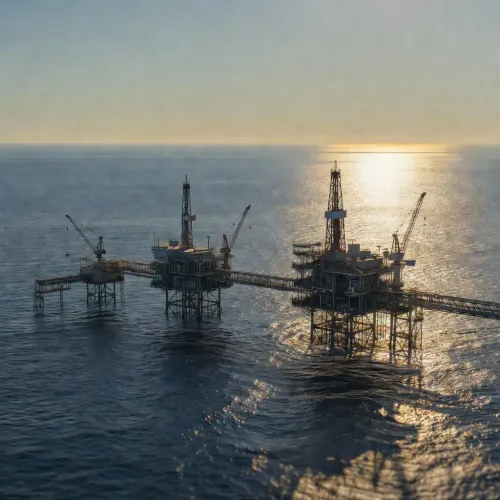
The Samudra Manthan programme targets approximately 60 deep- and ultra-deep-water wells through shared drilling costs, new seismic surveys and common offshore infrastructure.
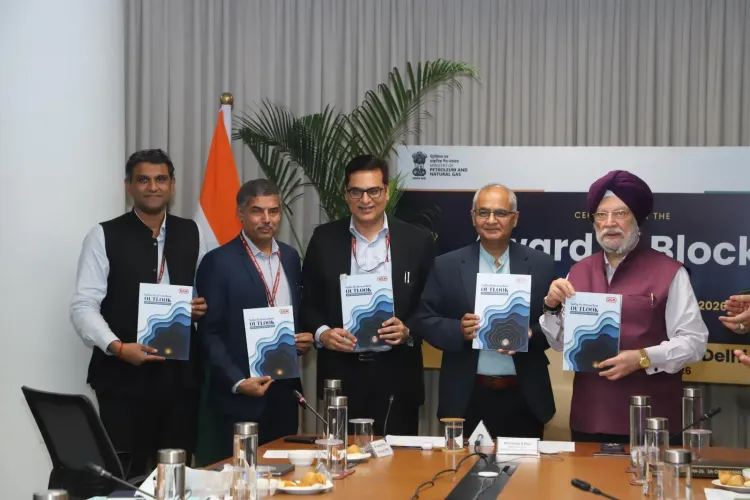
The India Hydrocarbon Outlook 2026 was simultaneously launched to guide science-based exploration and attract upstream investment.
India's crude import dependence exceeds 80 percent , making upstream production growth a strategic priority for the Modi government.
Upstream growth is expected to combine the OALP continuous licensing framework with technology partnerships and government-industry collaboration.
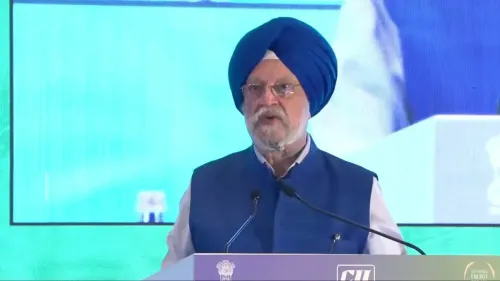
India's upstream energy ambitions moved from policy to contract on Thursday, October 15, 2026, as Union Petroleum Minister Hardeep Singh Puri presided over the signing of contracts for the Special Coal Bed Methane (CBM) Bid Rounds 2025 and 2026 — a milestone he called a 'renewed push for unconventional gas exploration' — alongside the launch of the India Hydrocarbon Outlook 2026.
CBM Bid Rounds 2025-26: What Was Signed and Why It Matters
Coal Bed Methane sits at the heart of India's unconventional gas strategy. The minister cited an estimated resource base of 2,600 BCF — though the full verified quantum remains subject to ongoing technical assessment — as the foundation for accelerating domestic production from a resource that has historically been under-exploited relative to its potential.
India has maintained a dedicated CBM policy framework since the early 2000s, but output has lagged expectations. The 2025 and 2026 bid rounds, signed under the Ministry of Petroleum and Natural Gas and overseen by the Directorate General of Hydrocarbons (DGH), represent the latest attempt to close that gap — this time with revenue-sharing contracts aligned to the Hydrocarbon Exploration and Licensing Policy (HELP) framework introduced in 2016.
Samudra Manthan: Deepwater Drilling Gets a Shared-Cost Model
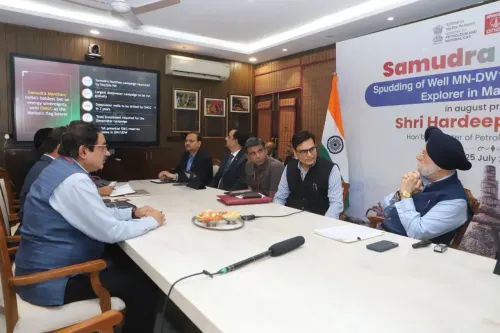
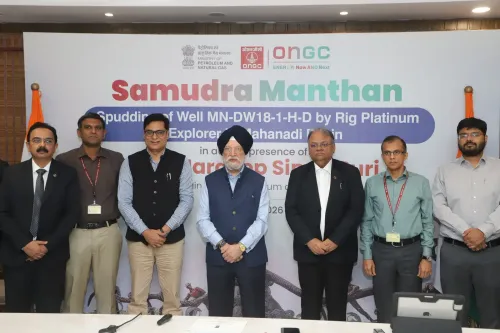
The other headline from the event was the government's spotlight on Samudra Manthan, PM Narendra Modi's offshore exploration programme. The scheme targets India's vast deepwater and ultra-deepwater acreage through three levers: new seismic surveys, shared drilling costs across approximately 60 deep- and ultra-deep-water wells, and common offshore infrastructure.
The logic is straightforward. Deepwater drilling is expensive enough to deter single-operator risk; a shared-cost model lowers the threshold for both public-sector giants like Oil India Limited and private players. India's crude import dependence currently exceeds 80 percent, and mature onshore basins have delivered declining output for years. Offshore reserves — particularly in the deepwater blocks off India's eastern and western coasts — remain the most credible route to materially shifting that equation.
India Hydrocarbon Outlook 2026: Science-Led Exploration as National Strategy
The launch of the India Hydrocarbon Outlook 2026 alongside the contract signings signals an intent to anchor future rounds in data and science rather than acreage-counting alone. Puri described the next phase of upstream growth as being driven by 'science-based exploration, technology-enabled development and stronger collaboration among government, industry, service providers, technology partners and research institutions.'
That framing matters. India has, under the Open Acreage Licensing Policy (OALP) introduced with HELP, moved toward continuous online bidding — giving explorers the ability to nominate blocks on demand rather than waiting for discrete licensing rounds. The Hydrocarbon Outlook document is intended to give industry a consolidated picture of India's prospectivity to attract bids under that system.
The 80-Percent Import Problem Driving Every Decision
Every upstream initiative the government announces traces back to the same stubborn number: India imports more than 80 percent of its crude oil needs, a vulnerability that was exposed sharply during global price spikes. The CBM contracts and Samudra Manthan are two flanks of the same campaign — one targeting onshore unconventional gas, the other chasing offshore oil and gas at depth.
Whether the contracts translate to production ramp-up will depend on how quickly seismic data acquisition moves under Samudra Manthan and how fast the newly signed CBM blocks progress from exploration to development drilling. Both timelines are measured in years, not months. But October 15, 2026 marks the moment the government put pen to paper — and that is where the clock starts.
Point of View
Deepwater offshore to deliver the step-change volumes India needs. The launch of a consolidated Hydrocarbon Outlook document alongside licensing events suggests the government is trying to shift the exploration narrative from administrative process to investable opportunity. With import dependence stubbornly above 80 percent, the political calculus behind accelerating both tracks is clear — but execution risk in deepwater drilling and CBM development timelines means results will arrive well beyond the current electoral cycle.
NationPress
15 Oct 2026
Frequently Asked Questions
What is the Special CBM Bid Round 2025 and 2026 in India?
The Special Coal Bed Methane Bid Rounds 2025 and 2026 are government-run licensing rounds for unconventional gas blocks in India, with contracts signed by the Ministry of Petroleum and Natural Gas on October 15, 2026, to accelerate domestic CBM production.
What is India's Samudra Manthan programme?
Samudra Manthan is an offshore exploration programme launched by PM Narendra Modi that aims to unlock India's deepwater and ultra-deepwater hydrocarbon resources through new seismic surveys, shared drilling costs for around 60 wells, and common offshore infrastructure.
What is the India Hydrocarbon Outlook 2026?
The India Hydrocarbon Outlook 2026 is a government document launched by the Ministry of Petroleum and Natural Gas to provide a science-based assessment of India's exploration prospectivity and guide upstream investment decisions.
How much does India depend on crude oil imports?
India imports more than 80 percent of its crude oil needs, making energy security and upstream production growth a central policy priority for the government.
What is India's CBM resource base?
Minister Hardeep Singh Puri cited an estimated Coal Bed Methane resource base figure at the October 2026 event, though the full independently verified quantum is subject to ongoing technical assessment by the Directorate General of Hydrocarbons.