HP CM Office Launches ₹116 Cr Projects in Lahaul-Spiti
Synopsis
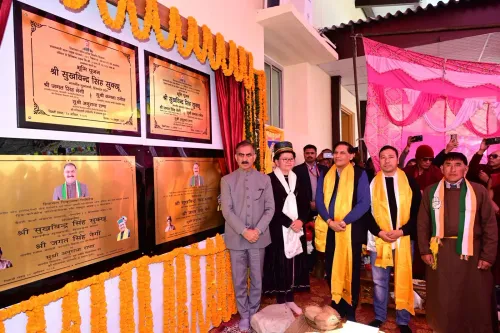
The Chief Minister's Office of Himachal Pradesh inaugurated and laid foundation stones for ₹116.28 crore worth of projects in Lahaul-Spiti on October 15, 2026, headlined by the state's first battery-storage solar power plant in Rongtong, Spiti Valley.
Key Takeaways
₹116.28 crore worth of developmental projects inaugurated and foundation-stoned in Lahaul-Spiti on October 15, 2026 .
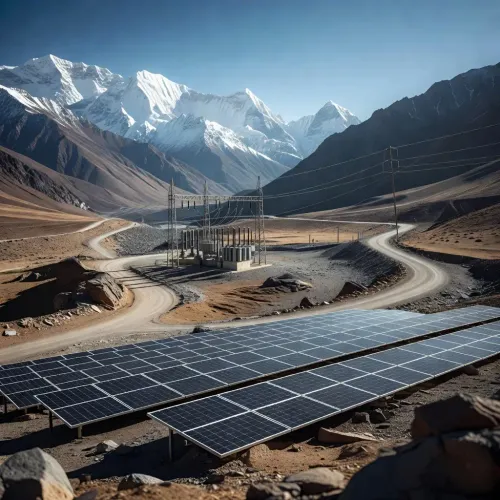
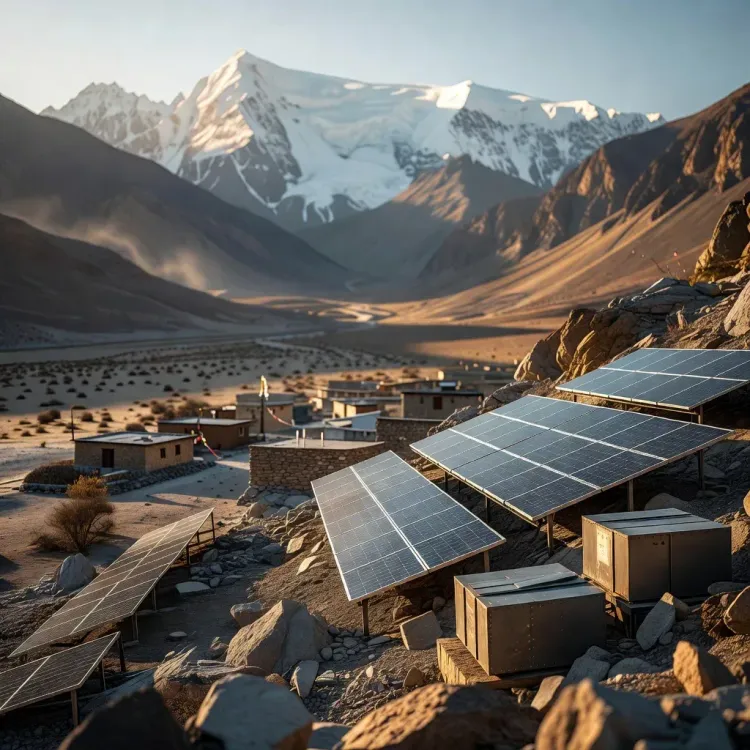
The centrepiece is Himachal Pradesh's first battery-storage solar power plant , located at Rongtong in Spiti Valley .
Battery storage makes the plant capable of supplying power through the valley's long, dark nights — a critical advantage over standalone solar panels.
Lahaul-Spiti is a high-altitude, seasonally cut-off tribal district where conventional grid extension is technically and economically difficult.
The project signals a shift toward frontier clean-energy solutions for remote Himalayan communities beyond traditional road and bridge investment.
Deep in the cold deserts of the Spiti Valley, a quiet energy revolution just got its foundation stone. The Chief Minister's Office of Himachal Pradesh announced on Thursday, October 15, 2026, the inauguration and laying of foundation stones for developmental projects worth ₹116.28 crore in Lahaul-Spiti — with the headline act being the state's first-ever battery-storage-backed solar power plant at Rongtong.
Himachal's First Battery-Storage Solar Plant at Rongtong
The Rongtong solar plant is not just another renewable energy announcement. It is specifically designed with battery energy storage — meaning it can store power generated during the brief sunny hours of a high-altitude Himalayan day and supply it through the long, dark, brutally cold nights. For a valley where conventional grid extension is a near-engineering impossibility and diesel generators have long been the fallback, that distinction matters enormously.
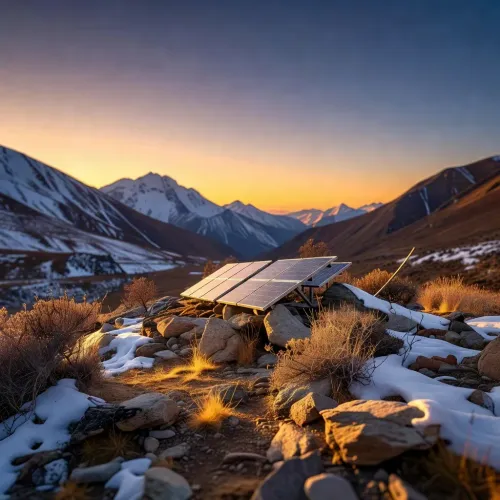
Lahaul-Spiti sits at elevations that regularly exceed 3,000 metres, cut off by heavy snowfall for months at a time. The seasonal intermittency of solar generation — a challenge that defeats standalone panels everywhere — is precisely what the battery-storage configuration is engineered to solve. This makes the Rongtong plant a potential template for other remote Himalayan pockets across the state.
₹116.28 Crore Spread Across Lahaul-Spiti
Beyond the solar plant, the ₹116.28 crore package spans multiple developmental projects inaugurated and foundation-stoned across the district. Lahaul-Spiti — Himachal Pradesh's largest district by area but one of its least populated — has historically lagged in infrastructure relative to the state's lower hills. Periodic infusions of project funding have been a recurring government instrument to bridge that gap, but the inclusion of frontier clean-energy technology signals an ambition that goes beyond road-and-bridge incrementalism.
Why Spiti's Energy Problem Is Uniquely Hard to Solve
The Spiti Valley is effectively a cold desert ringed by high passes. Winters freeze the landscape for the better part of six months. Conventional transmission infrastructure corrodes fast, is expensive to maintain, and vulnerable to avalanche and landslide damage. Grid power from the plains is technically feasible but economically punishing at scale.
Battery-backed solar sidesteps that entire calculus. Once commissioned, the Rongtong plant would provide reliable local generation — reducing diesel dependency, cutting emissions, and, crucially, stabilising power supply for the households, schools, and health posts that dot this sparse but strategically important border district.
For a state that sits astride some of the most sensitive terrain on India's northern frontier, lighting up Lahaul-Spiti is never only about watts — it is about presence, connectivity, and the quiet assurance that the mountains are not forgotten.
Point of View
Lahaul-Spiti is both a political and strategic priority — any government is seen to be failing its tribal constituency if this vast, high-altitude district remains energy-poor. By branding Rongtong as a 'first' for the state, the CM Office is also setting a replicable benchmark: if battery-backed solar works at over 3,000 metres in a cold desert, it can work anywhere in the Himalayan belt. The ₹116.28 crore package, while substantial for a sparsely populated district, will be judged by commissioning timelines — announcements in Lahaul-Spiti have historically outpaced delivery.
NationPress
15 Oct 2026
Frequently Asked Questions
What is the Rongtong solar power plant in Spiti Valley?
The Rongtong solar power plant is Himachal Pradesh's first battery-storage-backed solar energy facility, located in Spiti Valley within the Lahaul-Spiti district. It stores solar energy in batteries to supply power even when sunlight is unavailable, making it suitable for the valley's harsh, high-altitude climate.
What is the total cost of development projects launched in Lahaul-Spiti on October 15, 2026?
Projects worth ₹116.28 crore were inaugurated and had their foundation stones laid in Lahaul-Spiti on October 15, 2026, by the Chief Minister's Office of Himachal Pradesh.
Why is battery storage important for solar power in high-altitude areas like Spiti Valley?
High-altitude regions like Spiti Valley have extreme winters, limited sunlight hours, and no reliable conventional power grid. Battery storage allows solar energy generated during the day to be used at night or during cloudy periods, ensuring a consistent power supply where grid extension is impractical.
Why is Lahaul-Spiti a priority for infrastructure development in Himachal Pradesh?
Lahaul-Spiti is Himachal Pradesh's largest district by area but one of its least populated, with extreme terrain and seasonal road closures. It is a tribal district on India's northern border, making infrastructure development both a social equity priority and a strategic imperative.
Is this the first solar plant in Himachal Pradesh?
No — but the Rongtong facility is specifically described as Himachal Pradesh's first solar power plant operated with battery energy storage, which distinguishes it from conventional standalone solar installations already existing in the state.