CM Sai: Kelo Project a boon, Rs 10,000 cr invested in Chhattisgarh irrigation
Synopsis
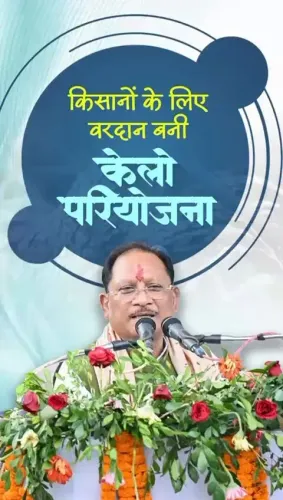
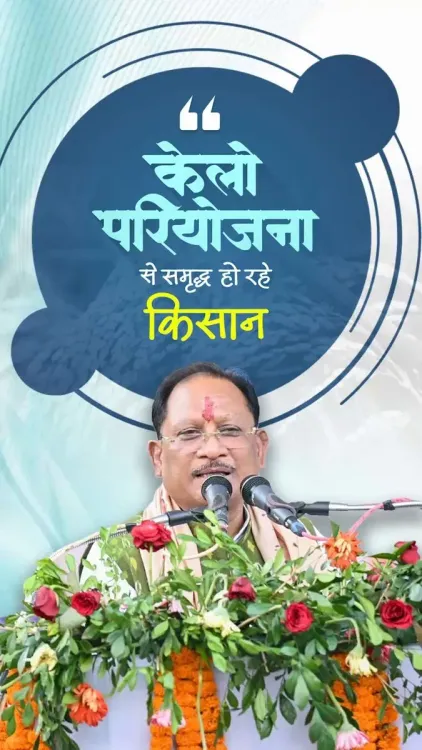
Chief Minister Vishnu Deo Sai says the Kelo irrigation project is a 'boon' for eastern Chhattisgarh, citing over Rs 10,000 crore in new projects and Rs 2,800 crore for repair of older schemes in under three years of his government.
Key Takeaways
CM Vishnu Deo Sai called the Kelo Project a 'boon' for the region in a post by the Chief Minister's Office on 15 October 2026 .
The Chhattisgarh government has allocated over Rs 10,000 crore for new irrigation projects in approximately two-and-a-half to three years in office.
An additional Rs 2,800 crore has been set aside for repair and rehabilitation of older irrigation schemes.
The Kelo Project primarily serves Raigarh district and surrounding areas of eastern Chhattisgarh.
The dual-track strategy targets both new infrastructure and legacy canal network upkeep to maximise farmer benefit.
The Sai government took office in December 2023 and has positioned irrigation investment as a core rural-development priority.
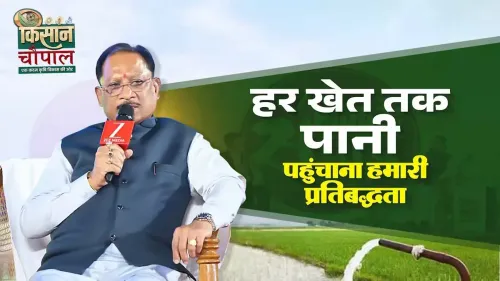
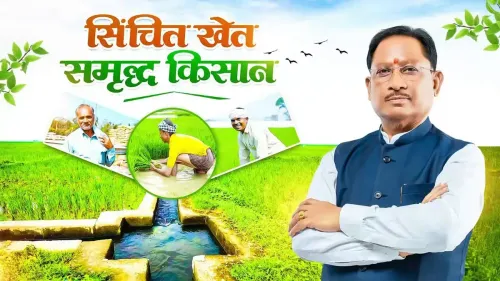
A river-fed irrigation push is reshaping agriculture across eastern Chhattisgarh — and Chief Minister Vishnu Deo Sai is putting hard numbers behind it. The Chief Minister's Office of Chhattisgarh posted on X on Thursday, 15 October 2026, quoting Sai's assertion that the Kelo Project has become a 'blessing' for the region, backed by over Rs 10,000 crore in new project allocations in roughly two-and-a-half to three years of the current government.
In his statement, Sai declared: 'Kelo pariyojana is kshetra ke liye vardan sabit ho rahi hai' ('The Kelo Project is proving to be a boon for this region'). He added that, alongside fresh investments, approximately Rs 2,800 crore has been earmarked for the repair and rehabilitation of older irrigation schemes — a recognition that existing infrastructure needed as much attention as greenfield projects.
What the Kelo Project means for Raigarh and beyond
The Kelo Project draws from the Kelo river, primarily channelling water toward Raigarh district and surrounding communities in eastern Chhattisgarh. The state has a large tribal and agrarian population that has historically depended on monsoon rains, making reliable canal irrigation a direct lifeline for smallholder farmers. Every season a crop fails to rain, it is not an abstraction — it is a household.
Chhattisgarh's irrigation programmes trace their lineage to the Accelerated Irrigation Benefits Programme, a central-government framework active since the early 2000s that pushed states to accelerate stalled projects. The current BJP government under Chief Minister Sai, which took office in December 2023, has framed irrigation investment as a centrepiece of its rural development agenda under the 'Sushasan Sarkar' (good-governance government) banner.
New builds and old repairs: a two-track strategy
The dual allocation — new projects at over Rs 10,000 crore and rehabilitation at around Rs 2,800 crore — signals a deliberate two-track approach. New infrastructure expands the commanded area; repairing ageing canals and headworks ensures water actually reaches the last farm in the chain. In many Indian states, funds flow readily toward ribbon-cutting projects while legacy networks quietly crumble. The explicit repair budget suggests the state is trying to close that gap.
For Chhattisgarh's farmers, the stakes are concrete: more irrigated acreage translates directly into the ability to take a second crop, hedge against erratic monsoons, and move away from subsistence-only production. Eastern districts like Raigarh, where the Kelo Project operates, have significant populations still dependent on rain-fed paddy cultivation.
Completion timelines and on-ground progress of specific works under the Kelo Project will be the next real test of whether these allocations convert into irrigated hectares — and that is a number farmers will count long before any budget speech does.
Point of View
800 crore repair allocation is analytically significant — it signals a shift from purely headline-grabbing new-build politics toward acknowledging that under-maintained legacy infrastructure is often the bigger constraint on farm productivity. For eastern Chhattisgarh, where tribal agrarian communities remain electorally decisive, visible water-delivery improvements carry both development and political weight. The real proof of intent, however, will come when completion data on commanded-area additions under the Kelo Project enters the public domain.
NationPress
15 Oct 2026
Frequently Asked Questions
What is the Kelo Project in Chhattisgarh?
The Kelo Project is an irrigation initiative in Chhattisgarh that channels water from the Kelo river primarily to Raigarh district and surrounding eastern areas, aiming to expand canal-irrigated farmland and reduce dependence on monsoon rains.
How much has the Chhattisgarh government invested in irrigation under CM Vishnu Deo Sai?
According to CM Vishnu Deo Sai , the state government has allocated over Rs 10,000 crore for new irrigation projects and approximately Rs 2,800 crore for repair and rehabilitation of older schemes in roughly two-and-a-half to three years in office.
Who is Vishnu Deo Sai and when did he become Chief Minister of Chhattisgarh?
Vishnu Deo Sai is the Chief Minister of Chhattisgarh, leading a BJP government since December 2023 . His administration has focused on irrigation, rural development, and tribal welfare.
Which districts benefit from the Kelo irrigation project?
The Kelo Project primarily benefits Raigarh district and surrounding communities in eastern Chhattisgarh, a region with significant tribal and agricultural populations dependent on river-based irrigation.
What is the Accelerated Irrigation Benefits Programme?
The Accelerated Irrigation Benefits Programme is a central-government framework active since the early 2000s that provided funding and direction to states, including Chhattisgarh , to accelerate stalled or incomplete irrigation projects and expand cultivable commanded area.