CM Sai Approves ₹12,800 Cr Irrigation Push for Chhattisgarh
Synopsis
Chhattisgarh CM Vishnu Deo Sai announced approvals worth over ₹12,800 crore for irrigation — more than ₹10,000 crore for new projects and ₹2,800 crore to repair 1,500-plus legacy structures — pledging water access for every farm in the state.
Key Takeaways
Chhattisgarh CM Vishnu Deo Sai announced the irrigation approvals on 7 July 2026 .
New irrigation projects worth over ₹10,000 crore have been sanctioned across the state. ₹2,800 crore approved separately for repair of more than 1,500 existing irrigation projects .
Total committed outlay across both tranches exceeds ₹12,800 crore .
The move aligns with the central government's Pradhan Mantri Krishi Sinchayee Yojana framework aimed at expanding assured irrigation coverage.
Detailed project lists and tendering schedules from the Water Resources Department are awaited.
Chhattisgarh Chief Minister Vishnu Deo Sai announced on Tuesday, 7 July 2026 that his government has approved new and repair irrigation investments totalling over ₹12,800 crore, aimed at extending water access to every farm in the state and boosting farmer incomes.
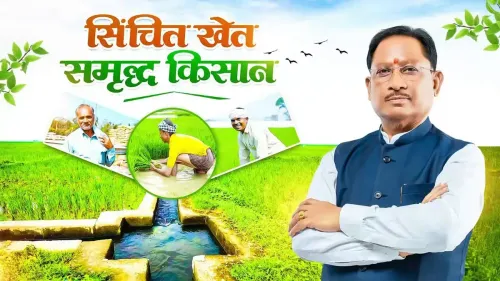
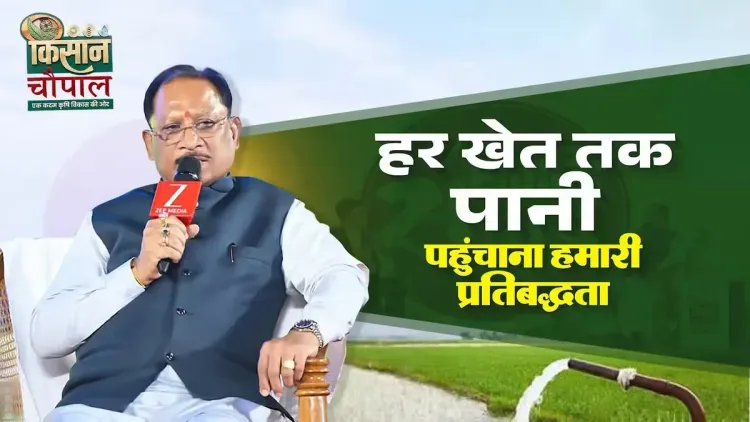
In his post, CM Sai wrote: 'हर खेत तक पानी, हर किसान तक समृद्धि' ('Water to every field, prosperity to every farmer'), framing the announcements as part of a sustained commitment by his 'Sushasan Sarkar' (good-governance government) to strengthen the agriculture sector.
Context
The chief minister outlined two distinct approvals. First, new irrigation projects worth over ₹10,000 crore have been sanctioned across the state. Second, a separate allocation of ₹2,800 crore has been approved for the repair and rehabilitation of more than 1,500 existing irrigation projects that had fallen into disrepair.
Together, the two tranches represent one of the largest single-round irrigation commitments in the state's recent history, covering both the creation of new water infrastructure and the restoration of legacy systems.
Policy Backdrop
Chhattisgarh, a central Indian state where agriculture employs a majority of the working population, has historically recorded irrigation coverage below the national average. The national assured-irrigation rate stood at roughly 48 percent in the early 2020s, and several central Indian states — including Chhattisgarh — trailed that figure.
The central government's Pradhan Mantri Krishi Sinchayee Yojana (PMKSY), launched in 2015, has provided a policy and funding framework for states to expand irrigated area and improve water-use efficiency. Chhattisgarh's 2023-24 state budget had already earmarked funds for completing ongoing schemes such as the Mahanadi reservoir project, signalling a multi-year trajectory that these new approvals now extend.
BJP-governed states including Madhya Pradesh and Rajasthan have pursued comparable strategies — combining large greenfield irrigation commands with systematic rehabilitation of older structures — as part of a broader party-level emphasis on rural agricultural productivity.
Stakeholders and Impact
The primary beneficiaries are Chhattisgarh's farming communities, particularly smallholder and marginal farmers in rain-dependent districts who currently rely on monsoon water for a single annual crop. Assured irrigation typically enables a second or third crop cycle, directly raising household incomes.
The repair component — covering over 1,500 structures — is especially significant because derelict canals and check dams often serve communities that built their agricultural calendars around them. Restoring these assets can deliver near-term water security without the longer lead times of entirely new construction.
State contractors, the Water Resources Department, and rural labour markets are also likely to see activity once tendering processes begin, with downstream effects on rural employment and local economies.
What's Next
Observers will watch for the Water Resources Department to release detailed project lists, district-wise allocations, and tendering schedules in the coming months. The pace of actual groundbreaking and fund disbursement will determine whether the approvals translate into tangible infrastructure before the next agricultural season.
With Chhattisgarh heading into the second half of the current legislative term under CM Sai's government, the scale of irrigation investment is also likely to become a central plank in the ruling party's outreach to rural voters — making timely project execution a political as well as administrative priority.
Point of View
500 existing structures is politically astute: it delivers benefits to communities already organised around those assets with shorter timelines than new construction. For CM Sai, who took office in December 2023 and must demonstrate rural delivery, a ₹12,800-crore irrigation push positions his government firmly on the agrarian agenda that has defined BJP's electoral strategy in central India. The real test, however, will be the gap between sanction and execution — a chronic challenge in large public-works programmes.
NationPress
6 Oct 2026
Frequently Asked Questions
How much has the Chhattisgarh government approved for new irrigation projects?
The Chhattisgarh government has approved over ₹10,000 crore for new irrigation projects, as announced by Chief Minister Vishnu Deo Sai on 7 July 2026.
How many old irrigation projects will be repaired in Chhattisgarh?
More than 1,500 existing irrigation projects will be repaired under a separate sanction of ₹2,800 crore approved by the Chhattisgarh government.
What is the total irrigation investment announced by CM Vishnu Deo Sai?
The total irrigation investment across new projects and repairs announced by CM Vishnu Deo Sai exceeds ₹12,800 crore.
How does Chhattisgarh's irrigation coverage compare to the national average?
Chhattisgarh has historically recorded irrigation coverage below the national average, which stood at roughly 48 percent in the early 2020s, making these investments particularly significant for the state's farming communities.
What central scheme supports Chhattisgarh's irrigation expansion?
The Pradhan Mantri Krishi Sinchayee Yojana (PMKSY), launched by the central government in 2015, provides the policy and funding framework within which Chhattisgarh's irrigation expansion is taking place.