CM Sai Pitches Chhattisgarh as National Farm Innovation Model
Synopsis
Chhattisgarh Chief Minister Vishnu Deo Sai on 23 May 2026 positioned the state as a national model for agricultural innovation, farmer income growth, and rural prosperity, reaffirming his government's commitment to farm diversification and modern technology adoption.
Key Takeaways
CM Vishnu Deo Sai declared on 23 May 2026 that Chhattisgarh is building a new national identity in agricultural innovation and farmer welfare.
The government has stated its highest priority is farmer income growth, agricultural diversification, and modern farming technologies.
Chhattisgarh is a major paddy-producing state where agriculture supports a large share of the rural population.
The BJP government, in power since December 2023 , has aligned state policy with central schemes such as PM-KISAN , which provides Rs 6,000 annually to eligible farmer families.
The state's stated vision — 'prosperous farmers, empowered villages, developed Chhattisgarh' — signals intent to broaden the agricultural base beyond traditional paddy cultivation.
Budget allocations and farm technology MoUs in the next fiscal cycle will be key indicators of whether stated priorities are backed by concrete action.
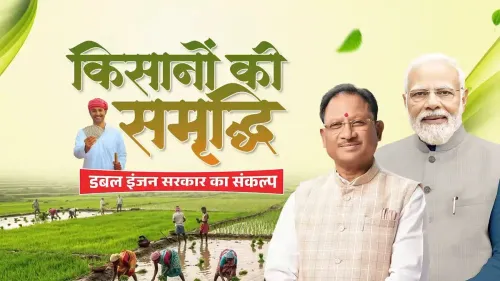
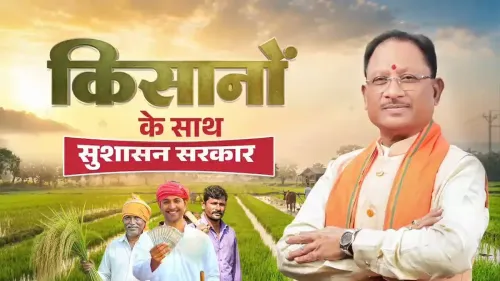
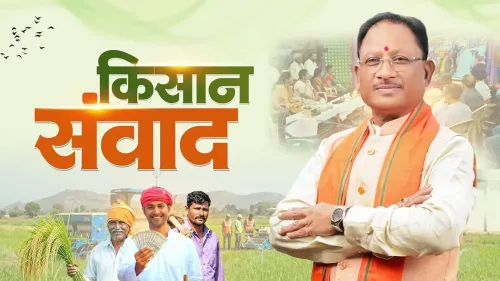
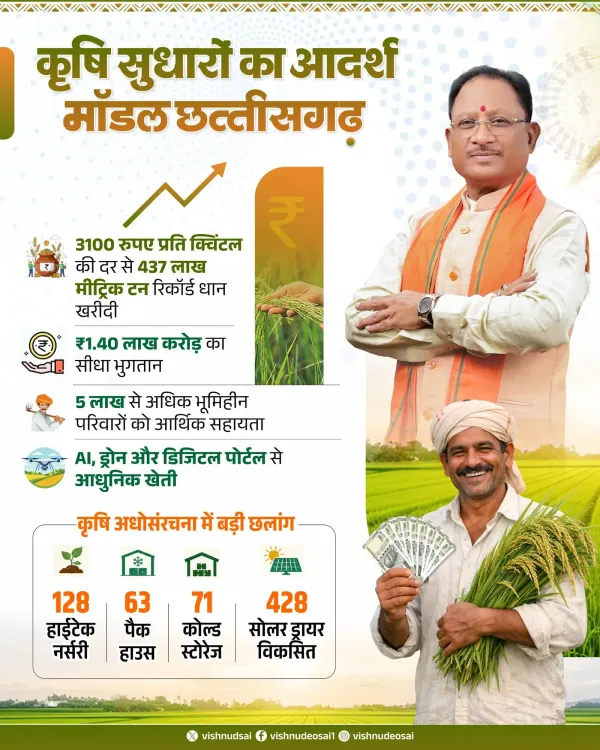
Chhattisgarh Chief Minister Vishnu Deo Sai on Saturday, 23 May 2026, declared that the state is establishing itself as a national model for agricultural innovation and farmer welfare, crediting both the tireless effort of farmers and the state government's pro-farmer policies for the transformation.
Posting in Hindi on X, CM Sai wrote: 'छत्तीसगढ़ आज कृषि नवाचार, किसान कल्याण और खेती के राष्ट्रीय मॉडल के रूप में नई पहचान बना रहा है' ['Chhattisgarh is today building a new identity as a national model for agricultural innovation, farmer welfare, and farming']. He added that his government is continuously working with the highest priority on farmer income growth, agricultural diversification, modern farming technologies, and rural prosperity. The post concluded with a three-part resolve: 'Prosperous farmers, empowered villages, and a developed Chhattisgarh.'
Context
Chhattisgarh is one of India's major paddy-producing states, with agriculture forming the backbone of its rural economy and supporting a large share of the population. CM Sai, who took office in December 2023 after the BJP won the state assembly elections, has consistently positioned farmer welfare at the centre of his administration's agenda. Saturday's post reaffirms that commitment in public terms, framing the state's agricultural direction as a replicable national template.
Policy Backdrop
The BJP-led state government's approach aligns with the central government's broader push for rural income enhancement, including the PM-KISAN scheme — launched in 2019 — which provides eligible farmer families an annual direct benefit transfer of Rs 6,000. States like Chhattisgarh have been encouraged to layer complementary state-level measures on top of central schemes, covering crop diversification, farm mechanisation, and technology adoption. CM Sai's reference to 'modern agricultural technologies' and 'agricultural diversification' signals continued movement along this state-centre coordination track.
Historically, Chhattisgarh has relied heavily on paddy procurement through minimum support price mechanisms. Both previous and current governments have continued or modified these mechanisms, but the current administration has signalled an intent to broaden the agricultural base beyond rice cultivation to build more resilient rural incomes.
Stakeholders and Impact
The primary beneficiaries of the policies referenced by CM Sai are Chhattisgarh's farming households and rural communities, who depend on state support for income stability and access to modern inputs. Agricultural diversification, if realised, could reduce the vulnerability of farmers tied to a single crop cycle and open new market linkages. Rural communities at large stand to gain from the 'empowered villages' vision articulated in the post, which encompasses infrastructure, livelihoods, and local governance.
For the BJP, the messaging also carries political weight: farmer welfare has been a central plank of the party's rural outreach in Chhattisgarh and nationally, and public affirmations of this agenda help consolidate the government's rural support base ahead of future electoral cycles.
What's Next
Observers will watch the state's upcoming budget allocations for agriculture to gauge whether the government's stated priorities translate into measurable financial commitments. Potential MoUs for farm mechanisation or technology transfer partnerships — with central agencies or private sector players — would be concrete indicators of progress on the modernisation agenda. How Chhattisgarh performs on crop diversification metrics and rural income indices in the next fiscal cycle will be the real test of whether the 'national model' claim gains traction beyond political messaging.
Point of View
As it hints at a structural shift in policy ambition, even if concrete outcomes remain to be demonstrated. Whether Chhattisgarh can substantiate the 'model state' claim will depend on measurable outcomes in farmer income, diversification uptake, and rural infrastructure — metrics that will be scrutinised as the government approaches the midpoint of its term.
NationPress
6 Oct 2026
Frequently Asked Questions
What did Chhattisgarh CM Vishnu Deo Sai say about farmers on 23 May 2026?
CM Vishnu Deo Sai stated that Chhattisgarh is emerging as a national model for agricultural innovation and farmer welfare, crediting farmers' hard work and the government's pro-farmer policies. He reaffirmed the government's commitment to farmer income growth, crop diversification, modern technologies, and rural prosperity.
What is the BJP government's farm policy in Chhattisgarh?
The BJP government in Chhattisgarh, led by CM Vishnu Deo Sai since December 2023, has prioritised farmer income support, agricultural diversification, and modern farming technology adoption, complementing central schemes like PM-KISAN which provides Rs 6,000 annually to eligible farmer families.
What is PM-KISAN and does it apply to Chhattisgarh farmers?
PM-KISAN is a central government direct benefit transfer scheme launched in 2019 that provides Rs 6,000 per year to eligible farmer families. It applies across states including Chhattisgarh, where the state government has been encouraged to add complementary measures.
Why is Chhattisgarh important for Indian agriculture?
Chhattisgarh is one of India's major paddy-producing states, with agriculture forming the backbone of its rural economy. The state has historically relied on paddy procurement through minimum support price mechanisms, and the current government is working to diversify its agricultural base.
What does agricultural diversification mean for Chhattisgarh farmers?
Agricultural diversification in Chhattisgarh refers to moving beyond the state's traditional dependence on paddy cultivation to include a broader range of crops and farming practices. This aims to reduce income vulnerability for farmers tied to a single crop and open new market opportunities.