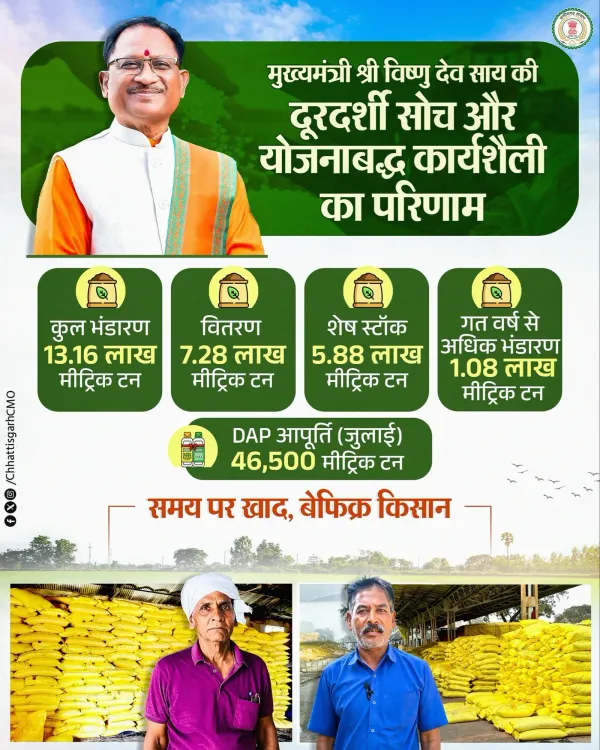
CM Sai ensures fertiliser supply for Chhattisgarh farmers
Synopsis
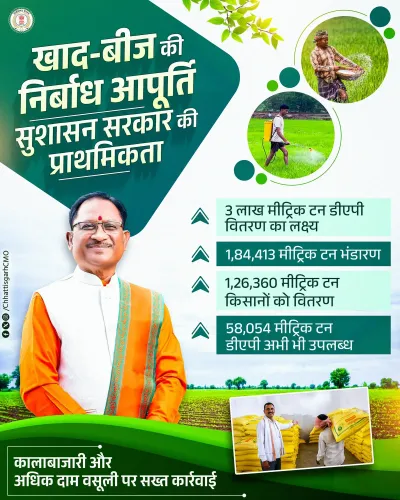
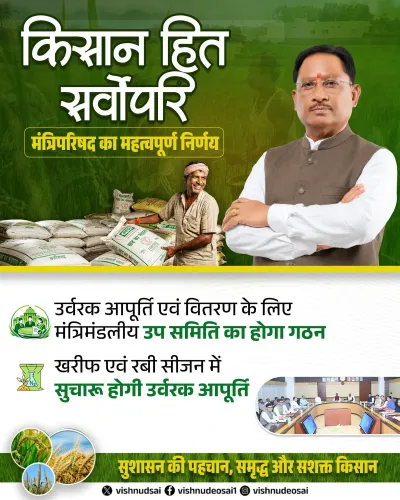
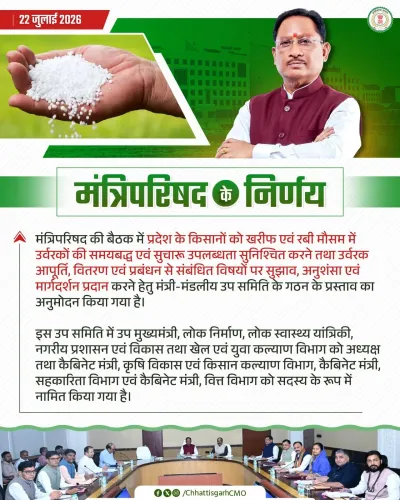
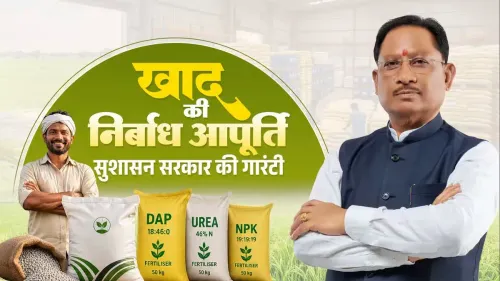
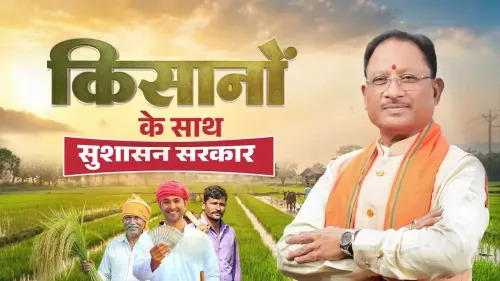
The Chhattisgarh government has ensured timely fertiliser availability for farmers ahead of the Kharif season, with CM Vishnu Deo Sai's office crediting strong supply management and continuous monitoring under its SuShasan Sarkar governance model.
Key Takeaways
The Chief Minister's Office of Chhattisgarh announced on July 6, 2026 that fertilisers have been secured for farmers before the Kharif season .
CM Vishnu Deo Sai is credited with the initiative; the government frames it under its SuShasan Sarkar (Good Governance) branding.
Chhattisgarh is a major paddy-producing state , making pre-season fertiliser availability critical for small and marginal farmers.
The move aligns with India's broader Nutrient Based Subsidy framework and post-2022 efforts to stabilise agricultural input supply chains.
Official Kharif sowing and fertiliser offtake data from the state agriculture department will be the key indicator of on-ground impact.
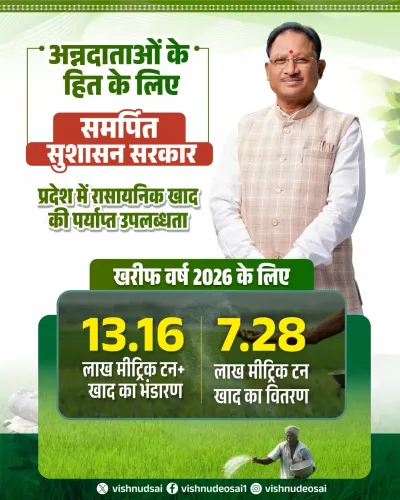
The Chief Minister's Office of Chhattisgarh announced on Monday, July 6, 2026, that the state government has secured timely availability of fertilisers for farmers ahead of the Kharif season, attributing the effort to a 'visionary initiative' by Chief Minister Vishnu Deo Sai. The announcement highlights robust supply management and continuous monitoring as cornerstones of what the government brands its SuShasan Sarkar (Good Governance Government) model.
Context
The post, shared in Hindi, states that 'khareef seezn se pahle kisanon ke liye urvarakon ki samay par uplabdhata sunishchit ki gayi hai' — fertilisers have been made available to farmers in time before the Kharif season. It credits strong supply management and sustained monitoring as the mechanisms through which the government is fulfilling its commitment to every farmer's needs.
Kharif is India's primary monsoon cropping period, running roughly from June to October, when demand for fertilisers peaks sharply. Chhattisgarh, a major rice-producing state in central India, sees paddy cultivation dominate this season, making pre-season fertiliser availability critical for small and marginal farmers.
Policy Backdrop
Since the BJP government came to power in Chhattisgarh in December 2023, the administration under CM Vishnu Deo Sai has undertaken reviews of agricultural supply chains to address input availability gaps. The state's approach aligns with the national Nutrient Based Subsidy (NBS) regime, which governs fertiliser pricing and distribution across India's rice belts.
Indian state governments routinely coordinate with central fertiliser suppliers and logistics networks ahead of both Kharif and Rabi seasons. This coordination became especially critical following the global fertiliser price volatility of 2022–23, which strained procurement pipelines in several states. Chhattisgarh's pre-season messaging reflects this broader administrative pattern of proactive supply-chain management.
Stakeholders and Impact
Small farmers and paddy cultivators are the primary beneficiaries of assured fertiliser supply. Delayed or insufficient fertiliser availability at the start of the sowing season can directly reduce crop yields and increase input costs for farmers who depend on subsidised supply channels.
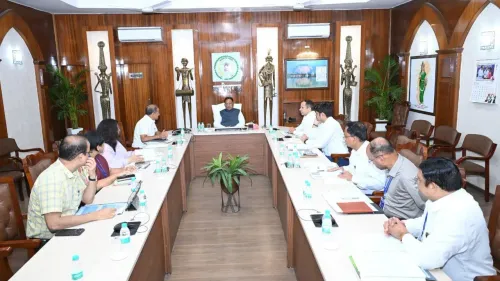
The government's emphasis on 'continuous monitoring' suggests active coordination between state agriculture officials and fertiliser distribution networks. The SuShasan Sarkar branding — used consistently by the current Chhattisgarh government — frames this as part of a wider governance efficiency drive rather than a one-off administrative measure.
What's Next
The state agriculture department is expected to release Kharif sowing data and fertiliser offtake figures as the season progresses, which will provide a clearer picture of whether pre-season supply arrangements translated into ground-level availability. Any follow-up directives on subsidies or procurement are likely to surface in the next state assembly session.
If supply management holds through the peak sowing window, the Sai government will likely use the outcome as a benchmark for its broader agricultural welfare narrative heading into future electoral cycles.
Point of View
But it carries political weight for a BJP government that unseated Congress in 2023 partly on promises of better farmer welfare delivery. By invoking the SuShasan Sarkar brand, the Sai administration is building a consistent governance narrative around agricultural inputs — a domain where predecessor governments were repeatedly criticised for supply failures. The emphasis on 'continuous monitoring' also reflects a broader national trend of state governments using real-time supply-chain oversight to prevent the kind of fertiliser shortages that caused political damage in multiple states after 2022. Whether the claim translates into measurable outcomes will depend on offtake data that the state agriculture department has yet to publish.
NationPress
5 Oct 2026
Frequently Asked Questions
Has Chhattisgarh ensured fertiliser supply for Kharif 2026?
Yes, the Chief Minister's Office of Chhattisgarh announced on July 6, 2026, that fertilisers have been made available to farmers ahead of the Kharif season through proactive supply management under CM Vishnu Deo Sai.
What is the Kharif season and why does fertiliser matter?
Kharif is India's monsoon cropping season from roughly June to October, when crops like paddy are sown. Fertiliser availability at the start of this window is critical because delays can reduce yields and raise costs for small farmers.
Who is Vishnu Deo Sai?
Vishnu Deo Sai is a BJP leader who became Chief Minister of Chhattisgarh in December 2023. His government has focused on agricultural supply-chain reforms and governance efficiency under the SuShasan Sarkar brand.
What is SuShasan Sarkar in Chhattisgarh?
SuShasan Sarkar, meaning 'Good Governance Government', is the branding used by the current Chhattisgarh administration to highlight efficient public service delivery, particularly in welfare and agricultural sectors.
What fertiliser policy framework does Chhattisgarh follow?
Chhattisgarh operates within India's national Nutrient Based Subsidy regime, which governs fertiliser pricing and distribution. The state coordinates with central suppliers and logistics networks to ensure adequate supply ahead of each cropping season.