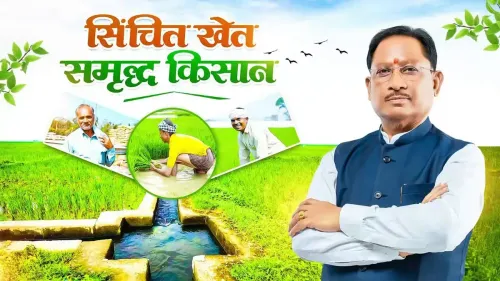
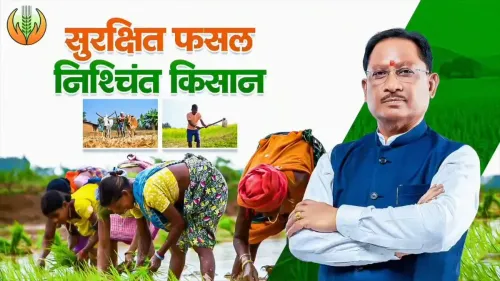
CM Sai Clears Rs 10,000 Cr Irrigation Projects in 2 Years
Synopsis
Chhattisgarh CM Vishnu Deo Sai announced approvals of over Rs 10,000 crore in irrigation projects over two years, calling irrigation the most vital foundation for agriculture in the state and signalling continued rural infrastructure investment under his BJP government.
Key Takeaways
Chhattisgarh CM Vishnu Deo Sai announced irrigation project approvals exceeding Rs 10,000 crore over approximately two years.
The CM described irrigation as 'the most important foundation for agriculture' in the state.
More than 70 per cent of Chhattisgarh's population depends on agriculture, much of it rainfed.
The push aligns with the central government's Pradhan Mantri Krishi Sinchayee Yojana launched in 2015.
Key beneficiaries include smallholder farmers in rainfed districts who face crop uncertainty during poor monsoon years.
Actual impact will depend on project execution, with state budget allocations and irrigated-area data serving as key metrics to watch.
Chhattisgarh Chief Minister Vishnu Deo Sai on Sunday, 14 June 2026 announced that his government has approved irrigation projects worth more than Rs 10,000 crore over the past two years, framing the push as essential to strengthening the agricultural backbone of the state.
Context
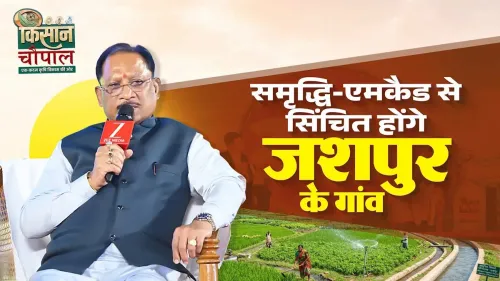
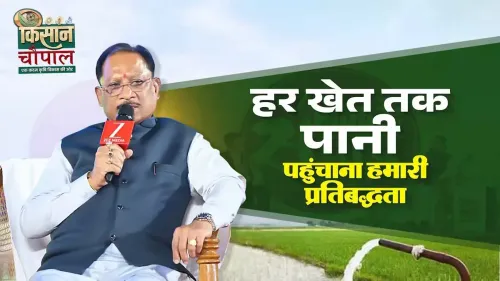
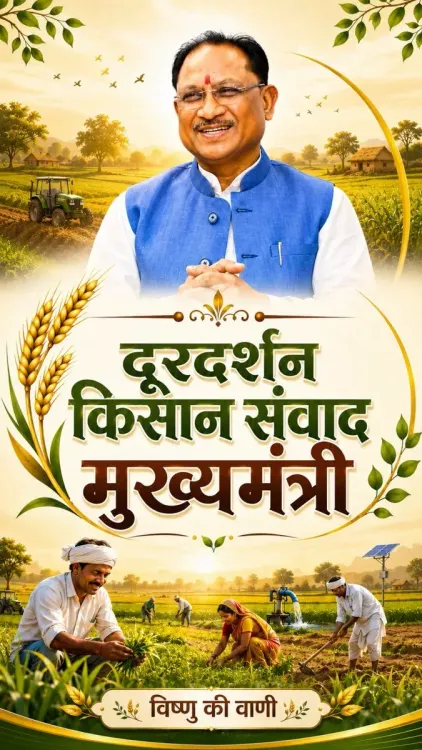
Posting in Hindi on X, CM Sai opened with a personal note — 'Kheti hamara pushtaini pesa raha hai aur hame kheti ka anubhav bhi hai' ('Farming has been our ancestral occupation and we have experience of farming') — before pivoting to policy. He stated that irrigation is the single most important foundation for agriculture and that his government has been working continuously to strengthen it. The post was tagged to @DDChhattisgarh and accompanied by a video.
Chhattisgarh is a central Indian state where more than 70 per cent of the population depends on agriculture. A large share of its cultivated land remains rainfed, making irrigation infrastructure a perennial political and economic priority.
Policy Backdrop
The announcement aligns with the national Pradhan Mantri Krishi Sinchayee Yojana (PMKSY), launched by the central government in 2015 to expand cultivable area under assured irrigation and improve water-use efficiency across states. Chhattisgarh has historically sought to harness rivers such as the Mahanadi for irrigation, with successive state governments — both Congress and BJP — sanctioning projects to reduce monsoon dependence.
CM Sai, a BJP leader who assumed office in December 2023, has previously focused on tribal and rural development themes, drawing on his earlier tenure as a union minister. The irrigation approvals represent one of the larger infrastructure commitments of his administration since taking charge.
Stakeholders and Impact
The primary beneficiaries of expanded irrigation infrastructure are Chhattisgarh's farming households, particularly smallholders in rainfed districts who face crop uncertainty during erratic monsoon years. Reliable irrigation can raise cropping intensity — enabling a second or third crop — and reduce income volatility for rural families.
Broader rural households stand to gain through improved agricultural productivity, which supports local supply chains, rural wages, and food security. State-level irrigation investment of this scale also generates construction employment and demand for engineering and civil works in the short term.
What's Next
The critical measure going forward will be execution: translating sanctioned project value into completed canals, reservoirs, and water distribution networks. Observers will watch Chhattisgarh's annual state budget allocations to gauge whether capital expenditure keeps pace with approvals. Official data on additional irrigated area created over the next two to three years will be the clearest indicator of on-ground impact. The government's ability to deliver these projects before the next assembly election cycle is likely to shape its rural electoral narrative.
Point of View
000 crore figure within a personal farming identity — 'farming is our ancestral occupation' — is a calibrated appeal to the state's predominantly agrarian electorate. The scale of approvals, if matched by execution, would represent a meaningful step in reducing Chhattisgarh's structural vulnerability to monsoon variability. However, the gap between sanctions and completed projects remains the standard accountability test for large irrigation programmes across Indian states.
NationPress
15 Sept 2026
Frequently Asked Questions
How much has Chhattisgarh approved for irrigation projects in the last two years?
Chhattisgarh CM Vishnu Deo Sai announced that irrigation projects worth more than Rs 10,000 crore have been approved over approximately the past two years.
What is the Pradhan Mantri Krishi Sinchayee Yojana and how does it relate to Chhattisgarh?
The Pradhan Mantri Krishi Sinchayee Yojana (PMKSY) is a central government scheme launched in 2015 to expand assured irrigation coverage. Chhattisgarh's state-level irrigation approvals align with this national framework aimed at reducing rainfed farming dependence.
Why is irrigation so important for Chhattisgarh's farmers?
More than 70 per cent of Chhattisgarh's population depends on agriculture, and a large portion of farmland relies on monsoon rains. Assured irrigation allows farmers to grow multiple crops annually and reduces income risk during poor monsoon years.
Who is Vishnu Deo Sai and when did he become Chief Minister of Chhattisgarh?
Vishnu Deo Sai is a BJP leader who became Chief Minister of Chhattisgarh in December 2023. He previously served as a union minister with a focus on tribal and rural development.
When did CM Sai make this irrigation announcement?
CM Vishnu Deo Sai made the announcement on Sunday, 14 June 2026, via a post on X in Hindi, tagged to DD Chhattisgarh.