CM Sai Highlights Chhattisgarh Infrastructure Push
Synopsis
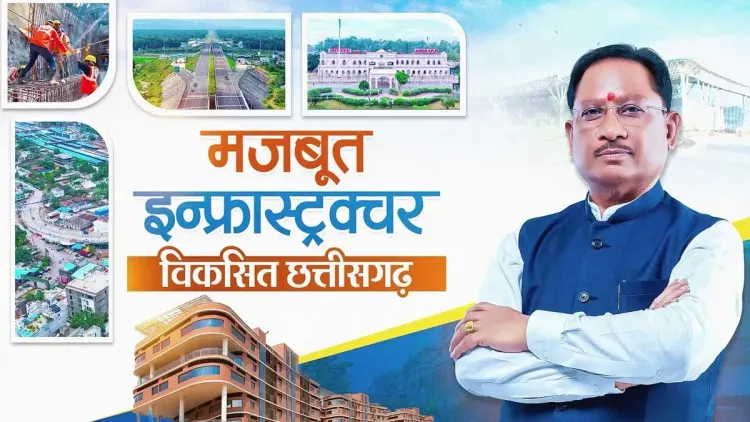
Chhattisgarh Chief Minister Vishnu Deo Sai on June 16, 2026 highlighted the state's rail, road, air and urban infrastructure expansion under the BJP's 'double engine' model, singling out Nava Raipur Atal Nagar as a symbol of investment-led growth aligned with the Viksit Bharat vision.
Key Takeaways
CM Vishnu Deo Sai posted on June 16, 2026 highlighting Chhattisgarh's infrastructure growth across rail, road, air, and urban sectors.
The post was tagged #12YearsOfNayaBharatNirman , linking state progress to a broader BJP national narrative.
Nava Raipur Atal Nagar was cited as an emerging hub for investment, industry, innovation, and employment.
Central schemes including Bharatmala Pariyojana (2015) and UDAN (2017) underpin the state's connectivity expansion.
The 'double engine' model — aligned BJP governments at state and centre — is the administration's stated driver of accelerated project delivery.
The infrastructure push is framed as foundational to achieving Viksit Chhattisgarh and Viksit Bharat goals.
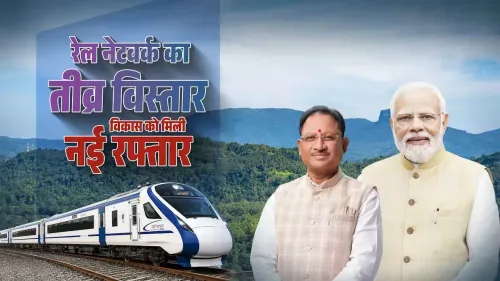
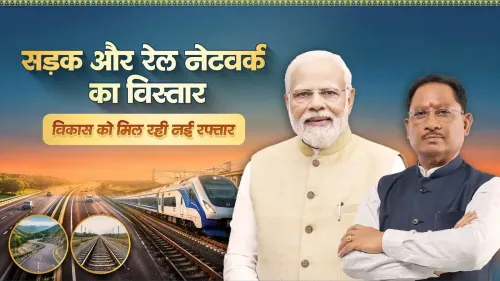
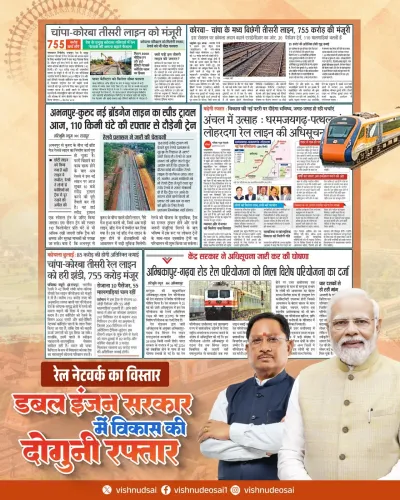
Chhattisgarh Chief Minister Vishnu Deo Sai on Tuesday, June 16, 2026, underscored the state's accelerating infrastructure development, pointing to rail, road, air, and urban connectivity gains under what he described as the 'double engine' government model.
Context
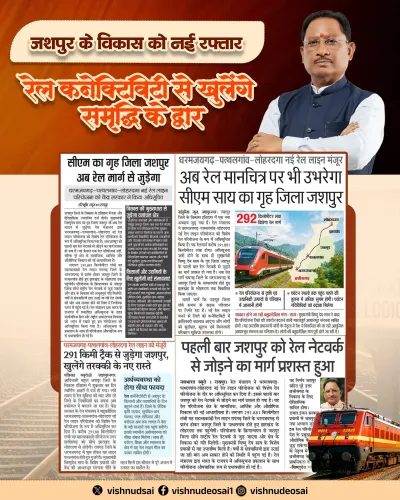
Posting on X, CM Sai wrote: 'जहां मजबूत इंफ्रास्ट्रक्चर होता है, वहीं विकास की सबसे मजबूत नींव तैयार होती है' — 'Where strong infrastructure exists, the strongest foundation of development is laid.' He cited new rail projects, expressways, national highways, and modern air connectivity as evidence that Chhattisgarh is setting new benchmarks in development.
The post was tagged #12YearsOfNayaBharatNirman, situating the message within a broader BJP narrative marking over a decade of what the party calls transformative national construction.
Policy Backdrop
The 'double engine' framing refers to the alignment between a BJP-led state government and the central government, an argument the party has used to claim faster fund flows and policy coordination for infrastructure projects. Chhattisgarh has been a beneficiary of central schemes including the Bharatmala Pariyojana, approved in 2015 to expand national highways and expressways, and the UDAN regional air connectivity scheme, launched in 2017 to improve airport links in smaller cities.
CM Sai took office in December 2023 following the BJP's return to power in the state after assembly elections. Since then, the state administration has consistently highlighted physical infrastructure as its primary development metric.
Nava Raipur Atal Nagar
Nava Raipur Atal Nagar, the planned capital city of Chhattisgarh named after former Prime Minister Atal Bihari Vajpayee, received specific mention in the post. CM Sai described it as 'emerging as a reflection of new India's aspirations — where new opportunities for investment, industry, innovation, and employment are taking shape.'
The city was conceptualised after Chhattisgarh's formation in 2000 and received renewed focus after 2014. It is positioned as a greenfield urban node intended to draw private capital and generate employment, mirroring a wider national pattern of developing new urban centres alongside legacy cities.
Stakeholders and What's Next
The infrastructure push has direct implications for investors, urban businesses, daily commuters, and the local workforce across the state. Improved rail and road connectivity reduces logistics costs for industries, while expanded air links open Chhattisgarh to faster business travel and tourism flows.
CM Sai framed the infrastructure agenda as integral to achieving 'Viksit Chhattisgarh' (Developed Chhattisgarh) and 'Viksit Bharat' (Developed India) — two goals that anchor the current BJP administration's long-term vision. State budget allocations for transport projects and fresh investment announcements tied to Nava Raipur Atal Nagar in the coming months will be a key indicator of whether the rhetoric translates into measurable project delivery.
Point of View
The administration signals an urban-investment story aimed at the middle class and the business community, not just rural beneficiaries. The #12YearsOfNayaBharatNirman tag places Chhattisgarh's gains within a party-wide timeline, reinforcing the BJP's national infrastructure legacy as a political asset. The absence of specific project numbers or completion dates keeps the communication aspirational rather than accountable — a common pattern in infrastructure messaging ahead of investment summits or budget cycles.
NationPress
15 Sept 2026
Frequently Asked Questions
What did Chhattisgarh CM Vishnu Deo Sai say about infrastructure on June 16 2026?
CM Vishnu Deo Sai stated that strong infrastructure is the foundation of development and highlighted historic work in rail, road, air, and urban connectivity under the 'double engine' government in Chhattisgarh.
What is Nava Raipur Atal Nagar and why is it significant?
Nava Raipur Atal Nagar is Chhattisgarh's planned capital city named after former Prime Minister Atal Bihari Vajpayee. It is being developed as a greenfield hub for investment, industry, innovation, and employment, and was conceptualised after the state's formation in 2000.
What is the 'double engine' government model in Chhattisgarh?
The 'double engine' model refers to the BJP governing both Chhattisgarh and the central government simultaneously, which the party argues enables faster fund flows, policy alignment, and accelerated infrastructure project delivery.
Which central schemes are driving infrastructure growth in Chhattisgarh?
Key central schemes include Bharatmala Pariyojana, launched in 2015 for national highway and expressway expansion, and the UDAN scheme, introduced in 2017 to improve regional air connectivity to smaller cities including those in Chhattisgarh.
What is Viksit Chhattisgarh and how does infrastructure relate to it?
Viksit Chhattisgarh, meaning 'Developed Chhattisgarh', is the BJP state government's long-term development goal aligned with the national Viksit Bharat vision. CM Sai has positioned infrastructure expansion in rail, road, air, and urban sectors as the primary driver toward achieving this goal.